


When it's time to repair or upgrade your car, you're faced with a choice: stick with the parts it came with from the factory, or dive into the world of aftermarket brands. This isn't just a minor decision; the aftermarket is a massive industry offering everything from high-octane performance upgrades to wallet-friendly fixes for your daily driver. Getting to know the players in this space is key to keeping your vehicle running right without breaking the bank.
So, What Are Aftermarket Car Parts Anyway?
Every single piece of your car, right down to the lug nuts, is an Original Equipment Manufacturer (OEM) part when it rolls off the assembly line. Aftermarket parts are simply any components made by a company that isn't the original vehicle manufacturer.
A good analogy is buying groceries. You can get the name-brand cereal, or you can opt for the store's version. Both will fill your bowl, but they come from different companies, often with different prices and sometimes even different ingredients. The same logic applies here.
But it's crucial to understand that "aftermarket" doesn't automatically mean "cheaper" or "lower quality." The world of aftermarket car part brands is incredibly diverse. Many companies have built their reputations on engineering parts that are actually better than the originals, using stronger materials or smarter designs to improve performance and outlast the factory component. For a more detailed comparison, check out our guide on OEM vs. aftermarket replacement parts.
Why Go with an Aftermarket Brand?
For most people, the biggest draw is the price tag. Aftermarket parts are almost always more affordable than their OEM equivalents, and the savings can be significant, especially for major repairs. But the advantages don't stop at your wallet.
- A World of Choice: Instead of one OEM option, the aftermarket gives you a huge selection. You can pick and choose the part that perfectly matches your performance goals and budget.
- Performance Upgrades: Many brands live and breathe performance. They specialize in creating parts—like brakes, suspension, and engine components—that are engineered to outperform the stock versions.
- Easy to Find: You can find aftermarket parts almost anywhere—local auto parts stores, countless online retailers, and your trusted independent mechanic. OEM parts, on the other hand, are often only available through a dealership.
The sheer size of this market speaks volumes. In 2024, the global automotive aftermarket was valued at a staggering USD 430.51 billion, and it's only expected to get bigger. That kind of growth is built on the trust millions of drivers place in quality aftermarket car part brands every single day.
Understanding the Tiers of Aftermarket Brands
Diving into the world of aftermarket car parts can feel like exploring a massive city with a bunch of different neighborhoods. Each area has its own character, price range, and reason for being there. You wouldn't look for a quiet family home in the middle of the financial district, right? The same logic applies here—you don't need a high-performance racing part for your daily commute. The key is simply knowing the lay of the land.
To get a handle on the different brands, it helps to start by understanding the importance of branding in the first place. Each company works hard to build a reputation around a specific promise, whether that’s quality, performance, or pure value. This creates a kind of tiered system that guides you to the right product. Honestly, this structure is a huge help, ensuring there’s a solid option for every car and every budget.
This infographic gives a great visual of the split between original factory parts and the massive aftermarket world.
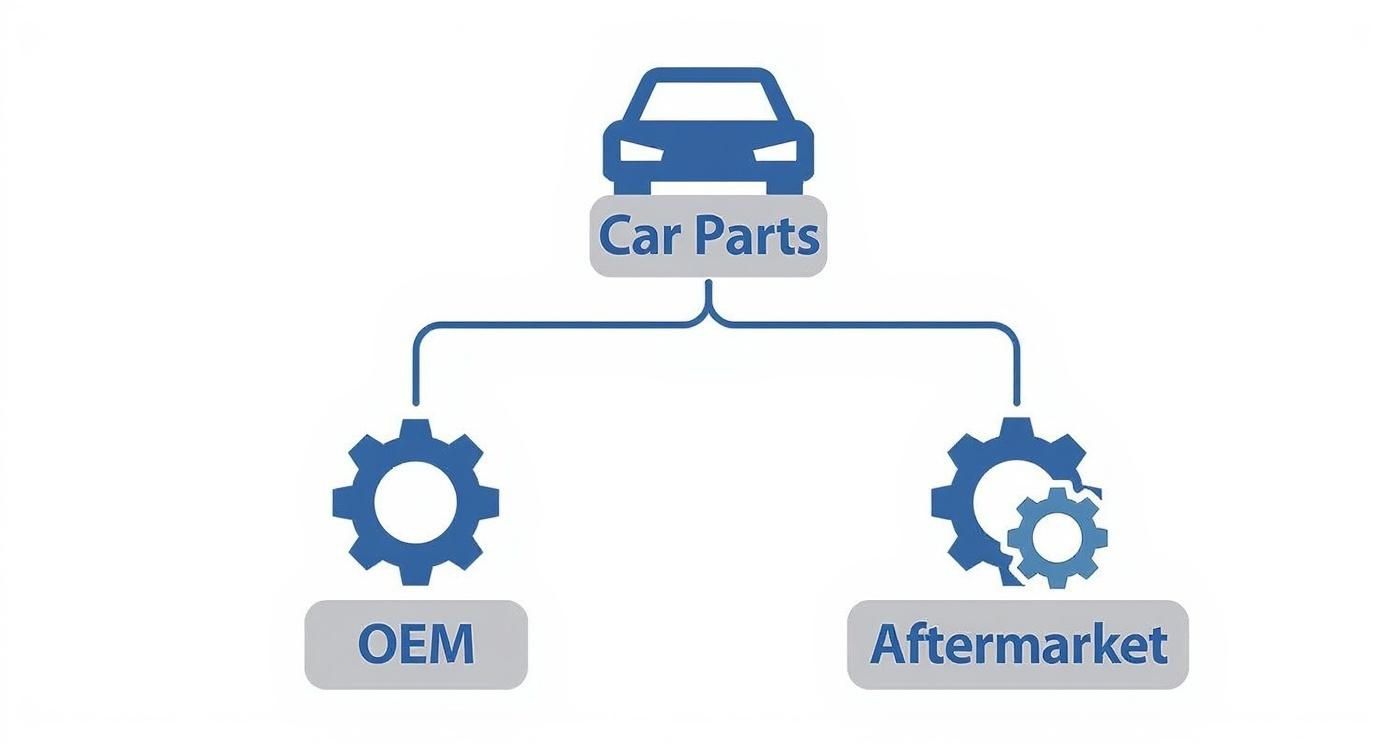
As you can see, once you step away from the dealership, the aftermarket opens up into its own ecosystem of specialized brands.
The Four Main Tiers of Aftermarket Brands
Let's break down these "neighborhoods" into four main categories. Figuring out which tier a brand falls into is the first step toward making a smart choice for your car.
-
Premium Performance Brands: These are the trailblazers. We're talking about innovators and engineers who are constantly pushing the limits of what's possible. Brands like Brembo (brakes) or Bilstein (suspension) create parts that often blow past OEM specs. They're built for racing, heavy-duty applications, or enthusiasts who demand the absolute best. You can expect top-shelf materials, advanced engineering, and a price tag to match.
-
OEM Supplier Brands: This is a special category and a favorite among seasoned mechanics. Companies like Bosch, Denso, or Aisin are the ones who actually make the original parts for the car manufacturers in the first place. Then, they sell those exact same parts to the public under their own name—just in a different box and usually for less money. This is as close to genuine OEM quality as you can get without the dealership markup.
For a lot of pros and savvy DIYers, OEM suppliers are the sweet spot. You get the proven reliability and perfect fit of an original part but at a much friendlier aftermarket price.
Aftermarket Brand Tiers Compared
To make it even clearer, here’s a quick breakdown of how these tiers stack up against each other.
| Brand Tier | Typical Quality | Price Point | Best For |
|---|---|---|---|
| Premium Performance | Exceeds OEM standards | High | Racing, enthusiasts, heavy-duty use |
| OEM Supplier | Identical to OEM | Moderate | Daily drivers, reliable repairs, perfect fit |
| Mid-Range | Meets or exceeds OEM | Affordable | Common repairs, budget-conscious daily drivers |
| Economy | Meets basic standards | Low | Older cars, budget-critical repairs |
Each tier has its place, and knowing the difference helps you avoid overspending or, worse, under-buying for a critical repair.
Finding the Right Balance with Mid-Range and Economy
While those top-tier parts are fantastic, they're often overkill for a routine fix. This is where the bulk of the aftermarket really shines, offering practical, reliable solutions for everyday drivers.
-
Mid-Range Brands: Think of these as the dependable workhorses of the aftermarket. Their whole game is producing quality replacement parts that meet or slightly beat OEM standards, but at a price that won't make you wince. These brands build their reputation on solid value and reliability, making them the go-to for most common repairs on your daily driver.
-
Economy Brands: When you've got an older vehicle or just need to get back on the road without breaking the bank, economy brands are there to help. The focus here is on function over flair. These parts meet all the basic safety and operational requirements needed to do the job. They might not have the longevity or polished finish of their pricier cousins, but they play a vital role in making car ownership affordable for everyone.
How to Spot High-Quality Aftermarket Parts
Navigating the sea of aftermarket car part brands can feel like a guessing game, but there are a few tell-tale signs that separate the quality parts from the ones you'll regret buying. Think of it like being a detective for your own car—you're looking for clues that point to durability, reliability, and a brand that actually stands behind its products. Price is only one piece of the puzzle, and frankly, it's often the least important one.
If you know what to look for, you can buy with confidence. A little bit of homework goes a long way toward a successful repair and gives you peace of mind for the long haul.
Look for Industry Certifications
One of the best signs of a quality aftermarket part is an official certification. These aren't just fancy acronyms on a box; they are proof that the part has been put through the wringer by an independent organization to ensure it meets strict standards for fit and performance. It's your best defense against shoddy manufacturing.
Two of the most common certifications you'll see are:
- ISO 9001: This one is a big deal. It doesn’t certify the part itself, but rather the company that makes it. An ISO 9001 certification means the manufacturer has a documented, high-quality control system in place, which drastically cuts the odds of a lemon ever making it to your doorstep.
- CAPA (Certified Automotive Parts Association): This is a critical one for exterior body parts like bumpers, fenders, and headlights. When you see a CAPA Certified seal, it means the part has been tested head-to-head against its OEM equivalent and is confirmed to match it in quality, fit, and safety.
When a brand goes through the trouble and expense of getting certified, it's a clear signal that they’re serious about their products.
Examine the Warranty and Return Policy
A company's warranty speaks volumes about how much they believe in their own stuff. A brand that only offers a flimsy 90-day warranty is practically telling you they don't expect their parts to last much longer than that. On the other hand, a solid warranty shows the manufacturer is ready to stand behind their engineering.
A lifetime warranty is the ultimate vote of confidence. It tells you the brand built that part to last and is willing to put their money where their mouth is, giving you real protection for your investment.
Beyond the warranty period, look at the actual return policy. A reputable seller will have a no-nonsense, easy-to-understand return process if the part isn't right or doesn't fit.
Leverage Real-World Feedback
Finally, don't underestimate the power of the automotive community. The best aftermarket auto parts have earned their reputations one happy customer at a time.
- Ask Your Mechanic: Seriously, your local mechanic is a goldmine of information. They see which parts come back on a tow truck and which ones go the distance. They know which brands they trust and which ones they avoid.
- Check Online Forums and Reviews: Hop onto vehicle-specific forums or check customer reviews on parts websites. You'll get raw, unfiltered feedback from other DIYers about how a part really fits, how easy it was to install, and whether it’s still working a year later. Look for consistent praise or recurring complaints.
Top Aftermarket Brands for Everyday Repairs
Alright, now that you know what to look for, let's talk about some of the brands you can actually trust for common repairs. This isn't a complete list, but it's a solid starting point packed with names that both professional mechanics and weekend warriors rely on for their mix of quality, price, and performance.
These are your workhorse brands for the parts you'll change most often—things like batteries, filters, brake pads, and sensors. These everyday components are the bread and butter of the aftermarket, driven by the constant need for maintenance and repairs. It's a huge market, with online sales in the U.S. alone expected to reach $47 billion by 2025. You can discover more insights about the U.S. automotive aftermarket to see just how big this industry is.
Brakes and Filtration
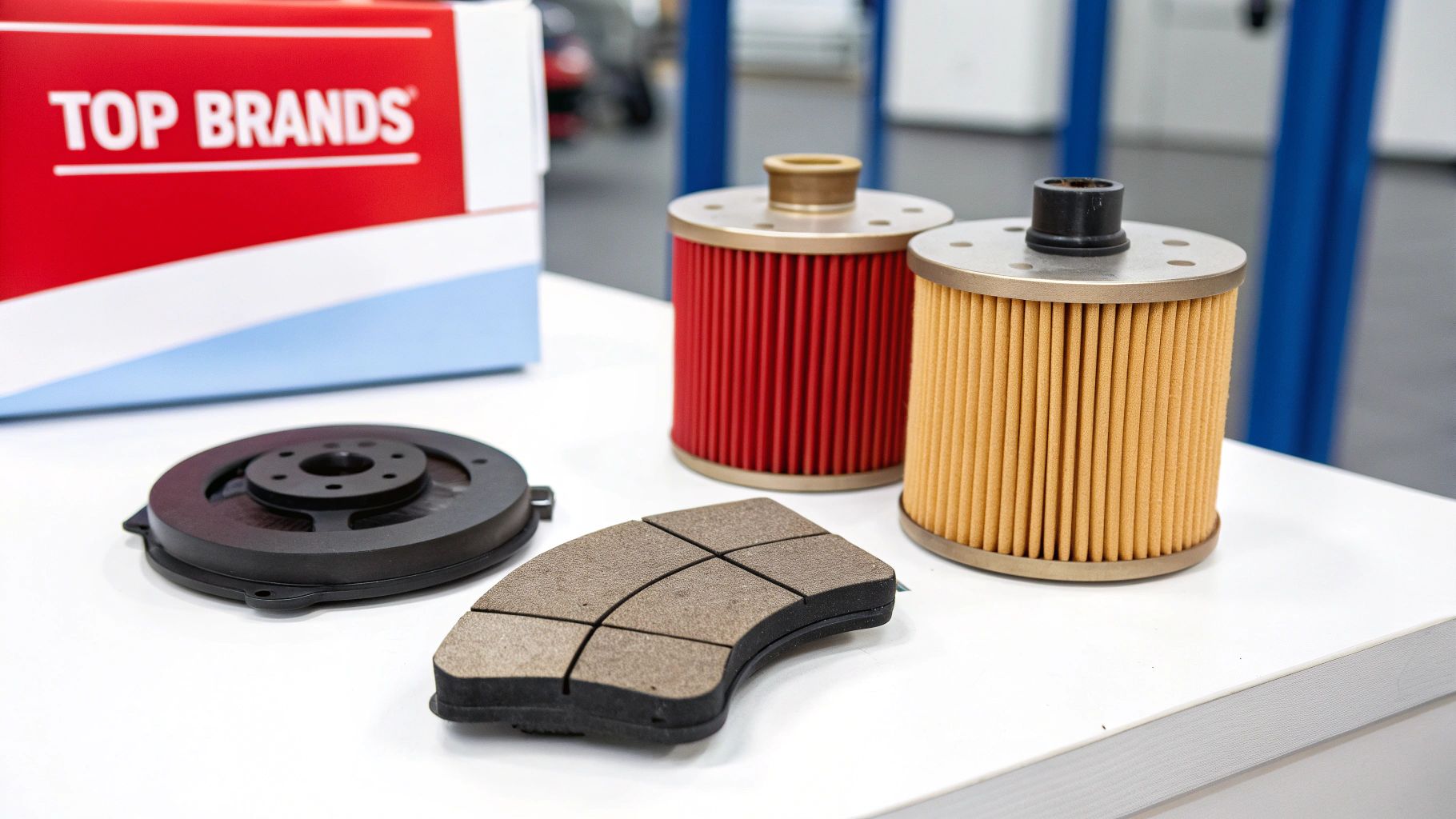
When it comes to safety and the health of your engine, brakes and filters are two areas where you absolutely can't compromise. These parts wear out by design, so picking a reliable brand is crucial.
-
Akebono: A true giant in the brake world, Akebono is an OEM supplier to countless automakers. Their Pro-ACT and Performance lines are legendary among technicians for being incredibly quiet, producing very little dust, and delivering the kind of smooth, confident stopping power you'd expect from the factory.
-
Mann-Filter: Keeping contaminants out of your engine's oil, air, and fuel is Mann-Filter's specialty. As another major OEM supplier, their parts are known for impeccable engineering and top-shelf materials that guarantee your engine gets the protection it needs to run efficiently.
Suspension and Steering
The comfort of your ride and the precision of your handling all come down to your suspension. When these parts wear out, you want replacements that will bring back that "like-new" feeling of stability and control.
Choosing a brand that specializes in a specific system, like KYB for suspension, often means you're getting a product backed by decades of focused research and development. It’s a smart way to ensure a high-quality, reliable repair.
KYB is one of the biggest names in shocks and struts, supplying them to car manufacturers all over the globe. Their Excel-G line is specifically designed to restore a vehicle's original handling and control, which makes them a go-to choice for daily drivers.
For other critical steering and suspension parts, Moog has earned its rock-solid reputation. They're famous for their "Problem Solver" series, which often includes clever design improvements over the factory parts to make them last longer and be easier for technicians to install.
Electronics and Engine Management
Today's cars are rolling computers, and when a sensor or electronic module fails, it can throw everything off. A quality replacement is key to getting your performance and fuel economy back on track.
-
Denso: As a massive OEM supplier, Denso’s catalog is staggering. They make everything from spark plugs and oxygen sensors to fuel pumps and A/C compressors. In many cases, buying a Denso part is like getting the original component that came on your car, just without the dealership's box and price tag.
-
NGK: When you think of ignition parts, NGK should be the first name that comes to mind. They are the undisputed leader for spark plugs and O2 sensors, praised by pros everywhere for their unmatched reliability, long life, and ability to bring an engine's performance right back to factory spec.
Making the Final Call for Your Car
So, how do you actually choose the right aftermarket brand? It’s not about finding one single "best" brand for everything. It's about finding the right fit for your car, your budget, and how you drive.
The perfect, high-end performance part for a souped-up track car is complete overkill for a ten-year-old sedan that just gets you to work and back.
This is where you bring it all together. The world of aftermarket parts is huge—it was valued at around USD 264.65 billion in 2024 and it's only getting bigger as more cars hit the road and need repairs. If you're curious about the numbers, you can read the full research about the aftermarket's growth to see just how massive this industry is. Your job is to cut through the noise and find what works for you.
A Simple Framework for Your Decision
Making a confident choice doesn't have to be complicated. Just run through these questions. Answering them will help you slash that list of hundreds of brands down to a handful of solid contenders.
-
What's Your Car's Job? Is it your daily commuter, a weekend project car you tinker with, or a heavy-duty work truck? A dependable mid-range or OEM-supplier brand is usually the sweet spot for a daily driver, while you might spring for a premium performance brand for that project car.
-
What's Your Budget? Let's be real about what you can spend. Economy brands can be a lifesaver when a critical part fails and money is tight. For most people, though, mid-range brands hit that perfect balance between price and quality.
-
How Critical is This Part? Be smart about where you spend your money. When it comes to safety-critical components like brakes, steering, and suspension, it's always worth investing in a trusted brand with a good warranty. For a replacement side mirror or a new bumper cover, you can afford to be more flexible.
Think of it as a balancing act between cost, how long the part will last, and the performance you expect. The "right" choice is the one that solves your problem today without causing bigger headaches or safety issues down the road.
To give you a clearer picture, here’s a quick rundown of how aftermarket parts stack up against their OEM counterparts.
Aftermarket vs OEM Parts A Quick Comparison
This table summarizes the main advantages and potential disadvantages of choosing aftermarket parts over original equipment manufacturer (OEM) parts, helping you weigh the pros and cons at a glance.
| Aspect | Aftermarket Parts | OEM Parts |
|---|---|---|
| Cost | Generally more affordable, with a wide price range. | Typically more expensive. |
| Availability | Widely available from many retailers, both online and in-store. | Usually only available from the dealership. |
| Variety | Huge selection from numerous brands, including performance and specialty options. | Limited to one option—the original part. |
| Quality | Varies from low-end to premium; research is key. | Consistent quality, backed by the vehicle manufacturer. |
| Warranty | Varies by brand; can sometimes exceed OEM warranties. | Standard warranty provided by the automaker. |
Ultimately, choosing between aftermarket brands comes down to what you prioritize. Do you need the cheapest fix right now, or are you looking for a long-term, reliable repair?
If you want to dig even deeper, our guide on OEM vs. aftermarket parts breaks it all down. By tapping into online communities for real-world reviews, listening to your mechanic's advice, and sticking with certified brands that stand behind their products, you'll make a purchase that keeps your car on the road and your wallet happy.
Common Questions About Aftermarket Car Brands
Alright, you've got the basics down on tiers and quality, but a few nagging questions might still be bouncing around in your head. Let's clear the air on some of the most common concerns car owners have before diving into the aftermarket world.
Getting these answers will help you separate fact from fiction and make you a much more confident shopper.
Will Using Aftermarket Parts Void My Car Warranty?
This is probably the number one fear for anyone with a car still under warranty. The good news? The answer is almost always no.
In the United States, you have the Magnuson-Moss Warranty Act on your side. This federal law makes it illegal for a car manufacturer to void your entire warranty just because you installed an aftermarket part.
They would have to prove—and the burden of proof is on them—that the specific part you installed directly caused the failure you're trying to get fixed under warranty. That said, it's always smart to read your warranty's fine print. If you have a brand-new car and need a critical repair, using an OEM part can sometimes save you a potential headache or argument with the dealership.
Are Aftermarket Parts Always Cheaper Than OEM?
Most of the time, absolutely. Affordability is what drives a huge part of the aftermarket industry. But it's not a hard-and-fast rule.
Remember, price often follows quality and engineering.
High-performance aftermarket parts are a perfect example. A set of track-ready brakes or a custom-tuned suspension system from a premium brand will often cost more than the stock OEM parts they replace. Why? Because they're engineered with better materials to deliver performance that goes way beyond factory specs.
Where Should I Buy Aftermarket Parts From?
You've got more options than ever, which is great. The best place for you really depends on what you're comfortable with. The most important thing is to stick with a reputable seller—someone who offers clear warranty details, solid product info, and actual customer support.
Here are a few solid places to start your search:
- Dedicated Auto Parts Retailers: Think of stores like NAPA or AutoZone. They offer a huge selection and you can actually see and touch the parts before you buy.
- Online Marketplaces: Giants like RockAuto and Amazon have an incredible catalog, competitive prices, and a treasure trove of customer reviews to guide you.
- Your Local Mechanic: Don't overlook your trusted local shop. These folks are on the front lines every day. They know which aftermarket car part brands hold up and which ones are junk, and they can source reliable parts for you.
For durable, high-quality aftermarket components that are engineered to last, T1A Auto provides a curated selection of parts backed by a lifetime warranty. Find guaranteed-fit replacements for your vehicle at T1A Auto.
