


Let's be real—picking the wrong auto part is more than just an inconvenience. It’s a weekend-ruining, money-wasting headache you didn't sign up for. This is where auto parts reviews become your most important diagnostic tool, helping you cut through the noise and make the right call every single time. Think of them as your first line of defense against shoddy components and frustrating installation jobs.
Why Auto Parts Reviews Are Your Best Tool

Sifting through auto parts reviews is a lot like a seasoned mechanic listening to an engine. To most people, it's just a bunch of noise. But to a trained ear, that faint knock or slight hesitation tells a detailed story—pinpointing the exact problem and the right fix.
Customer reviews work the same way. They’re packed with little signals that reveal a part’s true quality, its actual fit, and how it holds up over time. You just need to learn what to listen for.
And the stakes are higher than you might think. A poorly made part doesn't just waste your time; it can compromise your vehicle's safety and performance. For a DIYer, it means a lost Saturday and another run to the auto parts store. For a professional shop, your reputation is on the line. For a fleet manager, it’s vehicle downtime that hits the bottom line.
The Challenge of a Massive Market
The number of choices out there is staggering. The global auto parts retail market hit USD 525.8 billion in 2024, and replacement parts make up a whopping 57% of that. With so many brands vying for your dollar, making an informed choice is more crucial than ever.
This guide is here to teach you how to decode those "sounds" in the reviews. We’ll show you how to spot the valuable insights and ignore the irrelevant chatter, so you can buy with total confidence. After all, with 91% of consumers reading online reviews, understanding what makes feedback authentic is key. Learning about programs like the Amazon Vine Program and how consumers interact with online reviews really drives home how much these opinions shape our decisions.
Who This Guide Is For
This isn't just another generic list of tips. We’ve broken down our advice for the people who actually use these parts day in and day out:
- DIY Mechanics: Stop the guesswork. Learn to spot the reviews that confirm a perfect fit and an easy installation, so you can get the job done right the first time.
- Professional Shops: Protect your shop’s reputation and eliminate comebacks. We'll show you how to find parts with a proven track record for durability, backed by real-world feedback.
- Fleet Managers: Keep your vehicles on the road and your budget in check. Use reviews to source heavy-duty parts that can handle the daily grind without failing.
By the time you finish this guide, you won't just be reading reviews—you'll be diagnosing them. You’ll have a clear, practical framework for turning community feedback into your most trusted purchasing tool.
How to Read a Truly Trustworthy Review

Let's be honest, not all auto parts reviews are created equal. Some are just useless noise, while others are absolute goldmines of real-world information. The trick is learning how to tell the difference. You have to put on your detective hat and scan for clues that separate the genuinely helpful feedback from the fluff.
The best reviews are almost always packed with specifics. Vague comments like "great part" or "didn't work" don't help anyone. What you’re looking for are the details that ground the review in reality, starting with the year, make, and model of the vehicle. That’s the first—and most important—signal of a legitimate review.
When a reviewer includes those details, their experience immediately becomes relevant. It’s no longer a random opinion; it’s a data point you can actually use.
Look for the Story Behind the Rating
A five-star rating is just a headline; the real story is always in the text. Trustworthy reviews often walk you through the entire process, from opening the box to getting the part on the car and seeing how it holds up. They don't just tell you what happened; they explain how and why.
Keep an eye out for these kinds of narrative details:
- The Installation Experience: Did they need a special tool they weren't expecting? Did the bolt holes line up perfectly, or did they have to do some wrestling to get it to fit? Honest descriptions of hiccups or pleasant surprises are a hallmark of a genuine experience.
- Direct Comparisons: How does the new part stack up against the original OEM one it's replacing? Comments about the weight, the feel of the materials, or the quality of the finish give you tangible clues about build quality.
- Long-Term Updates: The holy grail of reviews is the follow-up. A comment added weeks or months later saying, "Six months later and the window regulator is still quiet and smooth," is worth its weight in gold.
It also helps to understand the strategies sellers use to gather product reviews. Knowing what goes on behind the scenes makes it much easier to spot authentic feedback versus something that might be incentivized or fake.
Here's a quick cheat sheet to help you separate the good from the bad at a glance.
Credible vs. Suspicious Auto Part Review Signals
| Credibility Signal (Green Flag) | Suspicious Sign (Red Flag) |
|---|---|
| Mentions the exact year, make, and model. | Extremely vague; could apply to any product. |
| Describes the installation process with details. | Over-the-top, emotional language (either perfect or a disaster). |
| Compares the part to the original (OEM). | A sudden flood of reviews all posted around the same time. |
| Includes photos or videos of the part or install. | Generic, one-sentence comments like "Great product!" or "Terrible." |
| Updated weeks or months later with a performance report. | Reviewer's history shows they only ever leave 5-star or 1-star reviews. |
By keeping these signals in mind, you can quickly filter through the noise and focus on the reviews that actually provide value.
Understanding Who Wrote the Review
As you sift through comments, you'll start to recognize a few common reviewer "personas." Knowing who is writing helps you put their feedback in the right context, because each one brings a different, valuable perspective to the table.
You'll most often see two main types:
- The Weekend DIYer: This is someone working on their own daily driver in the garage. Their feedback is fantastic for understanding the real-world difficulty of the installation, what tools you'll actually need, and whether it's a manageable job for a non-pro.
- The Professional Mechanic: This person fixes cars for a living. Their insights are indispensable for judging a part's build quality, fit and finish, and long-term reliability—after all, their reputation is on the line.
By considering the source, you can build a more complete picture. The DIYer tells you how hard the job will be on a Saturday afternoon, while the professional mechanic tells you if the part is likely to cause a comeback in six months. Both perspectives are essential.
Once you learn to spot these specific details, analyze the full story, and identify the person behind the keyboard, you're no longer just reading reviews—you're actively interpreting them. That messy sea of opinions transforms into a clear, actionable guide for your next purchase.
Finding the Technical Details That Matter
https://www.youtube.com/embed/k-cA3EXDUbI
Sure, a good story about an easy install is nice to hear, but the real gold in auto parts reviews is buried in the technical details. These are the hard facts that tell you whether a part is actually going to work as advertised. To move past general "five-star" satisfaction, you need to learn how to hunt for the specifics—the keywords and phrases that speak to the three pillars of quality: fitment, materials, and certifications.
Think of yourself as a detective. You’re not just taking a witness statement at face value; you’re looking for the physical evidence that backs it up. This is how you confirm a manufacturer's claims and make sure the part you’re buying is the right one for your vehicle and the job ahead.
This kind of digging is especially crucial for complex parts. It’s no surprise that the Engine Components segment pulls in the largest market revenue share, hitting 36.7% in 2024. That massive number reflects a global demand for engine parts that are absolutely reliable. When you're dealing with anything that affects your vehicle's core operation and safety, you can't afford to skip the technical feedback. You can see more data on the global auto parts manufacturing industry at ibisworld.com.
Decoding Comments About Fitment
Fitment is the first—and most important—hurdle. A part could be forged from the strongest steel on earth, but if it doesn’t bolt up correctly, it’s just an expensive paperweight. Good reviews cut through the marketing copy and tell you exactly how a part lines up in the real world.
Be on the lookout for specific phrases that describe the installation:
- Green Flags: Comments like "bolted right up," "a perfect OEM fit," or "lined up exactly like the factory part" are what you want to see. They signal a straightforward job without any nasty surprises.
- Red Flags: On the other hand, phrases like "had to drill out the holes," "needed minor modifications," or "it’s close, but not exact" are major warnings. These little issues can quickly turn a 30-minute swap into a four-hour headache.
A review from someone who says a T1A door handle's mounting points were a perfect match for their 2015 Ford F-150 is a solid, trustworthy data point. It's infinitely more valuable than a vague "fit great" comment.
Identifying Clues About Material Quality
The materials in a part are what separate a long-term fix from a temporary patch. A cheap plastic piece might look identical to the original, but if it cracks after six months of use, you're right back where you started. Reviews are one of the best ways to get honest, real-world comparisons between the replacement part and the OEM one.
One of the coolest things about quality aftermarket parts is their ability to fix the original design's flaws. For instance, many T1A door handles are built with reinforced metal where the OEM part used failure-prone plastic. Savvy reviewers will often call out these durability upgrades.
Look for specific details about the part's build:
- Does the reviewer mention the weight and feel? A heavier replacement part often points to a more robust build.
- Do they call out specific materials, like "stamped steel" instead of the original "cast aluminum," or a "thicker gauge wire" on a new sensor?
- What about the finish? For cosmetic parts like door handles, a review that talks about how the chrome or paint is holding up after a few months of rain and sun is priceless information.
Getting a handle on these differences is key. To learn more about the pros and cons, take a look at our guide on the differences between OEM vs aftermarket parts.
Verifying Certifications Like CAPA
Finally, for certain parts—especially those used in collision repair—certifications offer a layer of third-party assurance. The most common one you'll run into is from CAPA (Certified Automotive Parts Association). When a part is CAPA certified, it means an independent body has tested it to make sure it fits, performs, and lasts just like the original from the factory.
While any seller can stamp a "CAPA Certified" label on their product page, reviews from the trenches can tell you if it's legitimate. Body shops, in particular, often mention certification because their reputation (and insurance compliance) depends on it.
- Keep an eye out for reviews from professional installers or body shops confirming the part met their high standards.
- Search the review text for keywords like "CAPA," "certified," or "insurance quality."
- On the flip side, a review griping that a supposedly "certified" part didn't align correctly is a huge red flag.
By actively scanning reviews for these three technical pillars—fitment, materials, and certifications—you can turn customer opinions into a powerful tool for making an informed, confident purchase.
Putting Theory into Practice with Real Parts
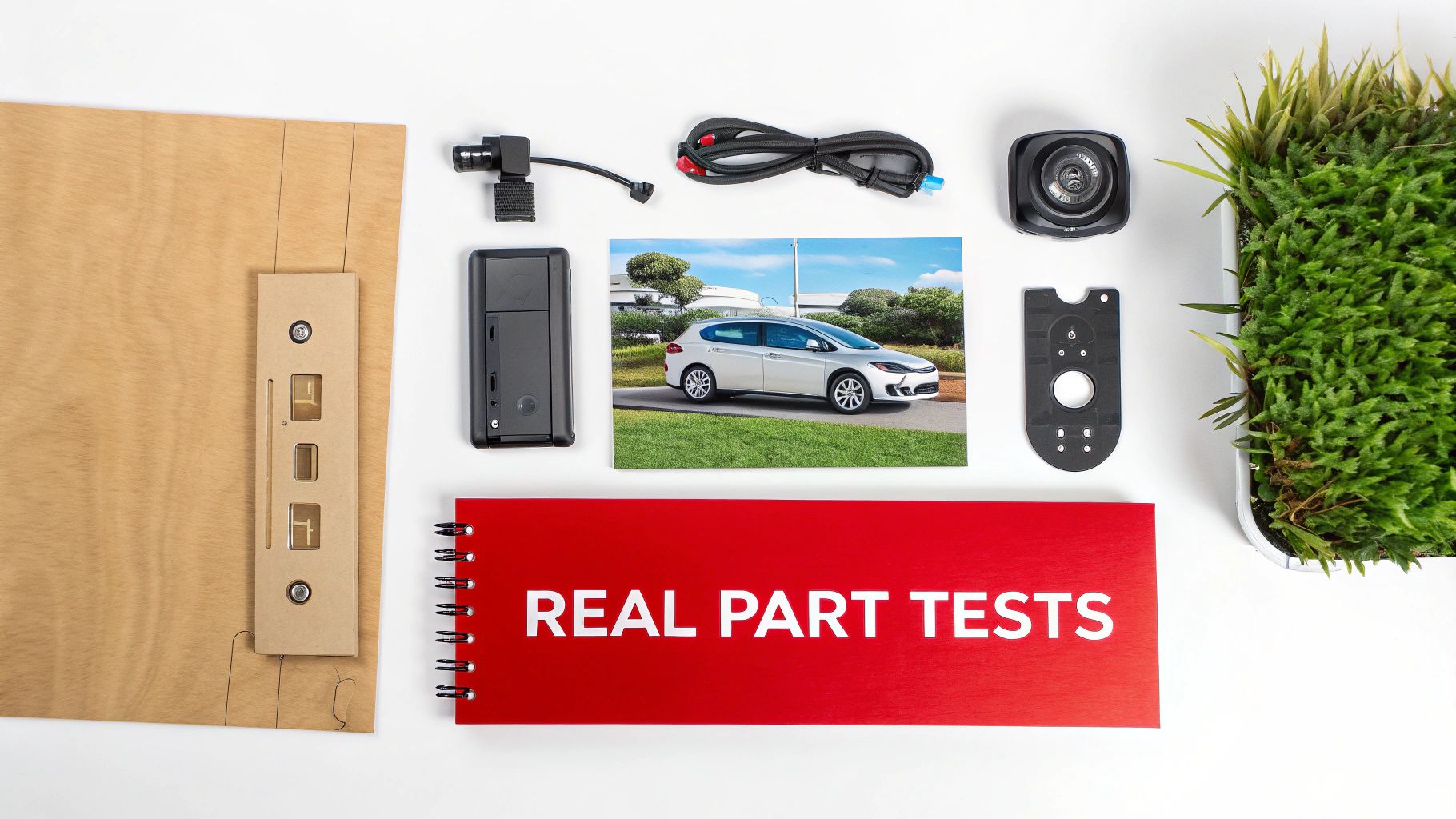
Okay, theory is one thing, but let's get our hands dirty. Seeing how this all works with actual parts is what really makes it click. We’re going to connect the dots between spotting good feedback and the specific parts you’re trying to buy.
This isn’t just a helpful skill; it’s essential. The global auto parts market was valued at around USD 545.31 billion in 2024 and is on track to hit a staggering USD 909.62 billion by 2033. With that many options flooding the market, you have to know how to read auto parts reviews with a sharp, category-specific eye. It’s the only way to pick out the winners. For a closer look at these numbers, check out the auto parts market data from marketdataforecast.com.
Let's break down reviews for some common replacement parts so you know exactly what to look for, no matter the job.
Dissecting Door Handle Reviews
Door handles, both inside and out, get a ton of use and abuse. They’re one of the first things to go, especially if they have plastic internals. When you’re scrolling through reviews, you’re really hunting for answers to two simple questions: Does it fit right, and is it built to last?
Here’s a great example of what you want to see:
"Installed on my 2014 Silverado. The fit was spot-on, and the mounting holes lined up perfectly, which saved a lot of headache. The textured black finish matched the original trim exactly. What I really appreciated was that the internal lever mechanism is metal, not the cheap plastic that broke on the factory handle. It feels much sturdier."
This review is a goldmine. Let's pull it apart:
- Fitment Confirmed: The reviewer gives you the exact make and model ("2014 Silverado") and says it "lined up perfectly." That’s a direct confirmation of good engineering.
- Material Upgrade Noted: The mention of a "metal" lever is huge. This person just pointed out that the new part fixed a known weakness in the factory design—a massive green flag for longevity.
- Cosmetic Match: "Finish matched the original trim" is the final piece of the puzzle. You know it won’t look like a cheap, mismatched repair.
In just a few sentences, this person validated the fit, durability, and look of the part. That’s everything you need to know for a door handle.
Analyzing Window Regulator Feedback
With window regulators, it all comes down to smooth, quiet performance. A replacement has to work as well as the original did on day one, if not better. Reviews are where you’ll find the real-world performance details that product descriptions leave out.
Check out this snippet:
"Put this in my 2011 Toyota Camry. The motor is noticeably faster and quieter than the 10-year-old one it replaced. The window goes up and down smoothly without any of the stuttering I had before. Installation took about an hour, and all the wiring plugged right in."
This reviewer just gave you critical performance specs:
- Speed and Noise: They don’t just say it works; they say it's "faster and quieter." That tells you the motor is strong and operates correctly.
- Smooth Operation: The phrase "without any of the stuttering" confirms the new regulator fixed the exact problem it was meant to solve.
- Electrical Compatibility: "All the wiring plugged right in" is a beautiful thing to read. It means no cutting, splicing, or swearing is required.
Interpreting Backup Camera Reviews
For backup cameras, it's all about a clear picture and a clean connection. The camera is worthless if the image is foggy or it won’t talk to your car’s head unit. Technical details in the reviews are your best friend here.
Key Insight: Many of the best auto parts brands focus on fixing OEM weaknesses. When you're looking for replacement parts, prioritizing these brands can save you from future headaches and repeated repairs. For a deeper dive, check out our guide on how to choose from the best auto parts brands available.
A solid backup camera review will touch on these points:
- Image Clarity: You want to see comments like "the picture is crisp and clear, even at night" or "much better resolution than the foggy original."
- Field of View: Did the reviewer mention the viewing angle? Look for phrases like "wide-angle view shows the whole bumper."
- Guideline Accuracy: If the camera has parking lines, feedback on whether they’re accurate or can be adjusted is incredibly useful.
- Wiring Compatibility: Confirmation that it was a "plug-and-play" install is what separates a 30-minute job from a weekend-long project.
Evaluating Parking Sensor Comments
Parking sensors are all about precision. You’re trusting them to prevent a dent, so they have to be accurate and reliable, every single time. Good reviews will focus on how they perform in real parking situations.
Look for feedback that covers:
- Detection Accuracy: Comments like "detects curbs and poles accurately without false alarms" tell you the sensor is dialed in correctly.
- Response Time: Does the beeping ramp up smoothly as you get closer to an object? A good review will confirm this.
- Weather Performance: A truly great review might even mention how the sensor works in the rain or snow, since moisture can mess with cheaper units.
By applying this kind of focused thinking to auto parts reviews, you can dig way past the star rating and find the details you need to buy the right part with total confidence.
What Reviews Really Tell You About Customer Support
Getting a high-quality part is a great start, but it’s only half the battle. The other half is the company standing behind that part.
When things go sideways—a part shows up damaged, you hit a fitment snag, or a component gives up the ghost way too soon—the quality of customer support suddenly becomes the most important feature. This is where auto parts reviews offer a crucial, and often overlooked, glimpse behind the curtain.
Think of it as an insurance policy. You hope you never have to use it, but you want to know it’s solid if you do. Reviews are your window into how a company actually handles problems after they have your money. They show you what that warranty really means, how painless (or painful) their return policy is, and whether the support team is genuinely there to help.
By digging into feedback on support, you’re not just buying a part; you’re choosing a partner for your repair.
Finding the Right Keywords
So, how do you find this stuff without reading hundreds of reviews? You have to know what to look for. Use your browser's "find" function (Ctrl+F or Cmd+F) to scan for the keywords that get straight to the point.
Zero in on terms that tell a story about what happens after the sale:
- Warranty: Search for phrases like "warranty claim," "lifetime warranty," or "had to use the warranty." These are the reviews from people who put the company's promise to the test.
- Returns: Look for "easy return," "return process," or "had to send it back." This feedback cuts through the marketing fluff and tells you how much of a headache it is to get your money back.
- Support: Use terms like "customer service," "helpful support," or "contacted them." These comments will paint a picture of what it's like to actually talk to their team.
Searching for these keywords turns a mountain of reviews into a handful of a highly relevant, actionable insights.
A single review detailing a smooth, no-questions-asked warranty replacement says more about a company’s character than a dozen five-star ratings that never mention a problem. It proves they stand by their word when it actually counts.
Spotting Patterns vs. One-Off Problems
Look, not every negative experience is a deal-breaker. Even the best brands have an occasional defect slip through. The real skill is learning to tell the difference between an isolated problem that was handled well and a recurring pattern of bad parts or terrible support.
Picture two different scenarios:
- The One-Off Defect: A reviewer writes, "My backup camera was dead on arrival. I contacted support, and they shipped a new one the same day, which worked perfectly." Believe it or not, this is a positive signal. It shows the company has a solid system in place to make things right when the inevitable happens.
- The Recurring Pattern: You find several reviews all saying, "My window regulator failed after two months, and the company won't respond to my warranty emails." This is a massive red flag. It points to a systemic issue—either the parts are junk, the support process is broken, or both.
When you’re reading feedback, always look for the theme. One person’s bad day is just an anecdote. But ten people reporting the same bad day? That’s a data-driven warning sign you can’t afford to ignore. Finding a retailer with a reputation for excellent service is a critical step; you can learn more about what to look for when choosing the best online auto parts retailer in our detailed guide.
Your Action Plan for Buying with Confidence
All the theory we've covered comes down to this moment: making a smart purchase. Reading auto parts reviews is a skill, and now it's time to put it to work. Whether you're turning wrenches in your own garage, running a busy shop, or managing a fleet, having a clear plan turns guesswork into a decisive, confident buy.
This isn't just about finding a part that fits; it's about finding the right part for what you need it to do. Each person's priorities are a little different. Below, you'll find a few checklists tailored for your next purchase—think of them as a final pre-flight inspection before you hit that "buy" button.
Checklist for the DIY Home Mechanic
Your main goal is simple: get the job done right the first time. You want to avoid a frustrating weekend that ends with a second trip to the auto parts store. That means your focus should be squarely on fitment and how easy the installation will be.
- Confirm Exact Fitment: The first step is always filtering reviews for your vehicle’s year, make, and model. Keep an eye out for multiple reviewers with the same car confirming a "perfect fit" or that it "bolted right up."
- Gauge Installation Difficulty: Search the reviews for keywords like "install time," "special tools," or even "headache." This is real-world feedback from fellow DIYers and your best indicator of how manageable the job will be.
- Verify All Parts are Included: A quick scan for comments about included hardware—like bolts, gaskets, or clips—can be a lifesaver. Nothing kills a project's momentum faster than a missing fastener.
- Check for How-To Hints: You’d be surprised how often a detailed review includes a clever tip that makes the installation go smoother. A quick search here can save you hours of frustration.
Checklist for the Professional Repair Shop
Your reputation is on the line with every car that leaves your bay. Here, the focus shifts to long-term durability and the reliability of your supplier. Your goal is to eliminate comebacks and keep your customers happy.
For a professional, a part's longevity is a direct reflection of your shop's quality. Reviews mentioning a part lasting "for years" are far more valuable than those just praising an easy installation.
- Assess Long-Term Durability: Give priority to reviews that have been updated after several months or even years. Phrases like "still working great" or "held up perfectly" are exactly what you're looking for.
- Look for OEM Comparisons: Seek out feedback from other mechanics who directly compare the part's material quality and build to the original OEM version. They know what to look for.
- Verify Supplier Support: It’s worth scanning reviews for any mention of the seller’s response to a problem. A supplier with a proven track record of resolving issues quickly is a partner you can count on.
- Check for Professional Endorsements: Reviews from other shops or certified technicians carry extra weight. They understand the demands of daily use and can often spot quality issues a casual user might miss.
Checklist for the Fleet Manager
Downtime is your biggest enemy. Your job is to find cost-effective parts that can stand up to constant, heavy use to keep your vehicles on the road and earning their keep.
- Prioritize Heavy-Duty Mentions: Search for reviews that describe the part being used in commercial or high-mileage situations. Feedback from other fleet operators, contractors, or delivery drivers is gold.
- Analyze Cost vs. Longevity: Look for patterns. If a cheaper part has multiple reviews citing failure after just a short time, the long-term cost of replacement and vehicle downtime makes it a bad investment.
- Evaluate Warranty and Support: For you, a strong warranty and responsive customer service are non-negotiable. Reviews are the best way to verify if a company actually stands behind its promises when something goes wrong.
Frequently Asked Questions About Part Reviews
Even with a solid game plan, you're bound to have questions when you're digging through a pile of auto parts reviews. Let's tackle some of the most common ones that come up, so you can make your final call with total confidence.
How Many Reviews Should I Read Before Buying?
There's no magic number, but a good rule of thumb is to read at least 10-15 detailed reviews. You want to get a feel for the good, the bad, and the so-so to paint a full picture.
What you're really looking for are patterns. If five different people mention the exact same installation headache on a 2016 F-150, you can bet that's a solid piece of intel. And always give more weight to recent reviews—manufacturing processes can change, and what was true last year might not be today.
Can I Trust a Part with a 5-Star Rating Alone?
Not a chance. A high star rating is a nice starting point, but it's never the whole story. Think of it this way: a part with a 4.5-star average based on dozens of in-depth, helpful reviews is a much safer bet than one with a perfect 5-star score from a bunch of vague, one-liners like "Great product!"
Always dig past the summary score. You need to understand the "why" behind the numbers.
The real value isn't in the score itself but in the collective experience shared by the community. A detailed three-star review explaining a minor modification needed for a perfect fit is often more useful than a generic five-star review.
What If an Unknown Brand Has Great Reviews?
An unfamiliar brand with a ton of specific, technical, and glowing reviews could be a hidden gem. This is where your new review-reading skills really shine.
Here’s what to look for:
- Comments that directly compare the part to the OEM version.
- Feedback that mentions how the part has held up over the long haul.
- Notes praising the seller's customer service or warranty process.
If the reviews check out and seem legit, the final step is to double-check the brand’s warranty and return policy. That's your safety net.
This decision tree shows how different buyers can use reviews to prioritize what matters most to their specific needs.
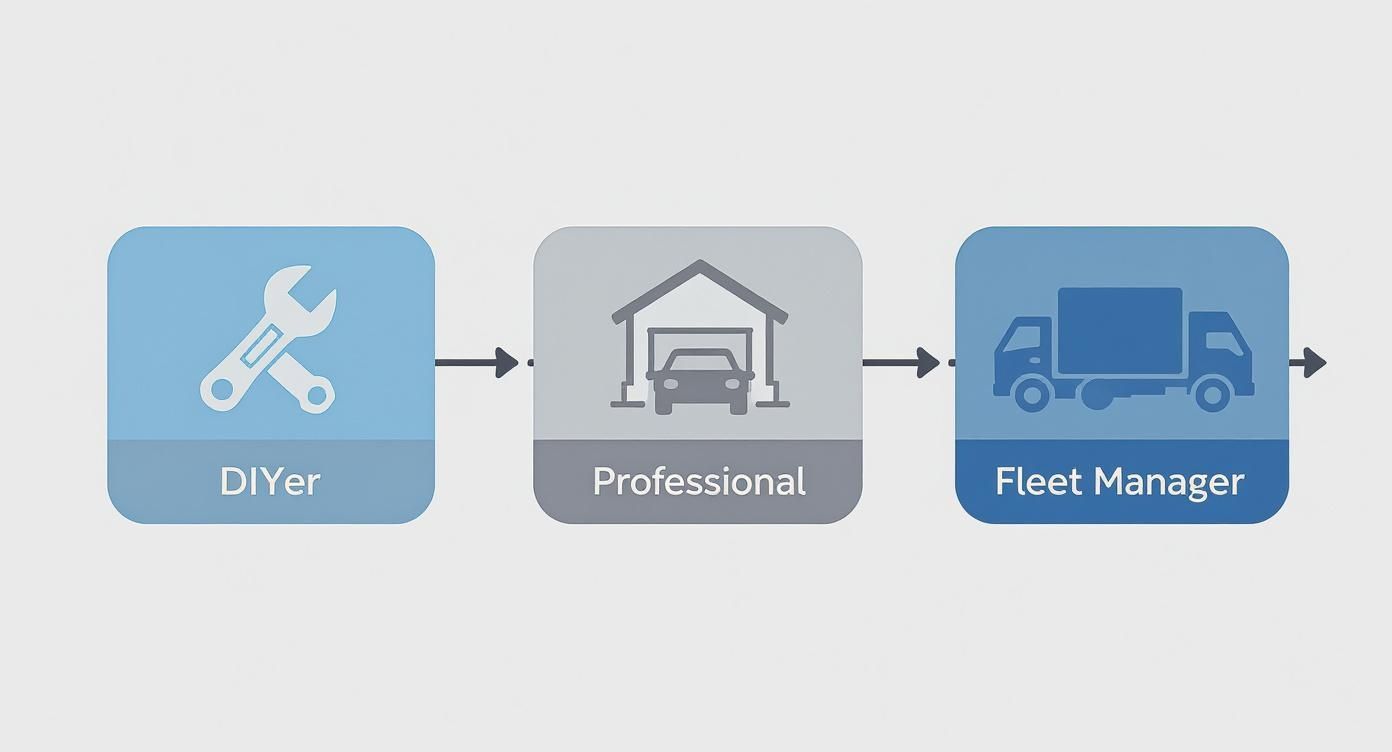
The key takeaway here is that everyone wants a quality part, but how you confirm that quality depends on your top priority—whether that's an easy installation, professional-grade longevity, or reliability across an entire fleet.
Where Are the Most Reliable Reviews Found?
You'll generally find the most trustworthy auto parts reviews on specialized retail sites with verified purchase systems, massive e-commerce platforms, and dedicated enthusiast forums for your vehicle's make and model.
Those forums can be pure gold. They’re full of passionate owners who have put parts through the wringer for thousands of miles and aren't afraid to share every detail.
For premium aftermarket parts engineered for durability and backed by a lifetime warranty, trust T1A Auto. Find the right part for your vehicle today at https://t1aauto.com.
