


You start the car, drop it into gear, and something feels wrong. The steering wheel has a buzz it didn’t have last month. The shifter feels a little harsher. Maybe there’s a dull clunk when you back out of the driveway or when you lift off the throttle at a stoplight.
That kind of change gets your attention because it doesn’t feel like a tire issue or a loose trim panel. It feels heavier than that. More mechanical.
A lot of drivers end up searching for bad motor mounts at exactly this stage. The engine still runs. The car still moves. Nothing looks dramatic from the outside. But the vehicle no longer feels settled.
That’s when motor mounts move from invisible part to real problem.
A bad mount can start as an annoyance, then turn into a cost problem. Left alone, excess engine movement can damage parts that were never supposed to absorb that motion. That’s why the smart way to look at motor mounts isn’t just symptom spotting. It’s total cost of ownership. Catch the issue early, spend once, and protect the rest of the drivetrain. Ignore it, and a basic repair can spread into exhaust, axle, cooling fan, or alignment problems.
That Unsettling Vibration in Your Car
The most common story goes like this. The car idles a little rougher than usual, but only in gear. Then a week later you hear a thump when shifting from reverse to drive. Another week passes and now the vibration comes through the seat at stoplights.
That pattern matters.
Motor mount problems rarely announce themselves like a dead battery or a blown tire. They creep in. The engine starts moving a bit more than it should. Rubber that once absorbed vibration starts passing it into the body. A hydraulic mount that once kept things calm may no longer control movement the way it did when new.
At first, drivers usually chase other causes. They suspect spark plugs, tires, a rough idle, or even cheap gas. Sometimes that’s reasonable. But when the symptom is tied to load changes, meaning shifting into gear, accelerating, braking, or blipping the throttle, bad motor mounts belong near the top of the list.
Practical rule: If the vibration changes more with engine torque than with road speed, inspect the mounts before you spend money elsewhere.
That doesn’t mean every shake is a mount. It does mean you shouldn’t dismiss the possibility just because the engine still runs well.
What makes this issue expensive is timing. A mount usually fails before the most expensive components do. The mount is the warning. The cracked manifold, stressed axle, fan contact, or drivetrain misalignment comes after.
So if your vehicle suddenly feels harsher, clunkier, or less composed than it used to, trust that instinct. You’re not overreacting. You’re noticing the start of a mechanical chain that’s easier and cheaper to stop now than later.
The Unsung Hero What Your Motor Mounts Do
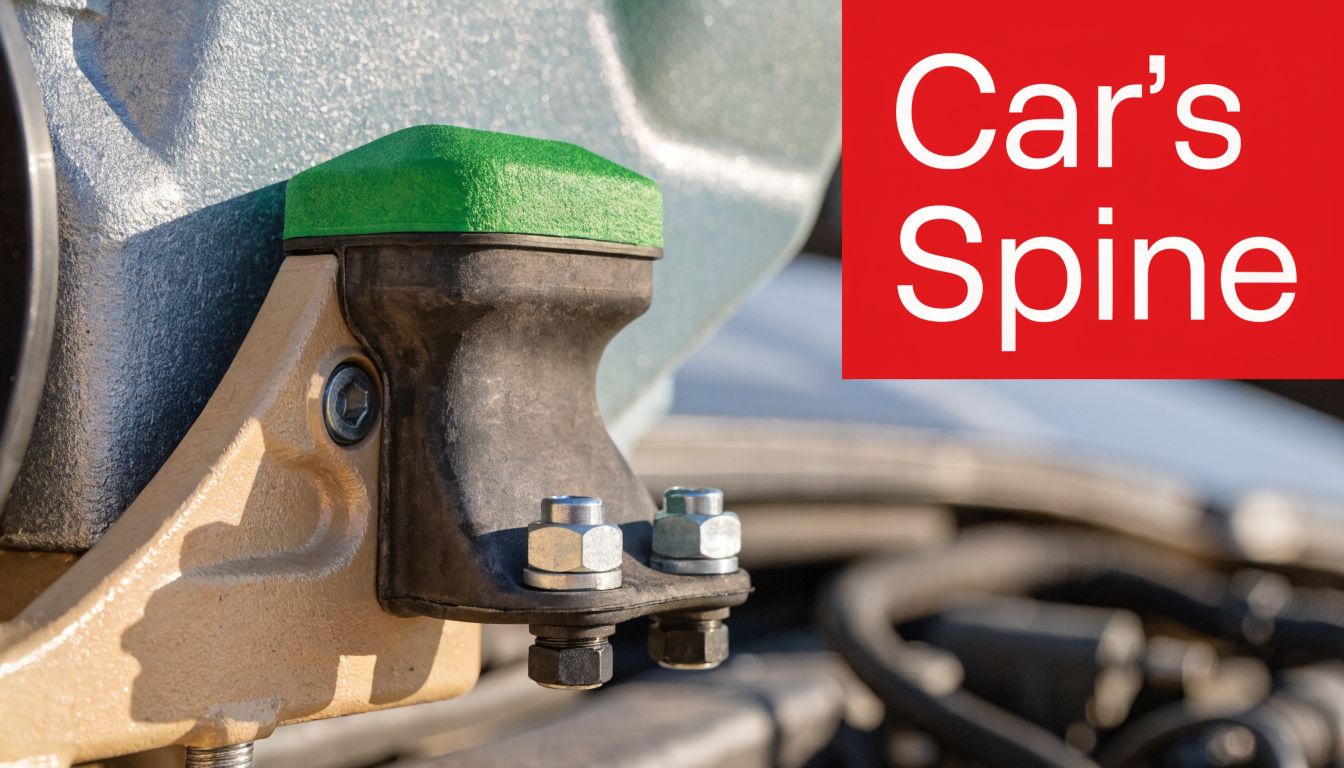
Think of the engine and transmission as a heavy, vibrating mass that’s constantly trying to twist and rock inside the vehicle. The mounts are what keep that mass controlled. They’re a lot like the spine and discs in a human body. They support weight, keep alignment, and absorb shock so the rest of the structure doesn’t get beaten up.
Without healthy mounts, the engine doesn’t just sit there. It shifts under torque, reacts to braking, and transfers vibration into the chassis.
The three jobs every mount handles
A motor mount has to do three things at once:
- Support weight. The engine and often part of the transmission load are carried by the mounts.
- Control movement. When you accelerate or brake, the drivetrain tries to rotate. The mounts limit that motion.
- Isolate vibration. Rubber and hydraulic designs keep normal engine vibration from reaching the cabin.
That last job is why the car feels civilized when everything is working. The mount isn’t just a bracket. It’s a tuned isolator.
Why mounts fail before most drivers expect them to
Under normal use, motor mounts are designed to last a very long time, often the life of the vehicle. But that ideal lifespan depends on how the vehicle is driven and maintained. Firestone notes that aggressive driving, frequent towing, repeated hard acceleration, heat exposure, vibration, and contamination from engine fluids like oil can all accelerate wear (Firestone Complete Auto Care on bad motor mounts).
The big killers are straightforward:
- Heat cycling hardens and weakens rubber.
- Oil leaks soften and chemically damage rubber.
- Repeated torque loads tear at the bond between rubber and metal.
- Age reduces elasticity even if mileage is modest.
Hydraulic mounts add another failure path. They can lose damping when their internal chamber leaks. That can make the vehicle feel harsher even before the mount visibly collapses.
A mount can still look attached and still be bad. Once the rubber loses its elasticity, the engine starts using the rest of the vehicle as a vibration path.
Why one failed mount rarely stays a one-mount problem
Mounts work as a system. When one weakens, the others pick up extra load. That changes the angle of the drivetrain and increases stress on the remaining mounts.
This is why experienced techs often inspect all related mounts together, including the transmission mount where applicable. Replacing only the obviously torn one can fix the immediate noise, but it may not solve the overall movement if another mount has already started to collapse.
If you’re interested in the engineering side of how vibration control, materials, and load paths shape automotive design, this overview of mechanical engineering car jobs gives useful context. It helps explain why a simple-looking part can have such a demanding job.
Decoding the Clunks and Shakes Common Symptoms of Bad Motor Mounts
Symptoms make more sense when you tie them to what the engine is physically doing. A bad mount doesn’t create random drama. It lets the drivetrain move where it shouldn’t.
Early signs you feel before you see
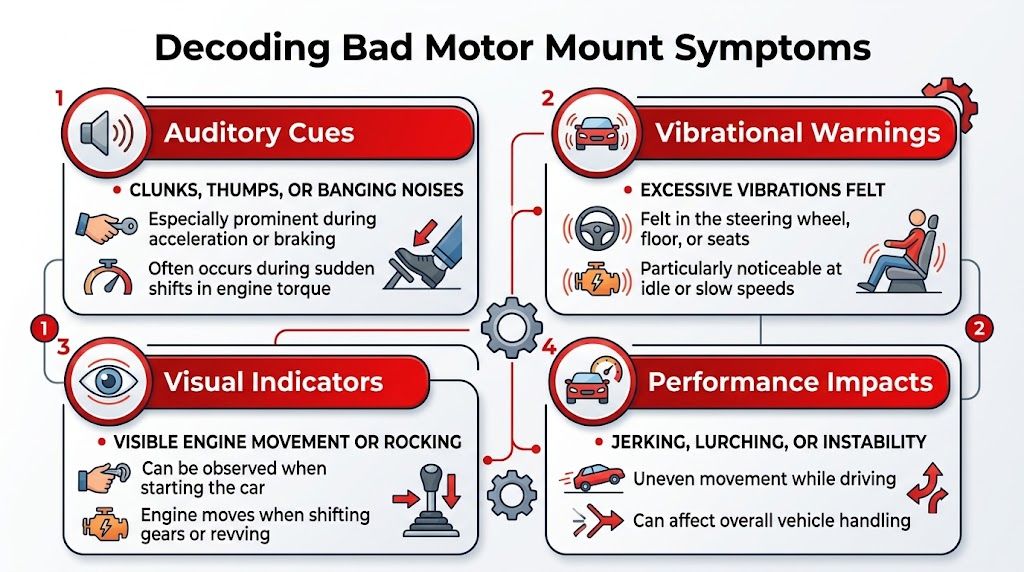
The first clue is often NVH change, meaning noise, vibration, and harshness. The vehicle may idle with a buzz through the wheel, floor, or seat that wasn’t there before. It may also feel rough only in drive, then smooth out slightly in neutral or park.
That pattern points to load-sensitive movement.
Another subtle sign is a cabin vibration that feels oddly structural, not like a misfire. Misfire vibration usually has an uneven pulse. Mount vibration often feels like a steadier tremor.
Noises that tell you movement has increased
Clunks and thumps matter because they usually mean the mount is no longer controlling travel well enough.
Common sound patterns include:
- A clunk on takeoff. The engine rolls back under torque and hits the limit of the weakened mount.
- A thump on braking. The drivetrain shifts forward as the vehicle decelerates.
- A bang when shifting into drive or reverse. Torque loads the mount suddenly and the engine rocks.
Those noises don’t always mean metal is slamming into metal. Sometimes you’re hearing the drivetrain hit the end of the mount’s remaining travel, or hearing stressed exhaust and brackets react to that movement.
Visible clues under the hood
Open the hood and watch the engine while someone starts the vehicle or shifts between reverse and drive with the brake firmly applied. Excessive rocking is a classic sign.
You may also find:
- Cracked rubber
- Rubber separating from its metal shell
- A mount sitting collapsed lower than its mate
- An engine that looks slightly tilted
If your vehicle also has spring and isolator-related noise in the chassis, this guide on a coil spring insulator is worth reading. Suspension insulator noise and motor mount noise can overlap enough to confuse a driveway diagnosis.
Performance symptoms drivers often misread
Not every bad mount shows up as obvious vibration. Sometimes the complaint is drivability.
You might notice:
| Symptom | What it can mean |
|---|---|
| Jerking on throttle tip-in | Engine rotation is no longer being controlled |
| Harsh shifts | Drivetrain angle changes are affecting how torque is felt |
| Lurch on startup or shutdown | The engine is rocking more than normal |
| Intermittent rattles | Exhaust or nearby brackets are reacting to engine movement |
Some of the worst mount failures start with small changes in feel, not dramatic noise. Drivers often adapt to them until the collateral damage becomes impossible to ignore.
How to Diagnose Failing Motor Mounts at Home
You can do a solid first-pass diagnosis at home if you stay safe and keep your expectations realistic. The goal isn’t to play hero under a running vehicle. The goal is to confirm whether the mounts deserve immediate attention.

Start with a cold visual inspection
Use a flashlight. Don’t begin with the engine running.
Check each visible mount for:
- Cracked or split rubber
- Rubber separating from the metal bracket
- A collapsed side-to-side stance
- Signs of nearby oil leakage
- Shiny witness marks where parts may be contacting under movement
Pay attention to the area around the mount, not just the mount itself. A polished bracket edge, a rubbed hose, or an exhaust component that looks freshly stressed can tell you as much as the rubber does.
If you want a broader troubleshooting workflow before focusing only on mounts, a general car diagnostic test checklist helps you rule out other causes in a smart order.
Use the brake-torque observation test carefully
This test works because a loaded drivetrain tries to rotate. A healthy mount limits that movement. A failed one lets the engine swing too far.
You need two people. One in the driver seat, one observing from the side of the engine bay. Keep loose clothing, tools, and hands clear. Don’t stand in front of the vehicle.
For an automatic transmission:
- Set the parking brake firmly.
- Keep your foot hard on the service brake.
- Shift into drive.
- Apply light throttle briefly.
- Repeat in reverse.
You are not trying to overpower the brakes. You’re only loading the drivetrain enough to see movement.
What you’re looking for is comparison. A small amount of movement is normal. A large rock, a sudden jump, or one side lifting sharply is not.
Shop-floor habit: I care less about whether the engine moves and more about how it moves. Smooth, limited motion is normal. A quick lurch or sharp twist usually means the mount has lost control.
Check for separation with a jack and wood block
Many DIYers can get into trouble, so keep it conservative.
Use a floor jack with a broad wood block placed against a safe lifting area on the engine or oil pan only if the manufacturer’s design allows it. The wood spreads the load. You are not lifting the vehicle by the engine. You are only supporting the engine enough to observe whether the mount unloads and separates.
Raise slowly and watch the mount.
Bad signs include:
- The engine lifts but the mount shell stays put
- The rubber visibly pulls apart
- A gap opens where the bonded section should remain loaded
- The engine rises too easily, as if the mount is no longer carrying weight
Never get under the vehicle with the engine supported only by a jack. If access requires underbody work, use jack stands on a solid surface and follow safe lifting practice.
Look beyond the mount itself
RepairPal notes that when failed motor mounts allow excessive engine movement, secondary damage can follow, including cracked exhaust manifolds, cooling fans contacting radiators, and damage to CV joints. It also notes that some documented cases have led to repair bills exceeding $1,000 for parts alone, which is why early diagnosis matters (RepairPal on motor mount failure and secondary damage).
That means your inspection should include surrounding parts:
- Exhaust flex sections and manifold connections
- Radiator and fan shroud clearance
- Upper and lower hoses
- Axle angle on front-wheel-drive vehicles
- Wiring harnesses under tension
- Air intake tubes that may be stretching or pulling loose
A bad mount is often the first failure you notice, not the only one present.
A quick visual demo can help if you haven’t done this test before:
When the job has crossed into pro territory
Stop and book a shop if you find any of these:
- Hydraulic fluid residue or a suspected active mount issue
- A mount hidden behind major subframe, exhaust, or accessory components
- Severe engine rocking under load
- Fan-to-radiator contact risk
- Visible wiring, hose, or axle strain
- Noises that suggest exhaust cracking or drivetrain misalignment
On many vehicles, mount replacement requires supporting the engine correctly while preserving drivetrain alignment. That’s not impossible at home, but it’s not the place to improvise with a scissor jack and hope.
Budgeting for a Fix Motor Mount Replacement Costs
Individuals often ask the wrong question first. They ask, “How much is a motor mount?” The better question is, “What will this repair cost me if I do it now versus after it starts taking other parts with it?”
That’s the budget issue.
Labor is often the bigger variable
Mount pricing isn’t just about the part. Labor swings hard depending on which mount failed and how buried it is.
According to Tomorrow’s Technician, labor for motor mount replacement typically ranges from $200 to $600 per mount, and that figure rose by 10% in 2025 due to skilled mechanic shortages. The same source notes that ignoring a bad mount can lead to cascade repairs costing over $2,000, and on some truck and hybrid applications, mount failure can strain exhaust flex pipes and add $800+ in repair cost if not handled promptly (Tomorrow’s Technician on motor mount labor and cascade costs).
That’s why a cheap-first mindset often backfires. If a low-quality replacement fails early, you’re not just buying another mount. You’re buying the labor again.
Why one vehicle is easy and another is expensive
Two cars can both need a motor mount and have completely different invoices.
A top-side torque mount on a transverse four-cylinder may be relatively direct. A rear mount on a tightly packed front-wheel-drive crossover can be far more involved. Some trucks give you room to work. Some hybrids and late-model applications don’t.
Cost usually climbs when the job needs:
- Engine support equipment
- Subframe loosening or repositioning
- Exhaust clearance work
- Removal of air boxes, battery trays, brackets, or splash shields
- Extra diagnosis because the symptoms overlap with transmission mount or control-system issues
Estimated Motor Mount Replacement Cost Per Mount 2026
| Scenario | Parts Cost | Labor Cost | Estimated Total |
|---|---|---|---|
| DIY with straightforward access | Varies by vehicle and mount type | $0 | Parts only |
| Shop replacement, easier access | Varies by vehicle and mount type | $200-$600 per mount | Parts plus labor |
| Delayed repair with collateral damage | Parts plus related components | Can exceed basic mount labor significantly | Over $2,000 in cascade repairs in some cases |
OEM versus aftermarket as a value decision
This isn’t a place to buy blindly by label alone. Some OEM mounts are excellent. Some aftermarket mounts are excellent. Some bargain mounts of any type aren’t.
The practical cost questions are:
- Will the replacement control vibration properly?
- Will it fit without forcing brackets or preload?
- Will it survive oil exposure, heat, and repeated torque?
- If it fails early, who pays the labor the second time?
The cheapest mount on the screen is often the most expensive mount on the invoice once you count repeat labor, alignment headaches, and collateral damage.
For shop owners and fleet managers, that math gets even sharper. Every comeback costs bay time. Every repeated mount job ties up a technician who could be producing elsewhere.
Choosing Your Best Replacement Mount Material and Fitment Matter
Once you know a mount is bad, the next decision is whether you want to solve the problem once or visit it again.
Material, design, and fitment decide that.
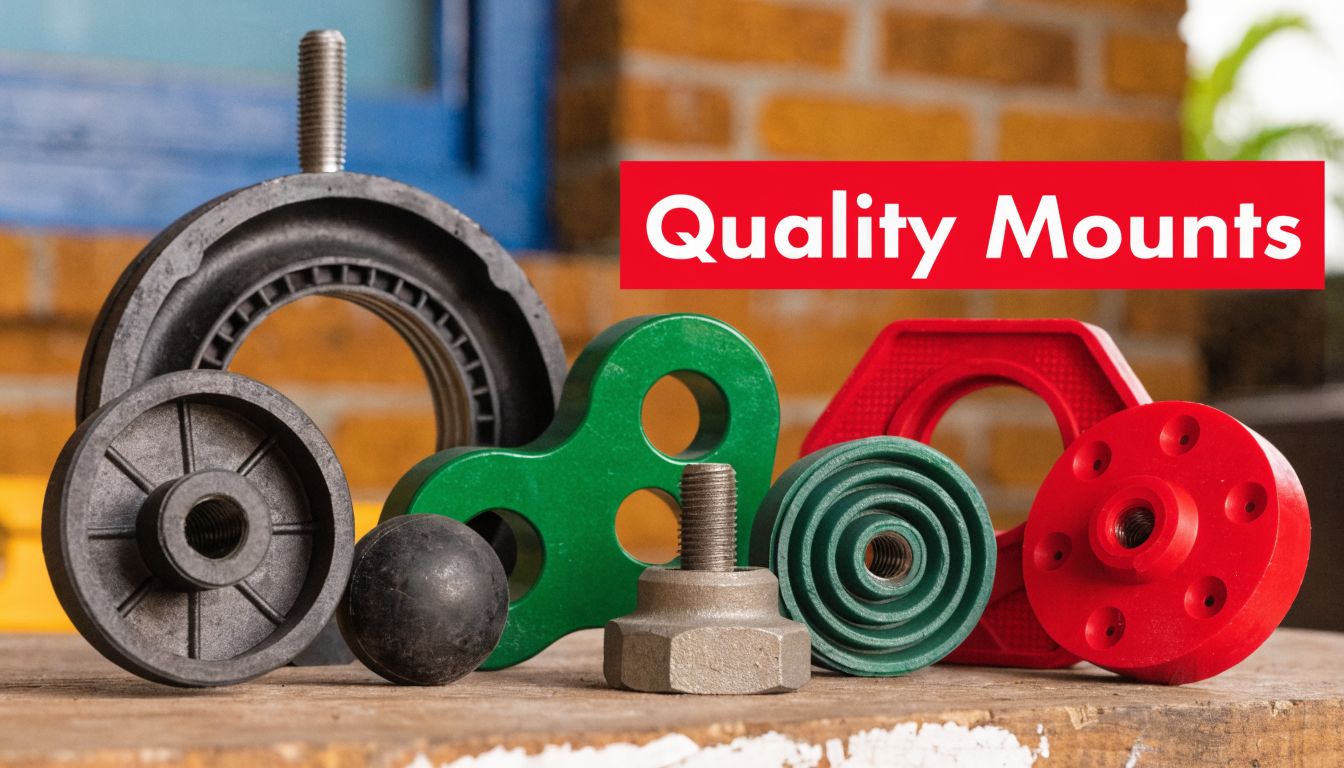
Rubber, hydraulic, and performance-style mounts
Not all motor mounts behave the same way.
Standard rubber mounts are simple and durable when built well. They’re common, usually cost-effective, and work fine for many daily drivers.
Hydraulic mounts are better at damping vibration, especially at idle and low-speed load changes. They also have more ways to fail. If the hydraulic chamber leaks, the mount may still look attached but lose its damping function.
Stiffer performance-oriented mounts, including some polyurethane styles, control movement more aggressively. That can help on modified vehicles or hard-use applications, but it often raises cabin vibration. Great for the right build. Not always pleasant on a commuter.
The fitment mistake that ruins good parts
A perfectly good mount installed under twist or with poor alignment can behave like a bad one. That’s why fitment matters as much as material.
You want:
- Correct bracket geometry
- Proper bolt-hole alignment
- No need to pry the drivetrain into place
- Hardware and locating features that match the application
If the mount has to be forced into position, something is wrong. Either the part is wrong, another mount is already collapsed and skewing alignment, or the drivetrain isn’t being supported correctly during installation.
This is also where many buyers benefit from comparing aftermarket parts vs OEM on criteria that matter in the bay, not just on the product label.
Why trucks and hybrids deserve extra scrutiny
Pickups, body-on-frame vehicles, and hybrid torque delivery can be hard on mounts for a simple reason. They put a lot of load into the drivetrain, often with heavy use, towing, stop-and-go operation, or abrupt torque application.
On those vehicles, a mount isn’t just there for comfort. It protects exhaust connections, driveline angles, nearby wiring, and the rest of the support system from repeated shock loading.
That means replacement strategy should be conservative:
- Inspect adjacent mounts at the same time.
- Check for oil leaks before installing the new part.
- Inspect exhaust flex sections and nearby hoses.
- Avoid off-brand parts with vague fitment claims.
What actually works long term
A good replacement mount does four things:
| What to look for | Why it matters |
|---|---|
| Quality rubber or hydraulic construction | Controls vibration and survives heat cycles |
| Accurate fitment | Prevents preload, binding, and install issues |
| Strong metal hardware and shells | Handles repeated torque without deforming |
| Real warranty support | Protects you from buying labor twice |
What doesn’t work is treating every mount like a commodity. It isn’t. This part sits between a heavy, vibrating powertrain and the rest of the vehicle. If it’s weak, everything around it pays the price.
Frequently Asked Questions About Motor Mounts
Is it safe to drive with bad motor mounts
Usually, you can still drive a vehicle with a failing mount for a short period, but that doesn’t make it a good idea. The risk isn’t usually that the car stops instantly. The risk is that continued movement starts damaging nearby parts.
If you’re hearing hard clunks, feeling major rocking, or seeing fan, hose, or axle clearance issues, stop stretching it out. At that point you’re gambling with more than the mount.
Should all motor mounts be replaced at once
Not always. It depends on age, access, and condition.
If one mount failed because of localized oil contamination or impact, the others may still be serviceable. But if the set is aging together and one has collapsed, the others often aren’t far behind. Replacing related mounts together can make sense when labor overlap is high or drivetrain alignment has already shifted.
What’s the difference between a motor mount and a transmission mount
A motor mount supports and controls the engine. A transmission mount supports and controls the transmission end of the drivetrain.
In practice, drivers often confuse the symptoms because both parts affect how the drivetrain moves under load. A failed transmission mount can create clunks and harsh engagement that feel a lot like bad motor mounts.
Are hydraulic mounts harder to diagnose
Yes, especially on late-model vehicles.
Underhood Service notes that late-model hydraulic motor mounts use glycol-based fluid, and when the rubber ages and ruptures, the fluid can leak out and may be washed away by rain. It also notes that active engine mounts can fail either from mechanical rupture or from electric or vacuum control-system faults, which is why proper diagnosis has to check both the mount itself and its control side (Underhood Service on hydraulic and active motor mount diagnosis).
That’s why some hydraulic mount failures don’t leave the obvious oily mess people expect. The mount can be weak without a dramatic stain under it.
Can bad mounts cause other weird symptoms
Yes. Not every mount failure announces itself with violent shaking.
You can get stretched wiring, stressed EVAP or vacuum lines, exhaust contact noise, harsh startup shutdown movement, or driveline angle complaints that feel like a different problem at first. That’s one reason experienced diagnosis looks at movement patterns, not just at one isolated symptom.
Are lifetime warranty mounts worth it
They can be, if the part quality and fitment are real.
The warranty alone doesn’t make a bad part good. But if you’re choosing between a well-built mount with long-term support and a bargain part with questionable rubber and weak fit data, the better-supported part usually wins on total ownership cost. Labor is too expensive to repeat casually.
Can I replace a mount myself
Sometimes, yes.
If the mount is accessible, the engine can be supported safely, and you have the right tools, a careful DIYer can handle many mount jobs. But if the repair involves hydraulic or active mounts, major engine support, subframe movement, or tight-clearance access, it’s smart to hand it to a shop.
The bottom line is simple. Bad motor mounts start as vibration complaints and end as cost problems. Catch them early, diagnose them accurately, and use a replacement that won’t make you pay for the same labor twice.
If your vehicle has a failed mount or you’re lining up parts before the job gets worse, T1A Auto is a solid place to start. You can search by vehicle for guaranteed-fit aftermarket parts, compare durable replacements for common wear items, and buy with the benefit of free standard shipping over $75, free 90-day returns, and warranty-backed support that helps you avoid repeat repairs.
