


If you've ever shopped for aftermarket parts, you've probably seen names like ACDelco, Bosch, and MagnaFlow pop up again and again. There's a good reason for that—they've built a solid reputation for performance and dependability. For both seasoned mechanics and weekend DIYers, these brands often hit the sweet spot between quality and cost.
Choosing Your Aftermarket Auto Parts Wisely
Diving into the world of aftermarket parts can feel overwhelming. Dozens of brands are all vying for your attention, each promising superior performance. So, how do you cut through the noise and find a part that’s actually built to last?
It really comes down to looking beyond the flashy packaging and focusing on what matters for your car’s longevity: the quality of the materials, the integrity of the manufacturing, and how the part holds up in the real world. This guide gives you a straightforward way to evaluate brands, so you're not just saving money now, but investing wisely in your vehicle's future.
Why Aftermarket Parts Are Gaining Popularity
The automotive aftermarket isn't just big; it's booming. Projections show the global market could climb to USD 756.25 billion by 2032. What's driving this? For one, more cars are on the road than ever before. Plus, more and more people are getting under the hood themselves, tackling repairs to save money and learn more about their vehicles. You can explore the full research on the automotive aftermarket industry from Coherent Market Insights.
This growth is great for consumers because it means more options. But it also means you have to be more discerning. The trick is learning to spot the difference between a high-quality component and a poorly made knockoff.
The real difference between a part that lasts a decade and one that fails in a year often comes down to the materials used and the precision of the manufacturing process. A brand's reputation is built on this foundation of quality.
To help you get started, here’s a quick-reference table summarizing the key areas to focus on when you're sizing up a brand.
Quick Guide to Evaluating Aftermarket Brands
| Evaluation Factor | Why It Matters for Your Car | What to Look For |
|---|---|---|
| Fitment Accuracy | A part that doesn't fit right won't perform correctly and can cause other issues. | Look for "direct-fit" or "OEM-spec" guarantees. Read reviews from owners of your specific vehicle model. |
| Material Quality | The materials dictate the part's durability and lifespan. | Check if the brand specifies the materials (e.g., 304 stainless steel, high-carbon steel). Compare to OEM specs. |
| Certifications | Third-party certifications (like IATF 16949 or CAPA) validate quality and safety standards. | Brands that display these certifications on their website or packaging take quality seriously. |
| Warranty & Support | A strong warranty is a sign of confidence in the product. | Look for a lifetime warranty or at least several years. Check for accessible, U.S.-based customer support. |
| Brand Reputation | Established brands have a track record to protect. | Read forum discussions, watch YouTube reviews, and see what professional mechanics are using. |
Think of this table as your checklist. If a brand ticks all these boxes, you can feel much more confident in your purchase.
OEM vs. Aftermarket: The Core Decision
One of the first forks in the road you'll encounter is whether to go with an Original Equipment Manufacturer (OEM) part or an aftermarket one. OEM parts are an exact replica of what your car came with, which guarantees a perfect fit.
However, the best aftermarket brands often see an opportunity to improve on the original design. They might use a stronger material or re-engineer a known weak spot, creating a part that actually outlasts the factory version.
There’s no single right answer; it depends on your goals. To help you weigh the pros and cons, our guide on the key differences between OEM and aftermarket parts breaks it all down, so you can decide what makes the most sense for your car and your wallet.
What’s It Actually Made Of? Spotting Quality Materials and Manufacturing
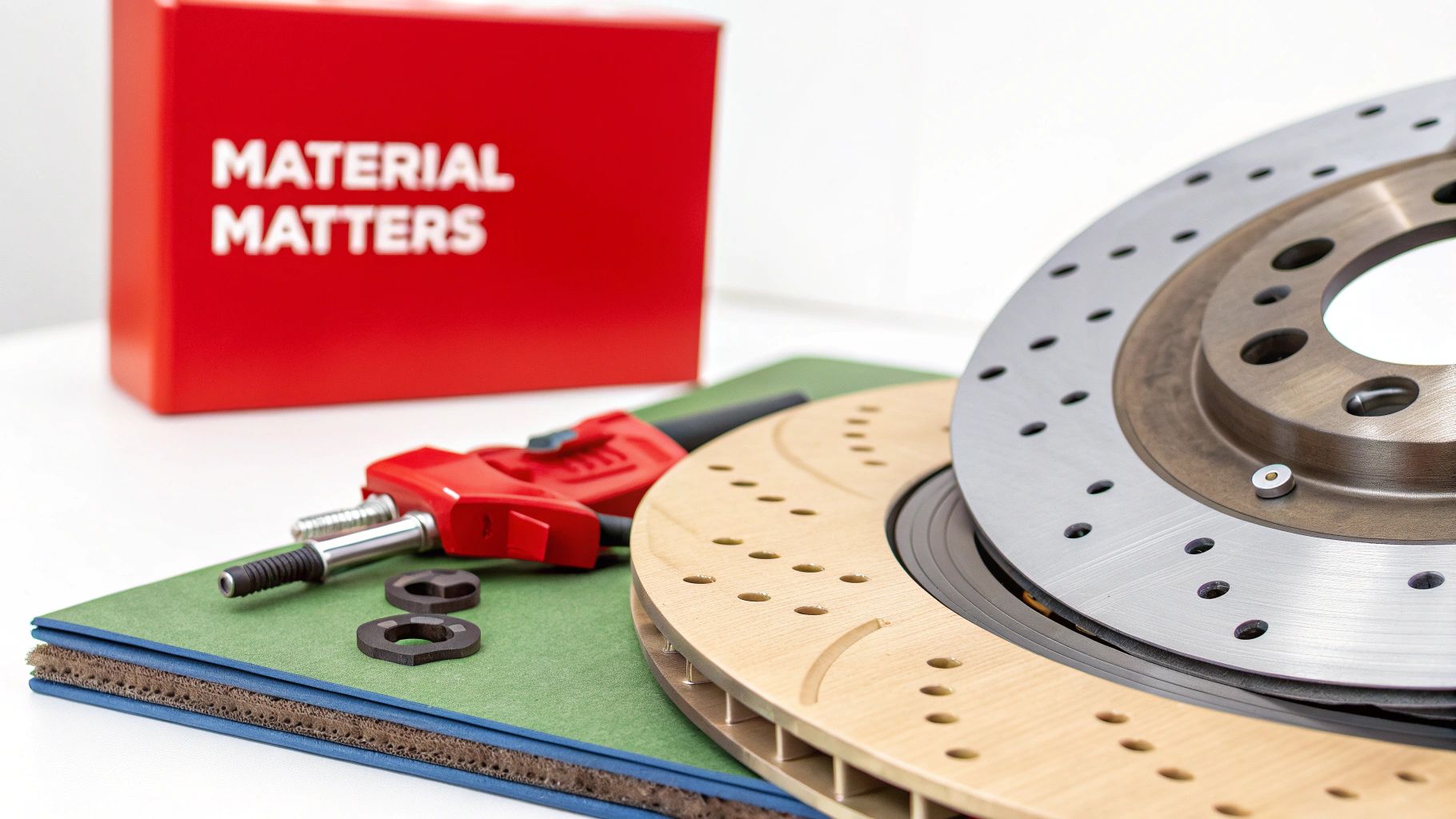
The real difference between a part that lasts a decade and one that gives up the ghost in a year often comes down to the raw ingredients. The best aftermarket auto parts brands aren't just slapping pieces together; they’re making very specific choices about the steel, aluminum, and polymers they use. A brand's reputation is literally built on this stuff.
Take a common part like a brake rotor. A cheap one made from low-grade iron might look okay at first, but it’s going to warp and wear out fast the first time you really lean on the brakes. A premium aftermarket rotor, on the other hand, is probably made from high-carbon steel. Why? It's all about better heat dissipation and durability. The material is the upgrade.
This commitment to quality shows up everywhere. I've seen countless tailgate handles fail because the original manufacturer used plastic parts that get brittle and snap. Top-tier aftermarket brands know this is a weak spot and will often re-engineer the handle with reinforced metal components, fixing the problem for good.
Decoding Materials for Different Parts
You don't need a degree in metallurgy to spot good quality, but knowing what to look for gives you a massive advantage. The smart brands are transparent about their materials because they know it’s a huge selling point.
Here’s what that looks like in the real world:
- Suspension Components: For things like control arms, look for forged steel or aluminum, not cast metal. The forging process creates a much denser, stronger structure that can handle the incredible stress suspension parts live with every day.
- Exhaust Systems: The gold standard here is 304 or 409 stainless steel. It stands up to rust and corrosion way better than the cheap aluminized steel you find on budget systems that are guaranteed to rust out.
- Gaskets and Seals: Skip the cheap cork or paper. High-quality gaskets are often made from multi-layered steel (MLS) or tough silicone that can handle extreme temperatures and pressures without cracking or springing a leak.
The global auto parts market is massive—valued at around USD 468.91 billion in 2024. In such a crowded space, brands that actually tell you what their parts are made of are sending a clear signal that they stand behind their work. You can get a sense of the aftermarket auto industry's global scale from Grand View Research.
Why Manufacturing Certifications Actually Matter
Great materials are only half the story. How a part is made is just as crucial. This is where manufacturing certifications come in. They aren't just fancy logos on a box; they are proof that a brand is serious about quality control and consistency.
A manufacturing certification is like a third-party audit of a brand's entire process. It tells you they don't just make one good part by accident; they have a system in place to make every part well, every single time.
The big one you want to see is IATF 16949. This is the international quality standard specifically for the automotive supply chain. A brand that holds this certification follows the same strict quality management rules that major car manufacturers demand from their own suppliers.
Ultimately, choosing parts from an IATF 16949 certified brand is one of the safest bets you can make to get a component that meets—or even beats—OEM quality. That means more reliability and a lot more peace of mind.
Ensuring the Perfect Fit for Your Vehicle

It doesn't matter if you've found the highest-quality component from one of the best aftermarket auto parts brands—if it doesn't fit, it’s a useless piece of metal and plastic. A part that's off by even a millimeter can lead to frustrating returns, lost weekends, and at worst, potential damage to your vehicle.
Getting the fit right from the very beginning is non-negotiable.
Your most powerful tool in this fight is your vehicle's VIN (Vehicle Identification Number). Think of this 17-digit code as your car's unique fingerprint. It tells a parts supplier everything they need to know, from the exact engine it left the factory with to its specific trim level. Any brand or retailer worth your time will have a VIN lookup tool to take the guesswork out of the equation.
Beyond the Basics of Fitment Checking
Here’s a rookie mistake I see all the time: just plugging in the year, make, and model and calling it a day. That’s often not enough. Sub-models, special editions, and even mid-year production changes can make a huge difference.
For instance, a 2010 Ford F-150 could have several different side mirrors. The correct one depends on whether it's an XL, XLT, or Lariat trim, or if it was manufactured in March versus October of that year.
This is where you need to get granular. If you can, find the original part number stamped on the component you're replacing. Cross-referencing that number against the one listed for the aftermarket part is the closest thing to a guarantee you'll get. If you’re buying online, finding the best online auto parts retailer often comes down to who provides the most detailed fitment data and tools.
A Practical Checklist for a Perfect Match
Before you ever hit that "buy" button, run through this quick checklist. It takes maybe two minutes, but it can save you hours of frustration and a trip to the post office for a return.
- Verified with VIN: Did you use the full VIN in the website's fitment checker, not just the year/make/model?
- Trim Level Confirmed: Does the part specifically list your vehicle's trim package (e.g., Sport, Touring, Base, etc.)?
- Production Dates Checked: Is your car's manufacturing date within the specific range listed for the part?
- Real-World Confirmation: Have you spent five minutes on a vehicle-specific forum or read customer reviews to see if anyone else had issues with this exact part?
A part that’s “supposed to fit” and a part that actually fits can be two different things. Community forums are where you’ll find the unfiltered truth from people who have already done the job you're about to start.
Ultimately, taking a few extra minutes to triple-check compatibility is the smartest move you can make. It’s the difference between a smooth, successful repair and a weekend wasted on hold with customer service.
Don't Overlook Warranties and Customer Support
A perfectly crafted part means nothing if the company behind it disappears when something goes wrong. When you're weighing your options for aftermarket parts, the warranty and the quality of customer support are just as critical as fitment or the materials used. A warranty isn’t just a piece of paper; it’s a direct signal of how much a brand trusts its own products.
Think about it. A company offering a limited lifetime warranty on a control arm is basically telling you they've built it to last the life of your car. They're willing to put their money where their mouth is. That’s a whole lot more reassuring than a flimsy 90-day policy that expires before you’ve even put a thousand miles on the part.
Of course, the devil is in the details. Some warranties cover a simple replacement, while others might be prorated or full of exclusions. Understanding the fine print, like what's covered in a collision repair warranty, is key to avoiding headaches down the road.
What Makes a Good Warranty?
Not all policies are created equal, and some are designed to be nearly impossible to claim. As you compare brands, keep an eye out for these signs of a company that actually stands by its customers.
- Lifetime vs. Limited: The gold standard is a "limited lifetime" warranty. This usually covers defects in materials and workmanship for as long as you own the vehicle. Other warranties might be limited by time (one to three years is common) or mileage.
- A Clear, Simple Process: The claims process shouldn't require a law degree to understand. If you have to jump through a dozen hoops just to start a claim, that's a huge red flag. A customer-friendly brand will have a straightforward warranty registration and claims process that’s easy to find and follow.
- No Hidden Fees: Watch out for policies that stick you with the bill for return shipping on a defective part or tack on a "handling fee" for the replacement. A good company covers its own mistakes.
Test Driving the Customer Support
A great warranty is useless if you can't get a human on the phone to honor it. Before you click "buy," spend five minutes doing a little recon on the brand's customer support.
Is there a phone number listed prominently on their site, or is it buried? Do they offer email or live chat? Send them a quick question—something simple about a part's specs. How quickly they respond and how helpful they are will tell you everything you need to know about what to expect if a real issue pops up.
A brand that makes its support team accessible and helpful before you've spent any money is far more likely to be there for you after the sale. Poor pre-sale support is a deal-breaker.
Ultimately, you want a brand that treats its support team as a core feature, not a necessary evil. Digging through enthusiast forums can also give you the real story. You'll find honest, unfiltered accounts of how a company handles claims, which is the best way to see which brands truly have your back when things go sideways.
Using Community Wisdom to Find Top Brands

Marketing materials and glossy product pages will tell you what a brand wants you to hear. For the real story—the unfiltered truth—you have to tap into the collective experience of people who have already put their money on the line.
The most honest feedback on the best aftermarket auto parts brands always comes from the enthusiasts and DIYers who live and breathe this stuff.
These are the places you'll find the details that a product description would never mention. You’ll learn about the control arm that needed a little filing to fit just right, or the side mirror that looked perfect but produced a faint whistle at 65 mph. This is the kind of invaluable, real-world data you just can't get anywhere else.
Locating Your Vehicle’s Digital Garage
Every vehicle make and model has a dedicated corner of the internet where owners gather. Your first mission is to find these digital garages. Think of them as treasure troves of information on everything from common failure points to which aftermarket brands offer the best bang for your buck long-term.
Focus your search on platforms known for deep, user-generated content:
- Vehicle-Specific Forums: This is ground zero. A quick search for "[Your Car Model] forum" will almost certainly turn up a few active communities. These are the places where people document entire builds and post detailed reviews of parts after 50,000 miles of use, not just a few days after installation.
-
Reddit Communities: Subreddits like
r/MechanicAdviceor model-specific groups liker/F150andr/4Runnerare goldmines. The conversational format makes it easy to ask direct questions and get quick, no-nonsense answers from a wide audience of mechanics and fellow owners.
This community-first approach is more critical than ever. While the automotive aftermarket eCommerce market is projected to hit USD 113.3 billion by 2025, a huge chunk of sales still happens offline. Forums and social media fill that crucial information gap, giving you the "hands-on" insights you’d normally get from a trusted local mechanic. You can learn more about these auto parts market trends on Market Data Forecast.
Before you commit to a brand, diving into these discussions is a must. Below is a quick-reference table to help you find the most reliable sources for authentic feedback.
Where to Find Trustworthy Part Reviews
Your go-to list for finding reliable, real-world feedback on automotive aftermarket brands.
| Platform Type | Specific Examples | What to Look For |
|---|---|---|
| Vehicle-Specific Forums | Miata.net, Bimmerfest, Ford-Trucks.com | Long-term ownership threads, build logs, and "DIY" or "How-To" sections. Search for the specific part number you're considering. |
| Reddit Subreddits |
r/MechanicAdvice, r/Justrolledintotheshop, model-specific subs (e.g., r/WRX, r/Jeep) |
Search for brand names and look for posts where users ask for recommendations. The comments are often more valuable than the original post. |
| YouTube Channels | Channels focused on specific models or DIY repairs (ChrisFix, EricTheCarGuy) | Watch installation videos. A mechanic's off-the-cuff comments about a part's quality or fitment issues during an install are incredibly revealing. |
| Social Media Groups | Facebook Groups for your specific car model | Use the group's search function before posting. Your question has likely been asked and answered dozens of times. Look for photo-heavy posts. |
These platforms offer a direct line to the experiences of people who have already been where you are.
How to Ask Questions That Get Real Answers
Once you've found the right community, the quality of advice you get depends entirely on the quality of your questions. Vague posts get vague replies. If you want actionable intelligence, you have to be specific.
Instead of just asking, "Is Brand X any good?" frame your question with the context that matters.
"I'm looking to replace the front lower control arms on my 2014 Silverado 1500. I'm torn between Brand X and Brand Y. For anyone who has used either, how was the install, and how have they held up after a year of daily driving?"
This type of question works because it does a few things really well:
- It shows you’ve already done some homework.
- It asks about specific, measurable outcomes—installation ease and longevity.
- Most importantly, it invites detailed stories from people with direct experience.
By leaning on the firsthand knowledge of these communities, you can see past the star ratings and marketing jargon. You'll be making a decision based on the shared experiences of hundreds of other owners, and that's the most reliable way to find a brand that actually delivers on its promises.
Got Questions About Aftermarket Parts? We've Got Answers.
Diving into the world of aftermarket parts can feel a bit overwhelming, and it's natural to have a few questions. Getting the right information is the first step toward making a smart purchase—one that keeps your car running safely and reliably without breaking the bank. Let's clear up some of the most common uncertainties people have.
Will Using an Aftermarket Part Really Void My Car's Warranty?
This is probably the number one fear for anyone working on a newer car, but you can breathe a sigh of relief. In the United States, consumer protection laws are on your side.
Thanks to the Magnuson-Moss Warranty Act, a car manufacturer can't just void your entire warranty because you decided to use a non-factory part. It's not that simple. For them to legally deny a warranty claim, they have to prove—and the burden of proof is on them—that the specific aftermarket part you installed directly caused the system to fail. So go ahead and use a quality aftermarket part with confidence.
Pro Tip: Always hang on to your receipts and installation records. It’s good practice and provides a paper trail if any questions ever come up.
What's the Real Difference Between OEM, OES, and Aftermarket?
You’ll see these acronyms everywhere, and while they sound similar, they mean very different things. Knowing what's what is key to getting the right part for your job and budget.
-
OEM (Original Equipment Manufacturer): This is the part you'd get from the dealer's parts counter. It comes in a box with the carmaker's logo (think Ford, Honda, etc.) and is identical to what was installed on your vehicle at the factory. You're paying for the brand name and a guaranteed fit, but it's almost always the most expensive option.
-
OES (Original Equipment Supplier): This is the insider's choice. An OES part is made by the exact same company that supplies the part to the car manufacturer. The only difference? It comes in the supplier's box (like Bosch, Denso, or Aisin) instead of the carmaker's, usually for a lot less money.
-
Aftermarket: This broad category includes any part made by a company that isn't the original supplier. The quality here is a mixed bag—it can range from cheap junk to truly exceptional. The best aftermarket auto parts brands often identify weak points in the original design and engineer their parts to be even more durable.
How Can I Spot a Cheap or Counterfeit Part?
The market is flooded with great parts, but there are definitely some duds out there you need to avoid. The most glaring red flag? A price that seems too good to be true. If you see a critical component for a fraction of what everyone else is charging, run the other way.
Here are a few other warning signs to watch for:
- Cheap, flimsy packaging, especially with typos or blurry logos.
- The part itself has no brand name, logo, or part number stamped on it.
- The online seller has a sketchy history with few or overwhelmingly bad reviews.
- There's no mention of a warranty, or the return policy is incredibly short and vague.
Your best defense is simple: buy from well-known, reputable brands and retailers. A seller with a reputation to protect isn't going to risk it by peddling fakes or junk.
By the way, as you're gathering new components for your next project, having an organized workspace makes everything go smoother. You might want to look into some effective garage storage systems to keep all your tools and parts in order. A tidy garage not only saves you time but also helps protect your investment.
At T1A Auto, we focus on engineering premium aftermarket parts that are built to last, replacing failure-prone plastic with upgraded metal and backing our products with a lifetime warranty. Find guaranteed-fit parts for your vehicle and experience the difference quality makes. https://t1aauto.com
