


A metal door handle is more than just a piece of hardware; it’s the very first physical connection someone makes with your space. Think about it—whether on a home, an office, or even a car, that handle sets the tone. A high-quality metal handle doesn't just open a door; it communicates a sense of durability and style before you even step inside.
Why Your Door Handle Choice Matters
I like to think of a door handle as the handshake of a building. It's a small detail, but it speaks volumes. A flimsy plastic handle feels like an afterthought, a compromise. But a solid, well-crafted metal handle? That feels secure, intentional, and reliable. It’s one of those rare elements that perfectly bridges aesthetics and pure function, quietly influencing everything from curb appeal to your own peace of mind.
This choice isn't just about making things look good, either. It’s a very real investment in long-term performance. Metal handles are simply built to last. They can take the constant pulling and turning, the temperature swings, and all the weather thrown at them far better than plastic ever could. They don’t crack, fade, or warp, which means they’ll work just as smoothly years down the road as they did on day one.
The Impact on Style and Security
Every single time you open a door, you’re interacting with its hardware. The right metal door handle can be the piece that ties an entire design together. A sleek, brushed nickel lever, for instance, fits perfectly in a modern, minimalist home. On the other hand, an oil-rubbed bronze knob might be the exact finishing touch a rustic farmhouse needs.
Beyond just looks, the material itself is a cornerstone of your security. Metal's natural strength offers a much tougher defense against anyone trying to force their way in. A well-made metal handle and lockset is a fundamental, non-negotiable layer of any home's security. This seamless blend of form and function turns a simple mechanism into a key feature of your environment.
A Growing Market Reflects Its Importance
This focus on quality hardware isn't just some niche design trend; it’s a global shift. The worldwide metal door handle market was valued at a massive USD 15.3 billion in 2023 and is expected to grow to around USD 21.7 billion by 2032. This isn't just a random spike—it shows a real, sustained demand from people who want durable, stylish, and secure hardware for both new builds and renovations. You can dig deeper into the numbers behind the metal door handle market growth on wiseguyreports.com.
Choosing a door handle is about more than opening and closing a door. It's about selecting a piece of hardware that will reliably serve its purpose while enhancing the overall character and value of your space.
Ultimately, this is a long-term decision. When you opt for a quality metal door handle, you’re investing in a component that delivers across the board:
- Enhanced Durability: It can stand up to years of wear, tear, and weather.
- Improved Security: Its inherent strength provides better resilience against tampering.
- Elevated Aesthetics: It offers that premium look and feel that completes your design.
- Lasting Value: It’s a functional upgrade that genuinely adds to your property's worth.
Decoding Metal Door Handle Types
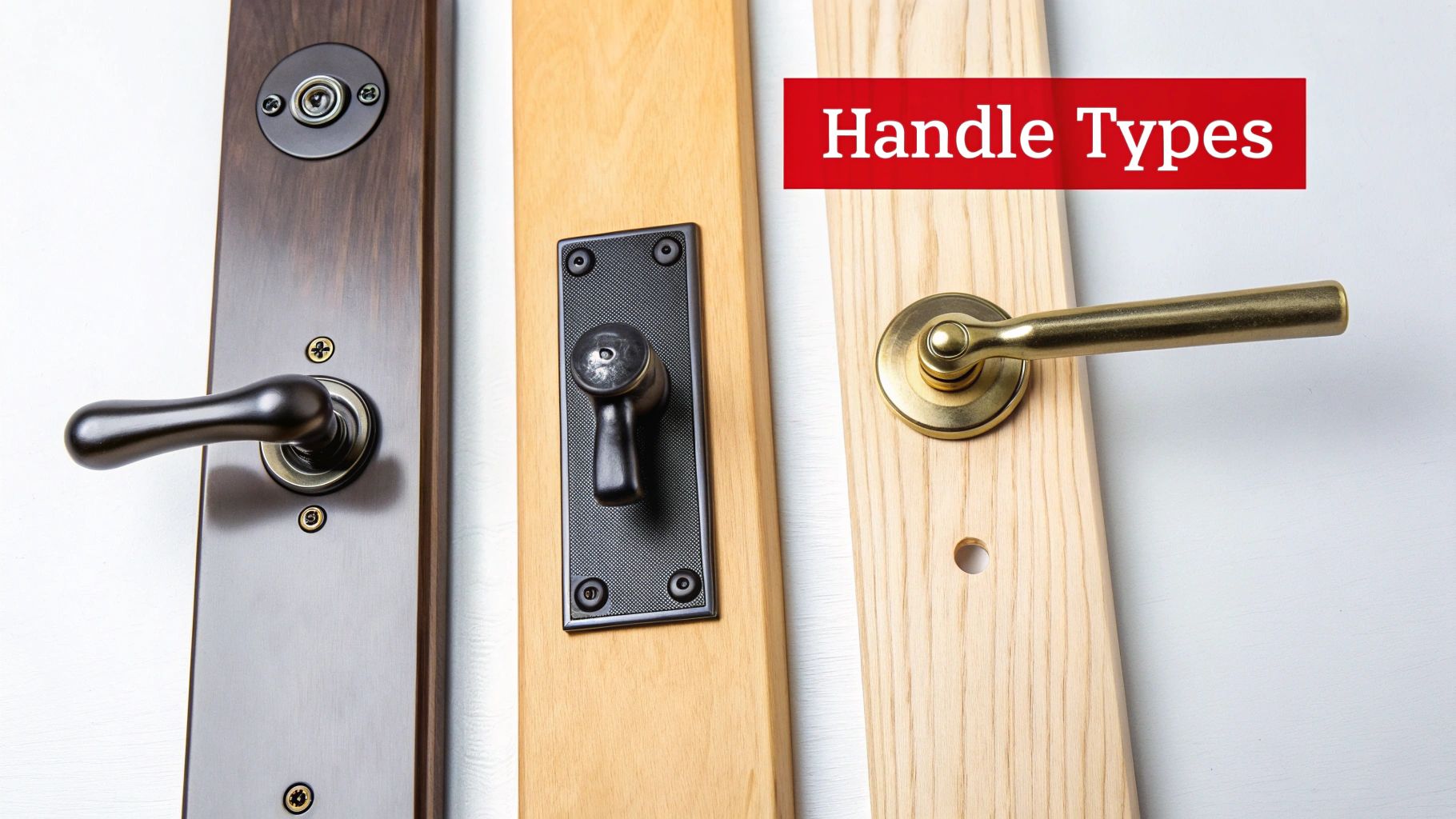
Choosing a door handle can feel a bit overwhelming, but it gets a lot easier once you understand the basic designs. At their core, different types of metal door handles are just tools for a specific job, whether that job is on your front door or your truck.
There are really only a few common mechanisms to know. Each one comes with its own set of pros and cons when it comes to ergonomics, security, and of course, style. Let’s break them down so you can see how their form really does follow their function.
Lever Handles: The Effortless Choice
Think of a lever handle as the "easy button" for opening a door. Its long bar gives you fantastic leverage, meaning all it takes is a simple push down to unlatch the door. This design is a lifesaver when your hands are full and a game-changer for anyone with limited grip strength.
This incredible ease of use is exactly why they're so popular. The global door handle market, valued at around USD 27.9 billion in 2024, is only getting bigger. Lever handles themselves grabbed over 36% of that market share, mostly because they’re so accessible and fit perfectly with modern designs. You can dig into the numbers in this door handle market analysis on marketresearchfuture.com.
- Best For: High-traffic areas, modern homes or vehicles, and any door where accessibility is key.
- Advantage: Super easy to operate and has a clean, contemporary look.
- Drawback: Can sometimes be accidentally opened by clever pets, and it’s easy to snag your clothes on the end.
Knob Handles: The Timeless Classic
The doorknob is the design everyone knows. Its simple, rounded shape is compact, doesn't stick out far, and sits comfortably in the palm of your hand. That makes it a great space-saver for tight hallways or spots where you don't want to catch a sleeve every time you walk by.
Opening a door with a knob requires a firm grip and a twist, making it a more deliberate action than a lever. There's a reason this classic has been around for centuries—it's reliable, gets the job done, and looks right at home on everything from vintage cars to colonial-style houses.
The core difference between a lever and a knob is the action required: a push versus a twist. This simple ergonomic distinction often becomes the deciding factor based on the door's location and who uses it most frequently.
Pull Handles: The Sturdy Statement
Pull handles are the most straightforward of the bunch. They have no moving parts or internal latches; they exist for one reason only—to give you something sturdy to pull. You see them everywhere on heavy entry doors, commercial buildings, and especially on vehicle doors that use a separate lock.
These handles are all about brute strength and making a visual statement. A big, beefy metal pull handle on a front door screams security and presence. On a car or truck, it's designed to give you a confident, solid grip every single time.
- Function: Purely for pulling; doesn’t operate a latch mechanism.
- Common Applications: Main entry doors, closet doors, sliding doors, and vehicle doors.
- Benefit: Incredibly durable because there are no moving parts to break or wear out.
Mortise Handles: The Integrated Security System
A mortise handle is much more than just a handle—it's an entire locking system built into a single, beefy metal box (the "mortise") that fits inside the door. This design cleverly combines the handle, latch, and lock into one highly secure unit.
You can often spot a mortise lock by its combination of a latch and a deadbolt that work together. This all-in-one approach provides a serious security upgrade, which is why it's a top pick for exterior doors where protection is the number one priority. While the installation is more complex, the trade-off is a seamless and incredibly tough locking system. This same integrated concept is also found in the automotive world, providing a robust handle and lock in one clean assembly.
To help you visualize which handle might be right for you, here’s a quick comparison of the types we’ve just covered.
Metal Door Handle Types At a Glance
| Handle Type | Best For | Ease of Use | Common Applications |
|---|---|---|---|
| Lever Handle | High-traffic areas & accessibility | Very Easy (Push-down motion) | Interior/exterior doors, commercial buildings |
| Knob Handle | Traditional aesthetics & tight spaces | Easy (Requires grip & twist) | Residential interior doors, classic cars |
| Pull Handle | Heavy doors needing a firm grip | Very Easy (Simple pull) | Main entry doors, commercial doors, vehicle doors |
| Mortise Handle | High-security applications | Easy (Integrated system) | Exterior doors, high-security vehicle doors |
Each of these designs has its place. Your choice ultimately comes down to balancing ease of use, the level of security you need, and the look you’re going for.
Understanding Your Metal Choices
The metal you choose for your door handle is a lot more than just a cosmetic decision. It's really about the hardware's personality, how long it's going to last, and even how it feels in your hand every single day. Just like different fabrics have their own unique textures and uses, each metal brings something different to the table. The trick is to find the right balance between looks and real-world performance.
Think of it like this: picking a metal door handle is like casting an actor for a specific role. You need the right performer for the job. Is the scene a high-traffic entryway, a salty coastal environment, or the driver's side door of a tough work truck? Let’s break down the most common materials and see which one is the star of your show.
Stainless Steel: The Modern Workhorse
When you just need something that's totally reliable and has a clean, modern look, stainless steel is your go-to. It's the "never-lets-you-down" material of the hardware world. The secret is chromium, which forms an invisible, self-healing layer on the surface to shield it from rust and corrosion.
This makes stainless steel a fantastic choice for pretty much any application, inside or out, especially in places with a lot of humidity or exposure to the elements. Its surface is also non-porous, which makes it hygienic and super easy to clean—a huge plus for any high-touch surface.
- Best For: Modern homes, kitchens, bathrooms, coastal properties, and automotive applications where weather resistance is crucial.
- Key Advantage: Incredible resistance to corrosion, scratches, and tarnishing.
- Aesthetic: Varies from a bright, polished finish to a more subtle brushed or satin look.
Brass: The Living Classic
Brass has a warmth and character that very few other metals can replicate. As an alloy of copper and zinc, it's known for that classic golden look that can feel both traditional and surprisingly modern, all depending on the finish.
What really makes brass special, though, is its "living finish." If you get unlacquered brass, it will develop a patina over time—a natural tarnish from being exposed to air and touch. This aging process gives every handle a unique, rich character that tells a story. Of course, if you'd rather keep that day-one shine, lacquered brass gives you the same warm color without the patina effect.
Brass is unique because it evolves with its environment. The patina that develops isn't a flaw; it's a testament to its history and use, adding a layer of authenticity to the hardware.
Aluminum: The Lightweight Contemporary
If your design philosophy is "less is more," then aluminum might be the perfect fit. It's incredibly lightweight yet surprisingly strong, making it ideal for minimalist and contemporary designs that are all about sleek lines and simplicity.
Aluminum is naturally resistant to corrosion because it forms its own protective oxide layer when exposed to air. It's also super versatile and can be finished in a huge array of colors through a process called anodizing. This makes it a great pick for creating a cohesive look with other design elements on your vehicle or in your home.
Zinc Alloy: The Versatile Chameleon
In the world of metal door handles, zinc alloy is the ultimate chameleon. It's a fantastic material for creating really intricate and detailed designs that would be too complicated or expensive to make with other metals. That's because it has a low melting point, which means it can be easily die-cast into almost any shape you can dream up.
While it's not as tough as stainless steel or brass on its own, zinc alloy handles are usually plated with more durable metals like chrome, nickel, or bronze. This gives them the look of more expensive materials while keeping the cost down. They offer amazing design flexibility, making them a popular choice for interior doors where you need an exact style match without the premium price tag. For a deeper dive into how different metals stack up, you can explore more about the durability of a metal door handle in our detailed comparison.
To help you figure out what's best for you, let's compare these popular materials head-to-head.
Comparing Popular Metal Door Handle Materials
Each metal brings its own strengths to the job. This table breaks down the key differences to help you narrow down your choice based on durability, looks, and budget.
| Material | Durability | Corrosion Resistance | Typical Cost | Best For Aesthetics |
|---|---|---|---|---|
| Stainless Steel | Very High | Excellent | Moderate-High | Modern, minimalist, industrial |
| Brass | High | Good (develops patina) | High | Traditional, classic, vintage |
| Aluminum | Moderate | Very Good | Low-Moderate | Contemporary, lightweight designs |
| Zinc Alloy | Moderate | Good (with plating) | Low | Intricate, decorative styles |
When it comes down to it, the best metal for your door handle depends on what you need it to do. It’s all about balancing the demands of the environment with the style you're trying to achieve.
How to Find Your Perfect Match
Choosing the right metal door handle is where the rubber meets the road—where practical needs meet personal style. It's about so much more than just grabbing something that looks good off the shelf. You need to be sure it fits correctly, works the way you need it to, and looks right in your space.
Let’s break this down into a few simple steps. We'll start with the technical must-haves, then move on to function, and finally, land on the aesthetic finish. Getting these details right from the start will save you a world of headaches later.
Start with the Technical Specs
Before you even start dreaming about finishes, you have to make sure the handle will physically fit your door. This really boils down to two critical measurements that are completely non-negotiable for a proper installation.
Getting these numbers wrong is probably the most common mistake people make, and it can bring a simple project to a screeching halt. Luckily, they're easy to figure out.
- Backset: This is simply the distance from the edge of your door to the dead center of the main hole where the handle goes. The two standard backset sizes you'll almost always see are 2-3/8 inches and 2-3/4 inches. Just measure your current setup to see which one you’ve got.
- Bore Hole: This is that big hole drilled right through the face of the door. It's where the main handle assembly sits. The industry standard here is 2-1/8 inches in diameter.
Knowing these two measurements is everything. They dictate whether a new metal door handle will line up properly with the latch and strike plate already in your door frame. If they're off, the door just won't close or lock. Period.
Match the Function to the Room
Once you've got the fit sorted out, it's time to think about what you need the handle to do. Not all handles have the same job. The right choice here depends entirely on where the door is and how much privacy or security you need.
Here are the main types you'll come across:
- Passage Handles: Think of these as the simplest of the bunch. They latch to keep the door closed but don't have a lock. They're the go-to for closet doors or a hallway entrance where you don't need privacy.
- Privacy Handles: These look a lot like passage handles but have a little push-button or turn-lock on the inside. This is your standard-issue handle for bathrooms and bedrooms.
- Keyed Entry Handles: Built for the outside world, these handles have a keyhole on the exterior and a simple turn-lock on the interior. They provide the security you need for your front door, back door, or any entry from the garage.
- Dummy Handles: As the name implies, these are just for show. A dummy handle has no latching parts at all and is basically just a pull. You'll find them on the non-working side of a set of French doors, for example.
One of the most common slip-ups is putting a passage handle on a bathroom door or using a flimsy interior handle on a heavy-duty exterior door. Always match the handle's job and durability to its location.
For car owners, the function is even more specific. An interior door handle might just operate the latch, while an exterior one has to work with the locking mechanism. Finding the right part for your vehicle means matching it exactly to the make and model. You can usually find a great selection of vehicle-specific interior handles to ensure a perfect functional match.
Define Your Style with the Right Finish
Alright, now for the fun part—picking a finish that pulls the whole look together. The finish of your metal door handle can have a surprisingly big impact on the feel of a room or your vehicle's interior. It's that final touch that makes everything look intentional.
Take a look around at the other hardware. Are the light fixtures, cabinet pulls, or window latches a certain color? Matching or complementing these existing elements is the key to creating a cohesive design.
Some popular finishes right now include:
- Polished Chrome: Gives you that bright, reflective, and modern pop. It's also a breeze to clean.
- Brushed Nickel: A bit softer and more contemporary, its textured look is fantastic at hiding fingerprints.
- Matte Black: This one makes a bold, dramatic statement and looks incredible in modern, industrial, or even farmhouse-style spaces.
- Oil-Rubbed Bronze: With its deep brown finish and subtle copper undertones, this is a classic choice for traditional or rustic decor.
By working through these three stages—measurements, function, and finish—you can pick a metal door handle with total confidence, knowing it will not only look great but fit perfectly and do its job for years to come.
Putting It All Together: Installation and Long-Term Care
You've picked out the perfect metal door handle—that's the fun part. But getting the installation right and keeping it looking sharp are what really make it a smart investment. A handle that's installed correctly feels solid and works flawlessly every single time. And with just a little bit of care, it'll stay that way for years.
Let’s walk through what you need to know for a DIY install, how to avoid some common slip-ups, and the best ways to care for different types of metal.
If you're still working through the selection process, this visual guide can help simplify your decision by breaking it down into location, function, and style.
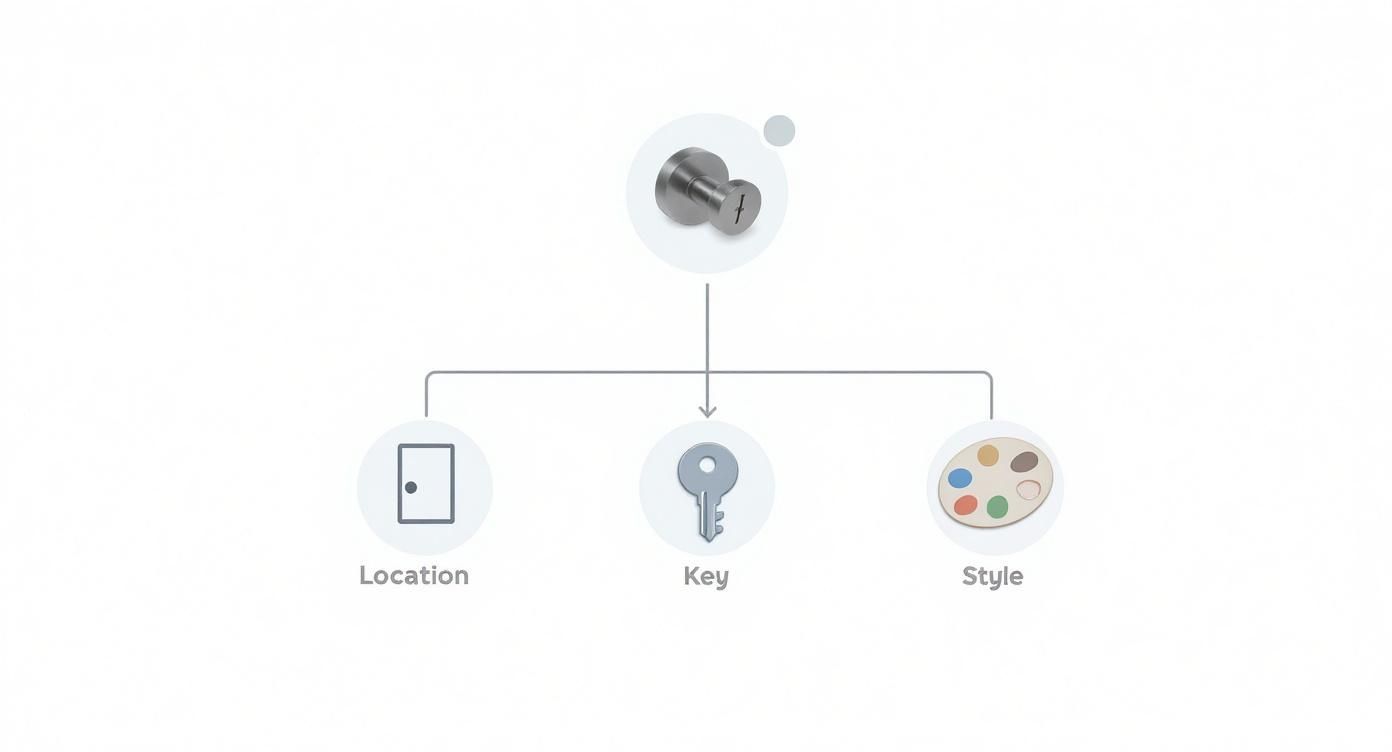
As you can see, just by answering a few basic questions about where the handle is going and what you need it to do, you can quickly narrow the field to find your ideal match.
Getting the Installation Right
Most metal door handles are a straightforward DIY project, but a couple of small mistakes can cause some big headaches down the road. The goal is simple: a firm, wiggle-free fit where the latch engages smoothly every time. A little attention to detail here pays off big time.
One of the most common blunders I see is people over-tightening the screws. It's so tempting to just crank them down as hard as you can, thinking it makes the handle more secure. But doing that can strip the screw heads, chew up the wood inside the door, and even bend the handle's housing. The trick is to tighten until the handle is snug and flush—that’s it.
Another crucial checkpoint is latch alignment. Make sure the latch bolt lines up perfectly with the center of the strike plate hole on the door frame. If it’s off even a little, the door won't close right or lock properly. You might have to nudge the strike plate up or down to get that perfect, satisfying click.
Keeping Different Metal Finishes Looking Their Best
How you care for your handle depends entirely on the metal and its finish. There's no one-size-fits-all solution; what works for chrome could ruin an oil-rubbed bronze finish. But the good news is that regular, gentle cleaning is almost always the answer.
Here’s a quick rundown for the most common materials:
- Stainless Steel & Chrome: These are the workhorses of the handle world—super low-maintenance. Just wipe them down with a soft cloth, some warm water, and a drop of mild dish soap. Dry them off right away with a microfiber towel to stop water spots from forming and bring back that shine.
- Brass (Lacquered): If your brass handle has that clear, protective lacquer coat, treat it just like stainless steel. Gentle soap and water are your friends. Stay far away from abrasive cleaners that can scratch or strip that lacquer away.
- Brass (Unlacquered): This is what we call a "living finish," meaning it's designed to darken and develop a natural patina over time. If you love that aged, classic look, just give it a good dusting now and then. To bring back the original gleam, you'll need a good brass polish and a soft cloth—just be sure to follow the instructions on the polish.
- Matte Black & Oil-Rubbed Bronze: These finishes need a gentle touch. Harsh chemicals or anything abrasive can easily strip the color. Stick to a microfiber cloth with a little water and maybe a tiny bit of mild soap, then dry it completely.
My go-to rule for cleaning any hardware is this: always start with the mildest method first. Nine times out of ten, a simple damp cloth is all you need to keep your handles looking brand new.
Troubleshooting Common Problems
Even the highest-quality metal handle can act up over time. But don't worry—most issues are simple fixes you can handle yourself in a few minutes.
If a handle starts feeling wobbly or loose, the mounting screws have probably just worked themselves a bit loose from all the opening and closing. Grab a screwdriver and gently tighten them back up until the handle is firm against the door again.
Is the latch sticky or not moving smoothly? The culprit is usually a buildup of dust and gunk inside the mechanism. A quick shot of a silicone-based lubricant into the latch assembly will usually solve the problem and get it working like new. Just try to avoid oil-based lubricants like WD-40, as they can actually attract more dirt over time and make the problem worse.
What to Know About Security and Warranties
When you're picking out a new metal door handle, it’s easy to get caught up in the style and material. But two other factors quietly play a huge role in your long-term satisfaction: security and the warranty. Thinking about these details now can save you some major headaches down the road.
After all, a sturdy metal handle is your first line of defense, whether it's on your front door or your truck. The inherent strength of metal is a physical deterrent that plastic just can't offer. For home hardware, this strength is actually measured by a grading system you’ll want to get familiar with.
Understanding Security Grades
The security of door hardware isn't just a marketing claim; it's officially tested and rated using standards from the American National Standards Institute (ANSI) and the Builders Hardware Manufacturers Association (BHMA). These grades tell you exactly how much punishment a lock and handle assembly can take.
- Grade 1: This is the top of the line. A Grade 1 handle is built for commercial buildings and high-traffic residential doors. To earn this rating, it has to survive 800,000 cycles of opening and closing, six heavy door strikes, and a 360-pound weight test. If you want the best for your home's exterior doors, this is it.
- Grade 2: This is a fantastic choice for most residential front doors. Grade 2 hardware is tested for 400,000 cycles, four door strikes, and a 250-pound weight test. It hits that sweet spot between rock-solid security and everyday value.
- Grade 3: This is the basic security grade, perfectly fine for interior doors where forced entry isn't a concern. It’s tested to withstand 200,000 cycles and two door strikes.
Think of it like buying tires. You wouldn't put basic passenger car tires on a heavy-duty truck that's going off-road. In the same way, you shouldn't trust a Grade 3 handle to protect your home's main point of entry.
Decoding Warranty Jargon
A good warranty is more than just a piece of paper; it’s a manufacturer's vote of confidence in their own product. It tells you they’re willing to stand behind what they make. But not all warranties are the same, so it's critical to understand what the terms actually mean.
You’ll often see a "limited lifetime" warranty on high-quality metal door handles, but that word "limited" is doing a lot of work. This type of warranty almost always covers defects in the materials and the mechanical parts for as long as you own the handle.
What it usually doesn't cover is the finish, which can wear down over time from weather and use. It also won't cover damage from a botched installation or from using harsh chemical cleaners.
Always take a minute to read the fine print. Knowing exactly what's protected gives you peace of mind and makes things much easier if you ever need to make a claim. For a real-world example of what to look for, check out our lifetime warranty registration process for our premium parts. Taking that final step ensures your investment is protected for years to come.
Frequently Asked Questions
Even after diving into all the details, you might still have a few lingering questions about picking out or looking after new metal door handles. Let's tackle some of the most common ones so you can move forward with confidence.
Can I Use the Same Handle Indoors and Outdoors?
I wouldn't recommend it. Exterior handles are engineered for a much tougher life, built with materials and finishes specifically designed to shrug off sun, rain, and wild temperature swings. An interior handle just doesn't have that built-in armor.
Put an interior handle on an outside door, and you'll likely see it start to pit, fade, or corrode in no time. Always double-check the product specs to ensure a handle is rated for exterior use before you buy it.
Think of it this way: the finish on an exterior metal door handle is its raincoat and sunscreen. Using an indoor handle outside is like sending it into a blizzard wearing a t-shirt—it's just not prepared for the elements.
How Should I Clean a Matte Black Finish?
A matte black finish looks fantastic, but it needs a delicate touch to keep it that way. The best approach is simple: grab a soft microfiber cloth, dampen it with warm water, and add just a tiny drop of mild dish soap.
Steer clear of abrasive cleaners, scrubby sponges, or any harsh chemicals. These will scratch or even strip that beautiful, non-reflective finish right off. Once you're done wiping it down, dry the handle completely with a fresh, soft cloth to avoid leaving any water spots behind.
Why Is the Backset Measurement So Important?
The backset is the distance from the edge of your door to the center of the big hole where the handle mechanism sits. Getting this measurement right isn't just important—it's everything. It ensures the latch lines up perfectly with the hole in your door.
The two most common backset sizes you'll see are 2-3/8 inches and 2-3/4 inches. If you get this wrong, the latch won't hit the strike plate on the door frame properly, and your door simply won't close or lock. A quick measurement beforehand saves you from a world of installation frustration.
For premium, durable metal door handles engineered to last and backed by a lifetime warranty, explore the vehicle-specific collection at T1A Auto. Find the guaranteed-to-fit replacement for your car or truck today.
https://t1aauto.com
