


Aftermarket F-150 parts are simply replacements for your truck's factory components, but they're made by companies other than Ford. They represent a smart, budget-friendly alternative to pricey OEM (Original Equipment Manufacturer) parts from the dealership, and in many cases, they’re actually better than what came on the truck in the first place.
Why Aftermarket Parts Are Your F-150’s Best Friend
Your F-150 is a workhorse, but even the toughest trucks need some TLC eventually. It’s usually the high-traffic parts that go first—things like plastic door handles, tailgate latches, and window regulators that get used every single day. When one of them finally gives out, you have a decision to make: head back to the dealer for a pricey OEM part or explore the world of high-quality aftermarket F-150 parts.
Think about it for a second. The factory part that just broke was likely designed with mass-production costs in mind, not necessarily lifetime durability. A premium aftermarket part, on the other hand, is often engineered specifically to fix those original design flaws. It’s not just a replacement; it’s an actual upgrade.
Upgrading Beyond the Original Design
Smart aftermarket manufacturers see where factory parts fail and go back to the drawing board. They redesign them for more strength and a longer service life, meaning you get a component built to outlast the one it’s replacing.
Choosing a quality aftermarket solution comes with some serious perks:
- Enhanced Durability: Swapping that flimsy plastic handle for one made of reinforced metal means you won’t be dealing with the same problem a year from now.
- Cost Savings: Aftermarket parts almost always deliver significant savings over their OEM equivalents, often without compromising on quality.
- Improved Performance: Many parts are designed to correct known issues, giving you smoother operation and better reliability for years.
The big idea here is simple: Why replace a failed part with an identical one that's just going to break again? A well-made aftermarket component offers a permanent fix, saving you the headache and cost of repeat repairs.
A Market Driven by Demand
The sheer number of F-150s on the road is what drives the huge market for reliable replacement parts. As the best-selling vehicle in the U.S. for an incredible 47th consecutive year, with over 750,000 trucks sold in a recent year alone, there are millions of them out there.
With the average vehicle now on the road for 12.5 years, the need for dependable aftermarket F-150 parts has never been greater. This has created a massive industry focused on one thing: keeping these legendary workhorses running strong. You can find out more about automotive aftermarket trends to see why it's a great time to invest in quality replacement parts.
Getting the Right F-150 Part: It's All About the Generation
We’ve all been there. You find what looks like the perfect aftermarket part online, click "buy," and wait. When it finally arrives, you discover the mounting holes are off by a hair or the electrical plug is from another planet. It’s a classic, frustrating moment that almost always boils down to one simple thing: you bought a part for the wrong F-150 generation.
Think of each generation as a completely different blueprint. A mirror for a 2010 F-150 might look nearly identical to one for a 2018, but the wiring for features like blind-spot monitoring or the built-in puddle lights could be totally redesigned. This isn't just about appearances; it's about the truck's core electronic and physical architecture. Getting it wrong is a recipe for wasted time, annoying return processes, and a truck that's stuck in the garage.
To sidestep this headache, your first move should always be to pinpoint your truck's exact model year and trim level. You'll find this on the sticker in the driver's side door jamb, or you can just run your VIN through an online decoder. This simple step is your best insurance against ordering the wrong aftermarket F150 parts.
Why a Few Model Years Can Make a Huge Difference
Ford isn't just changing things for the sake of it. Each new F-150 generation brings major updates to the body style, technology, and engineering that directly impact how replacement parts fit and function.
-
10th Generation (1997-2004): Known for its "jelly bean" rounded styling, this generation is in a world of its own. Parts from this era, from door handles to tailgate latches, are completely unique and won't fit anything newer.
-
11th Generation (2004-2008): This is where the F-150 got its modern, boxy look. Ford redesigned mirror shapes and their mounting points, and you'll find different interior guts like window regulators that are specific to these years.
-
12th Generation (2009-2014): Electronics started getting more complex here. This is when you really have to start paying attention to the wiring for things like powered side mirrors and backup cameras, as they varied significantly by trim and year.
-
13th Generation (2015-2020): The game-changing aluminum body design altered everything. Mounting points for bumpers, tailgate assemblies, and even door hinges had to be re-engineered to work with the new materials.
-
14th Generation (2021-Present): Today's F-150s are tech powerhouses. Sensors, cameras, and mirrors are so deeply integrated into the truck’s driver-assist systems that a replacement part has to communicate perfectly with the onboard computer to function.
The big takeaway? A new generation is basically a hard reset on part compatibility. While a few small, insignificant parts might carry over for a year or so, you should assume that all major components have been redesigned from the ground up.
A Quick Guide to F-150 Part Compatibility
Trying to keep all these generational changes straight can feel like a lot, but a simple roadmap makes it easy. Knowing what to look for is half the battle when ordering the right aftermarket F150 parts.
The table below breaks down the most common compatibility pitfalls for the popular F-150 generations. It’s a handy cheat sheet to keep in mind when you're shopping for replacements.
Ford F-150 Generation and Common Part Compatibility Guide
| F-150 Generation (Years) | Common Part Categories | Key Compatibility Notes (e.g., Connector Type, Mirror Style, Sensor Changes) |
|---|---|---|
| 10th Gen (1997-2004) | Door Handles, Mirrors | Unique rounded body style means parts are not cross-compatible. Mirror connectors are basic and lack modern features. |
| 11th Gen (2004-2008) | Tailgate Assembly, Regulators | Sharper, boxy body lines define this era. Tailgate latches and handle mechanisms were updated from the 10th gen. |
| 12th Gen (2009-2014) | Mirrors, Backup Cameras | Wiring harnesses became more complex. Pay close attention to sub-model features like tow mirrors vs. standard mirrors. |
| 13th Gen (2015-2020) | All Body Panels, Sensors | The aluminum body introduction changed mounting points for almost everything. Proximity and bumper sensors became standard on many trims. |
| 14th Gen (2021-Present) | Cameras, Mirrors, Sensors | Highly integrated electronics. Replacing a mirror may require system recalibration due to built-in sensors and cameras. |
By referencing your truck’s model year against this guide, you can quickly spot the potential issues for the part you need. This transforms a frustrating guessing game into a straightforward checklist, ensuring you get a part that fits right and works perfectly the first time.
The Most Common F-150 Parts That Fail and How to Upgrade Them
Every truck has its weak spots, and after decades on the road, the F-150 is no exception. Over hundreds of thousands of miles, certain parts just take a beating from daily use and eventually give out. Knowing what’s likely to break isn’t about being negative—it’s about being prepared. It gives you the chance to fix the problem before it leaves you stranded and, more importantly, to install an upgrade that’s better than the original.
The good news is that these common failures are so well-known that the aftermarket has stepped up in a big way. For F-150 owners, especially those with trucks that are a few years old, the market is packed with high-quality replacement parts designed to solve the original weak points. With the average vehicle on the road today being between 6-12 years old, there are fantastic, durable upgrades available for everything from a simple handle to a complex sensor.
This timeline shows how the F-150 has changed over the years, which is crucial for figuring out which part fits your specific truck.
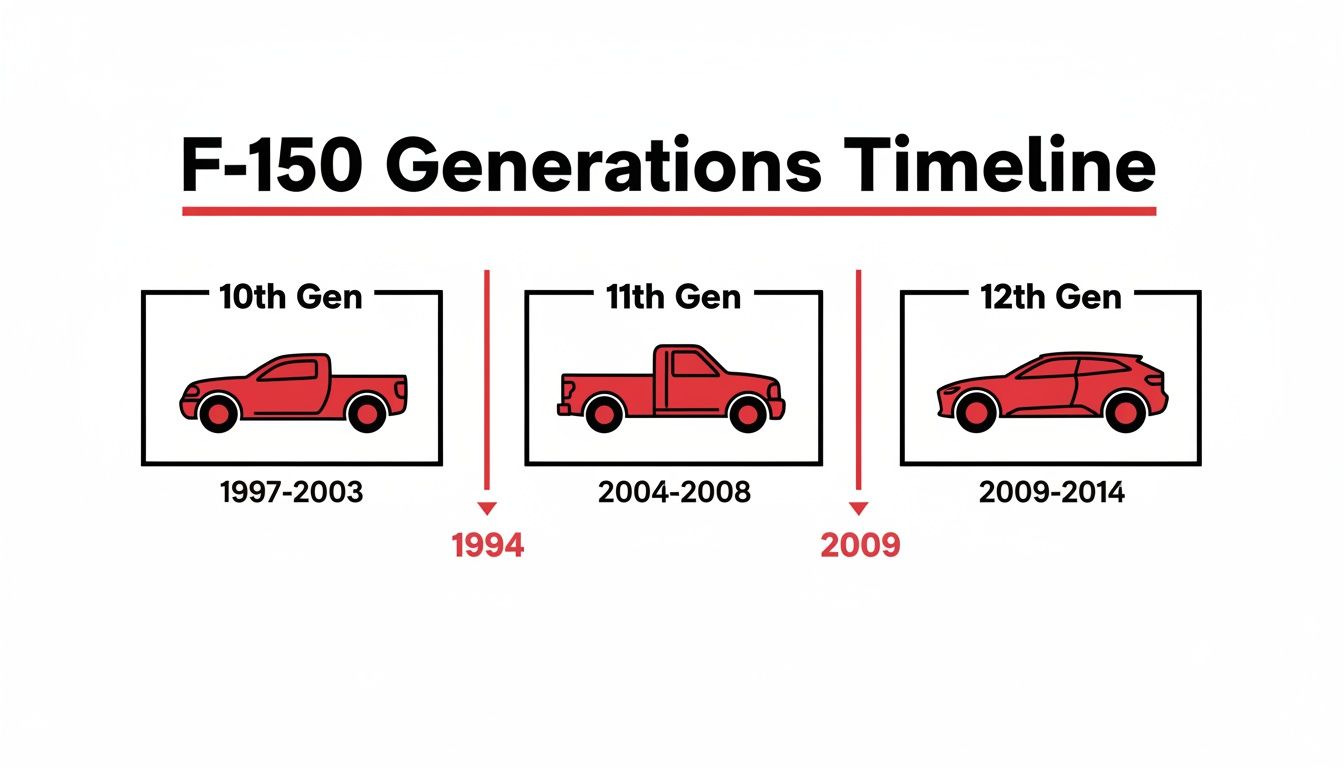
As you can see, a new generation isn't just a facelift. It’s often a complete redesign that affects everything from body panels to the electronics inside, so getting the model year right is everything.
Door Handles: The First Point of Failure
Think about it—the door handle is the first and last thing you touch every time you use your truck. Those factory-installed plastic handles on F-150s, both inside and out, are famous for giving up the ghost. After years of being pulled on and baked by the sun, the plastic gets brittle and eventually just snaps off in your hand.
When this happens, don’t make the mistake of replacing it with the same flimsy OEM part. This is your chance to upgrade.
- Reinforced Materials: Many aftermarket handles are built with tougher polymers or even have metal reinforcements at the key stress points where the originals always break.
- Exact Fitment: Good suppliers design their handles to be a perfect match for the factory specs. That means no drilling, no weird gaps—just a clean, simple installation.
A better handle doesn't just get you back in your truck; it feels more solid and gives you confidence that it won't fail you again.
Tailgate Assemblies: A Workhorse Weak Point
Your F-150’s tailgate is built like a tank, but the smaller parts that make it work? Not so much. The handle, latches, and support cables are always under strain from heavy loads, vibrations, and constant opening and closing. The plastic bezel around the handle is especially known for cracking in cold weather, and the internal latch parts wear out, causing the tailgate to get stuck or refuse to close properly.
Upgrading these tailgate components isn't just a repair; it's smart preventative maintenance. A quality aftermarket tailgate handle made from a stronger composite or metal will easily outlast the stock version. It’s an easy fix that brings back the utility your truck was built for.
If you're wrestling with a busted tailgate, we have a complete guide that walks you through picking the right tailgate parts for your Ford F-150.
Window Regulators and Motors: The Inevitable Burnout
It’s a sound every car owner dreads: a loud grinding or popping noise, and suddenly your window won't go up or down. That’s the classic sign of a failed window regulator. The regulator is the track-and-cable system that moves the glass, and its motor will eventually burn out from years of use. On top of that, the little plastic clips holding the glass can break, letting the window fall right down inside the door.
This isn’t an "if," it's a "when" for most vehicles. When it’s your turn, look for an aftermarket regulator that comes as a complete assembly with the motor already attached. This makes the job way easier and guarantees all the moving parts are brand new. The best replacements use stronger materials and are tested to perform as well as—or better than—the original, so you can count on smooth operation for years to come.
Side Mirrors and Sensors: The Eyes and Ears
Modern F-150s are packed with tech, and the side mirrors are a perfect example. They’re no longer just glass; they contain heating elements, turn signals, blind-spot sensors, and even cameras. One little bump in a parking lot can turn into a shockingly expensive repair if you run back to the dealership.
This is exactly where CAPA-certified aftermarket parts shine. CAPA stands for the Certified Automotive Parts Association, and that seal means an independent lab has tested the part to make sure it fits, looks, and performs exactly like the original. For something as important as a mirror or a parking sensor, that certification is your peace of mind. You get a replacement that restores your truck's safety features without that sky-high dealership price tag. While focusing on these upgrades, it's also wise to be aware of other potential problems, like symptoms of a car transmission slipping, to keep your F-150 running smoothly in every respect.
How to Spot a High-Quality Aftermarket Part
Diving into the world of aftermarket F-150 parts can feel like a bit of a gamble, but it doesn't have to be. Once you know what to look for, the signs of a well-made part are actually pretty clear. It's a lot like picking out a good power tool—you can just feel the difference between a cheap knockoff and something built to last. You look for solid construction, better materials, and a warranty that shows the company believes in its own work.
The price tag is only one piece of the puzzle. A truly high-quality part shows its worth in the details. Take a replacement door handle, for example. A cheap one might be made from flimsy, untreated plastic that's just waiting to get brittle and crack in the cold. A premium version, on the other hand, will often use a stronger polymer blend or even add metal reinforcements at key stress points. That’s what gives it the guts to outlast the original.
This same idea applies to almost any part you buy. Keep an eye out for metal components with finishes designed to fight corrosion, like powder coating or zinc plating. Those little details are what separate a quick patch-up from a real, lasting repair.
Look for Proof of Quality
When you're shopping for parts for your F-150, you don't have to rely on marketing claims alone. Independent certifications are your best friend here, acting as a seal of approval that confirms a part meets strict standards for fit, performance, and safety.
There are two big ones to watch for:
- Manufacturing Certifications (ISO): An ISO 9001 certification tells you the part was made in a facility that follows globally recognized quality control standards. It’s a solid sign that you’re getting a consistently made and reliable product.
- Independent Standards (CAPA): For parts that affect your truck's safety and appearance—think side mirrors, cameras, and lights—the CAPA (Certified Automotive Parts Association) seal is the gold standard. A CAPA-certified part has been independently tested to prove it performs just as well as the original factory component it’s replacing.
These certifications cut through the noise. They offer objective, third-party proof that you’re buying a part that was actually engineered to work correctly and safely on your truck.
The Warranty Tells the Real Story
Maybe the clearest signal of a quality aftermarket part is the warranty. A company that’s truly confident in its engineering and materials will always back it up with a solid guarantee. A skimpy 90-day warranty? That might be a red flag that the manufacturer doesn't expect the part to hold up for very long.
A lifetime warranty, on the other hand, is much more than a sales pitch. It's a statement of confidence. It means the company has invested in better materials and thorough testing, and they're willing to bet their reputation on the part's ability to handle years of real-world abuse.
When you see that lifetime warranty, you can feel pretty good that you're getting something designed for the long haul. It's a clear sign the company puts durability before corner-cutting. You can learn more about what separates the good from the great by reading our guide on the best aftermarket auto parts on the market. Choosing parts with these markers of quality is the best way to keep your F-150 running reliably for years to come.
Installation Tips for a Hassle-Free Repair
You’ve got the right aftermarket F-150 part in hand, and now it's time for the install. This is the moment where a little prep work can be the difference between a quick, satisfying fix and an afternoon of pure frustration. Whether you’re a seasoned pro or a weekend warrior, a solid game plan is your best friend.
For the DIYer tackling a job in the driveway, the golden rule is to have everything you need before you start. There's nothing worse than getting a door panel half-off and realizing you don't have the right tool. Trust me, a simple pre-flight check saves a world of headaches.
Your DIY Pre-Installation Checklist
Before you even think about popping a panel or loosening a bolt, take ten minutes to get your gear and game plan sorted. This one step can turn a daunting task into a smooth, manageable job.
-
Gather the Right Tools: Most common F-150 part swaps only require a basic socket set, some screwdrivers, and pliers. But the one tool you absolutely shouldn't skip is a panel and trim removal tool kit. These cheap plastic pry tools are a lifesaver, designed to pop off interior trim without scratching your paint or snapping those delicate plastic clips.
-
Find a Good Tutorial: Hunt down a video tutorial for your exact model year and the specific part you’re replacing. The key here is to watch it all the way through once before you touch your truck. It lets you see the tricky steps coming and avoid the common mistakes.
-
Keep Your Fasteners Organized: A magnetic tray or a few labeled plastic cups will be your best friend. This small step completely eliminates the "where does this last bolt go?" panic when you're putting everything back together.
The single biggest mistake DIYers make is rushing the disassembly. Go slow with plastic clips and electrical connectors. They get brittle with age and will snap if you force them. A little patience now saves you from placing a second parts order tomorrow.
A Professional Perspective for Repair Shops
For any mechanic or body shop, time is money. Every minute a truck is tied up in a bay is a minute you're not making a profit, which is why a dependable parts supplier is more of a partner than a vendor. Guaranteed fitment isn't a "nice-to-have"—it's a business necessity. When you order aftermarket F-150 parts that you know will fit right the first time, you cut out wasted labor and keep the workflow humming.
This need for efficiency is being met by the explosion of high-quality parts available online. The shift to digital storefronts has changed the game for everyone. The U.S. aftermarket is poised for major growth, and it's largely being fueled by online retailers who make it incredibly easy to find the exact part you need. For example, a common F-150 upgrade is swapping flimsy plastic door handles and window regulators for metal-reinforced versions, a move that reportedly slashes repeat failures by 50%. You can explore more trends in the automotive aftermarket parts market on mordorintelligence.com.
When you’re dealing with insurance jobs, using CAPA-certified parts is non-negotiable. These components are your guarantee that you're meeting strict industry standards for quality and safety. It protects your shop's reputation and gives your customers the confidence they deserve. Working with a supplier who stocks CAPA-certified parts just makes the whole process simpler.
Why Smart Part Choices Keep Your F-150 Running Stronger
Choosing the right part for your F-150 isn't just about getting back on the road after something breaks—it's about making your truck better and more reliable for the long haul. We've walked through how to pinpoint your F-150's generation for a perfect fit, what separates a quality component from a cheap knock-off, and why a good aftermarket F150 part can be a smart upgrade. This knowledge changes a repair from a frustrating chore into an opportunity to strengthen your truck.
When you opt for a well-designed replacement, you're not just patching a problem. You're actively reinforcing your F-150 against the same failure happening again. A metal-upgraded handle or a precision-built sensor isn't just a part; it's an investment in your truck's future.
Building Long-Term Dependability
This idea of picking quality components for better performance isn't unique to trucks. Think about it like choosing the best batteries for trail cameras—you don't grab the cheapest option and hope for the best. You pick the one you can count on to work when it counts. For your F-150, that means choosing parts made from proven materials and backed by a solid warranty.
Taking this approach gives you something invaluable: peace of mind. Your truck stays the reliable workhorse you need it to be, and you know the job was done right with a part engineered to go the distance.
Every smart part choice is a vote for fewer future headaches. When you prioritize quality over the cheapest option, you’re buying durability and saving yourself from repeat repairs down the road.
This is especially critical for parts that affect your truck's safety and core functions. For example, grabbing a replacement that meets tough industry standards is a no-brainer. You can learn more about CAPA certified parts to understand why they're a go-to choice when you need performance that matches or exceeds the original.
At the end of the day, making informed choices about your aftermarket F150 parts puts you in control. You now have the know-how to find exactly what you need and experience the satisfaction that comes from getting the repair right the first time.
F-150 Aftermarket Parts: Your Questions Answered
Diving into the world of aftermarket F-150 parts can feel a little overwhelming. You've probably got questions floating around about your truck’s warranty, safety, and whether you're really getting a good deal. Let's clear the air and tackle some of the most common questions F-150 owners ask.
Getting straight answers is the first step to making a smart purchase. Once you understand the facts, you can cut through the noise and find the right components to keep your truck performing its best.
Will Using Aftermarket Parts Void My Truck's Warranty?
This is the big one, the question I hear more than any other. The short answer is no, and you have federal law on your side. Thanks to the Magnuson-Moss Warranty Act, a manufacturer can't just void your entire vehicle warranty because you installed a non-Ford part.
For a dealer to deny a warranty claim, they have to prove that the specific aftermarket part you installed was the direct cause of the mechanical failure. So, swapping out a broken door handle has absolutely no impact on your engine or transmission warranty. It's as simple as that.
Are Aftermarket F-150 Parts as Safe as OEM?
Of course. That is, as long as you're buying from a reputable source. The best aftermarket manufacturers aren’t just making cheap copies; they’re engineering parts to meet or even beat the original factory specs.
When it comes to anything safety-related—think side mirrors, backup cameras, or lighting—look for one thing: CAPA certification.
The Certified Automotive Parts Association (CAPA) is a non-profit, independent testing body. When you see the CAPA seal, it’s a guarantee that the part has been rigorously tested for fit, material quality, and safety performance. It's solid proof the part is every bit as reliable as the original.
What’s the Difference Between Aftermarket and Used OEM Parts?
This is a crucial distinction that comes down to value and peace of mind. A used OEM part is pulled straight from a truck in a scrapyard. It has an unknown history, existing wear, and you can pretty much forget about a warranty.
On the other hand, a quality aftermarket part is brand new. It often comes with smart design upgrades, like replacing flimsy plastic pieces with reinforced metal. Best of all, it's backed by a real warranty, which means you're getting far more reliability for your money.
What Tools Do I Need to Install These Parts?
Good news here. You don’t need a professional mechanic's garage to tackle most of these jobs. The vast majority of common part swaps on an F-150 can be done with a basic set of hand tools you probably already have.
To be prepared for most installations, make sure your toolkit includes:
- A decent socket and ratchet set (metric is a must)
- Phillips and flathead screwdrivers
- A plastic trim removal kit (this will save your paint and plastic panels from scratches)
- A set of Torx bits, which Ford uses all over their trucks
Having these on hand before you pop the hood will make the whole process go a lot smoother.
At T1A Auto, we take the guesswork out of finding premium aftermarket F-150 parts engineered for a perfect fit and long-term durability. From CAPA-certified cameras to our metal-reinforced handles backed by a lifetime warranty, we've got the reliable upgrades you need to keep your truck on the road. Shop our complete collection of Ford F-150 parts today!