


When you're on the hunt for the best aftermarket car parts, you're really looking for that sweet spot where quality, fitment, and value all meet. The best aftermarket parts don't just work; they often meet or even beat the original manufacturer's standards, giving you solid performance without the dealership price tag. The real trick is learning how to tell a high-quality part from a cheap knockoff.
Decoding Aftermarket and OEM Parts
Before you even start browsing, it's crucial to get a handle on the two main types of parts you'll encounter. It’s a bit like grocery shopping: OEM parts are the big, national name brands, while aftermarket parts are like the premium store brands. More often than not, that store brand gives you the same quality for a much better price.
Getting this distinction down is the first step. Once you do, you'll be able to make much smarter and more confident decisions for your car.
OEM vs Aftermarket Parts At a Glance
To make it simple, here’s a quick breakdown of how these two types of parts stack up against each other.
| Factor | OEM Parts | Aftermarket Parts |
|---|---|---|
| Manufacturer | Made by the vehicle's original manufacturer or their supplier. | Made by various independent companies. |
| Price | Generally more expensive. | Typically more affordable with a wider price range. |
| Availability | Primarily available through dealerships. | Widely available online, at auto part stores, and repair shops. |
| Quality | Consistent quality, identical to the original part. | Varies from low-end to premium, often exceeding original quality. |
| Selection | Usually only one option available for a specific vehicle. | Huge variety of brands, materials, and designs to choose from. |
This table shows that while OEM offers a straightforward, single-option path, the aftermarket opens up a world of choice and value.
What Are Original Equipment Manufacturer (OEM) Parts?
Original Equipment Manufacturer (OEM) parts are exactly what they sound like—the same components your car was built with in the factory. They're made by the company that originally supplied the parts to the automaker. So, when you buy an OEM part from a dealership, you're getting the very same piece that was on your car when it first rolled off the assembly line.
And What About Aftermarket Parts?
Aftermarket parts, on the other hand, are made by companies that aren't the original manufacturer. These parts are engineered to perform just like—and in many cases, better than—their OEM equivalents. The whole point of the aftermarket is to create competition, which leads to a massive variety of options, innovative new designs, and much more competitive prices for people like us.
This diagram helps visualize the relationship.

As you can see, while OEM parts follow a direct line from the carmaker, the aftermarket is a whole ecosystem of independent companies creating alternatives that compete for your business.
The biggest advantage of the aftermarket is choice. You're no longer stuck with one part at one price. You get to pick a part based on what matters most to you, whether that's getting better performance, longer-lasting durability, or just saving some money.
This competitive landscape has created a massive industry. The global aftermarket auto parts market is on track to hit USD 756.25 billion by 2032, thanks to more cars being on the road and a growing demand for quality replacement options.
The aftermarket isn't just about big mechanical pieces, either. Broadening your knowledge to include things like fuel additives and their functions shows just how deep the rabbit hole goes. The more you know, the better equipped you'll be to find the absolute best parts for your vehicle.
How to Spot a High-Quality Aftermarket Part
Let's be honest, the aftermarket parts world can be a bit of a wild west. You'll find fantastic, high-value components sitting right next to cheap knock-offs that are destined to fail. So, how do you tell the difference? It comes down to knowing the signs of quality—looking past the flashy packaging to understand what really makes a part good.
Think of it like buying a good kitchen knife. You can instantly feel the difference between a well-balanced, solid piece of steel and a flimsy, cheap one. The same intuition applies to car parts. You just need to know what to look for.
The Gold Standard: Look for Certifications
One of the easiest ways to separate the good from the bad is to look for an official certification. These aren't just marketing stickers; they're proof that a part has been put through the wringer by an independent third party to make sure it performs just like the original. For anything safety-related, a certification is a must.
In North America, the top dog in certifications is the Certified Automotive Parts Association (CAPA).
- What is CAPA? CAPA is a non-profit organization that exists for one reason: to test and certify that aftermarket parts are just as good as their OEM counterparts. They check everything from fit and materials to on-vehicle performance.
- Why does it matter? A CAPA seal on a part means it has passed a gauntlet of tests. For things like side mirrors, cameras, or bumper sensors, this certification is your assurance that the part will fit right, work correctly, and last.
When you see that CAPA sticker, you can breathe a sigh of relief. It’s a proven component, not just a good-looking copy.
Judge the Part by Its Materials and Build
Beyond official seals, you can learn a lot just by holding a part in your hands. The materials and the quality of the finish tell you almost everything you need to know about its durability and performance. Cheap plastics and sloppy metalwork are dead giveaways of a part that will give you headaches.
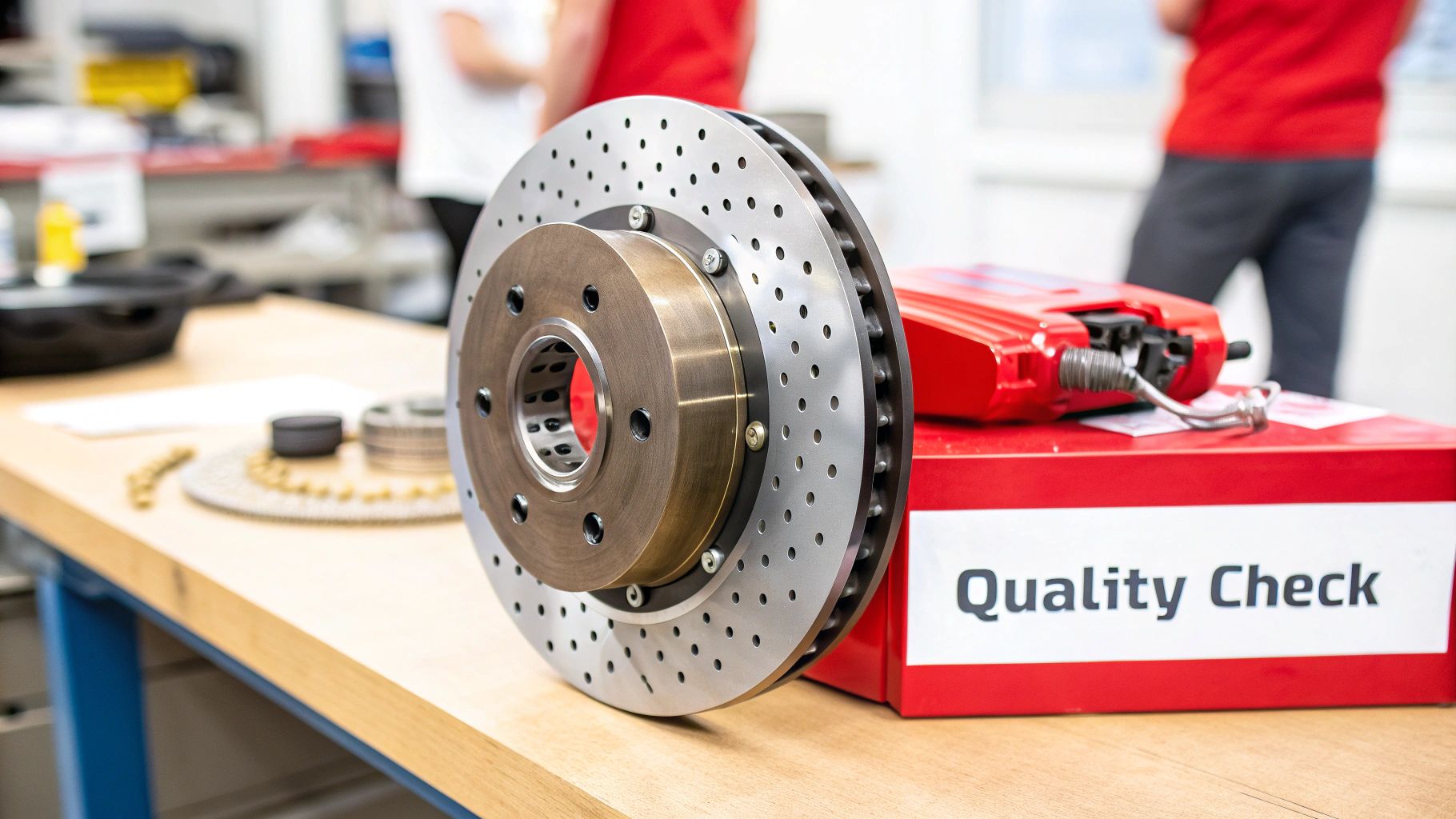
A perfect example is the difference between a standard brake rotor and a performance one. A premium rotor is often made from high-carbon cast iron because it handles heat better and resists warping. That material choice directly impacts how well your car stops. This same logic applies to everything, from the plastic in a door handle to the gears in a window regulator.
If you want to dive deeper into how these materials and designs stack up against the factory originals, check out our guide comparing OEM vs Aftermarket parts.
Pro Tip: Look for the little things that signal quality manufacturing. Are the welds on a metal bracket clean and even? Is the finish on a plastic part smooth? Are the edges crisp and well-defined? These are signs of a manufacturer that cares about their work.
Your Hands-On Quality Checklist
When your new part arrives, don't just tear open the box and run out to the garage. Take a minute for a quick inspection. It could save you a ton of time and frustration later.
Here's what to look for:
- Feel and Finish: Does the part have a solid, substantial feel? Plastic shouldn't feel brittle. Metal parts should be smooth, without any rough edges, burrs, or signs of cheap casting.
- Welds and Seams: On metal parts like exhaust hangers or brackets, check the welds. They should be uniform and clean, not sloppy and globbed on. For plastic pieces, look where the mold halves came together—the seams should be almost invisible, not jagged.
- The Side-by-Side Comparison: Put the new part right next to the old one you just took off. Pay close attention to the size, shape, and especially the mounting points. If something looks obviously different, it’s a huge red flag for fitment problems.
- Check for Hardware: A quality part often comes as a complete kit with any necessary new bolts, gaskets, or clips. If you have to reuse old, rusty hardware, it might be a sign the manufacturer was cutting corners.
By keeping an eye out for these key indicators—strong certifications, quality materials, and careful construction—you can confidently choose aftermarket parts that will get the job done right and give you the peace of mind you deserve.
Ensuring the Perfect Fit for Your Vehicle
There's nothing worse than getting halfway through a repair, covered in grease, only to find out the brand-new part you just unboxed doesn't fit. It's a project-killer. A simple ordering mistake can send you back to square one, dealing with returns, wasting time, and starting your search all over again.
Getting the fit right the first time is the secret to a painless repair.
This isn't a new problem, either. The need for correctly fitting parts has been around as long as cars have. The U.S. automotive aftermarket has always been a huge industry—valued at around USD 300 billion way back in 2007. Even then, aftermarket components made up about 60% of all auto parts sales, which shows you just how critical reliable replacements have always been. If you're interested in the history, you can read this analysis of the automotive parts industry to see how deep it goes.
The good news is that today's tools make it much, much easier to guarantee a perfect match before you spend a dime.
Your VIN Is Your Best Friend
Think of your car's Vehicle Identification Number (VIN) as its fingerprint. This 17-character code is a unique identifier that tells a parts supplier everything about your specific vehicle—its manufacturing date, engine type, trim package, and more.
Just searching by year, make, and model isn't always enough. Car manufacturers often make subtle changes mid-year or use slightly different parts across various trim levels of the exact same model. It gets confusing fast.
The VIN cuts through all that noise. It's the universal key that unlocks the precise parts list for your car, truck, or SUV. Using a website's VIN lookup tool is the single best thing you can do to avoid getting the wrong part.
Going Beyond the Basics in Your Search
While the VIN is your go-to, knowing a few other key details about your vehicle helps you cross-reference and navigate online catalogs like a pro. The more specific you can be, the better.
Here’s what you should have handy:
- Trim Level: An "LE" sedan might have different side mirrors or door handles than the sportier "XSE" version.
- Engine Size: A V6 model often uses different sensors, brackets, and hoses than its 4-cylinder counterpart.
- Drivetrain: A 4WD truck might need a totally different component than the 2WD version.
- Production Date: Knowing your car was built in, say, November 2022 versus February 2023 can make a difference if the manufacturer changed suppliers mid-cycle.
Avoiding Common Fitment Pitfalls
Even the most careful DIYer can get tripped up. One of the biggest mistakes is assuming a part listed for a "Ford F-150" will fit your F-150. That single model can have dozens of variations based on bed length, cab size, and engine, each with unique part requirements.
Another classic mistake is trusting the picture alone. A part might look identical online, but a mounting point could be off by a few millimeters—just enough to make it impossible to install. Always trust the data.
Stick to your VIN, double-check the details, and rely on part numbers, not just photos. Do that, and you'll find the best aftermarket car parts that slide right into place, every single time.
A Practical Guide to Common Aftermarket Parts
Alright, we've covered the theory—what quality seals like CAPA mean and how to make sure a part actually fits your car. Now it’s time to get our hands dirty and apply that knowledge to the real world. Knowing the "what" is great, but knowing the "why" behind choosing a specific part for a specific job is what separates a quick fix from a lasting repair.
Let's walk through some of the most common parts you'll find yourself replacing. We'll zero in on what truly matters for each one, so you can spot the difference between a cheap knock-off and a quality replacement that's built to last.
This isn't a small corner of the auto world, either. The demand for these components is massive and only getting bigger. In fact, the global automotive aftermarket is on track to become a USD 664.3 billion industry by 2028. It's everyday passenger cars that are driving most of that growth, with drivers needing to replace high-wear parts just like the ones we're about to cover. You can discover more insights about auto care industry growth to see just how common these repairs are.
Selecting a Durable Window Regulator
There are few things more annoying than a car window that’s stuck open or won't go down. When a window regulator fails, the culprit is almost always the cheap plastic components inside the assembly. The factory part is designed for cost, not longevity, and those plastic bits get brittle and snap over time.
This is a perfect example of where a good aftermarket part isn't just a replacement—it's an upgrade. Smart manufacturers identify these common failure points and engineer their parts to fix them.
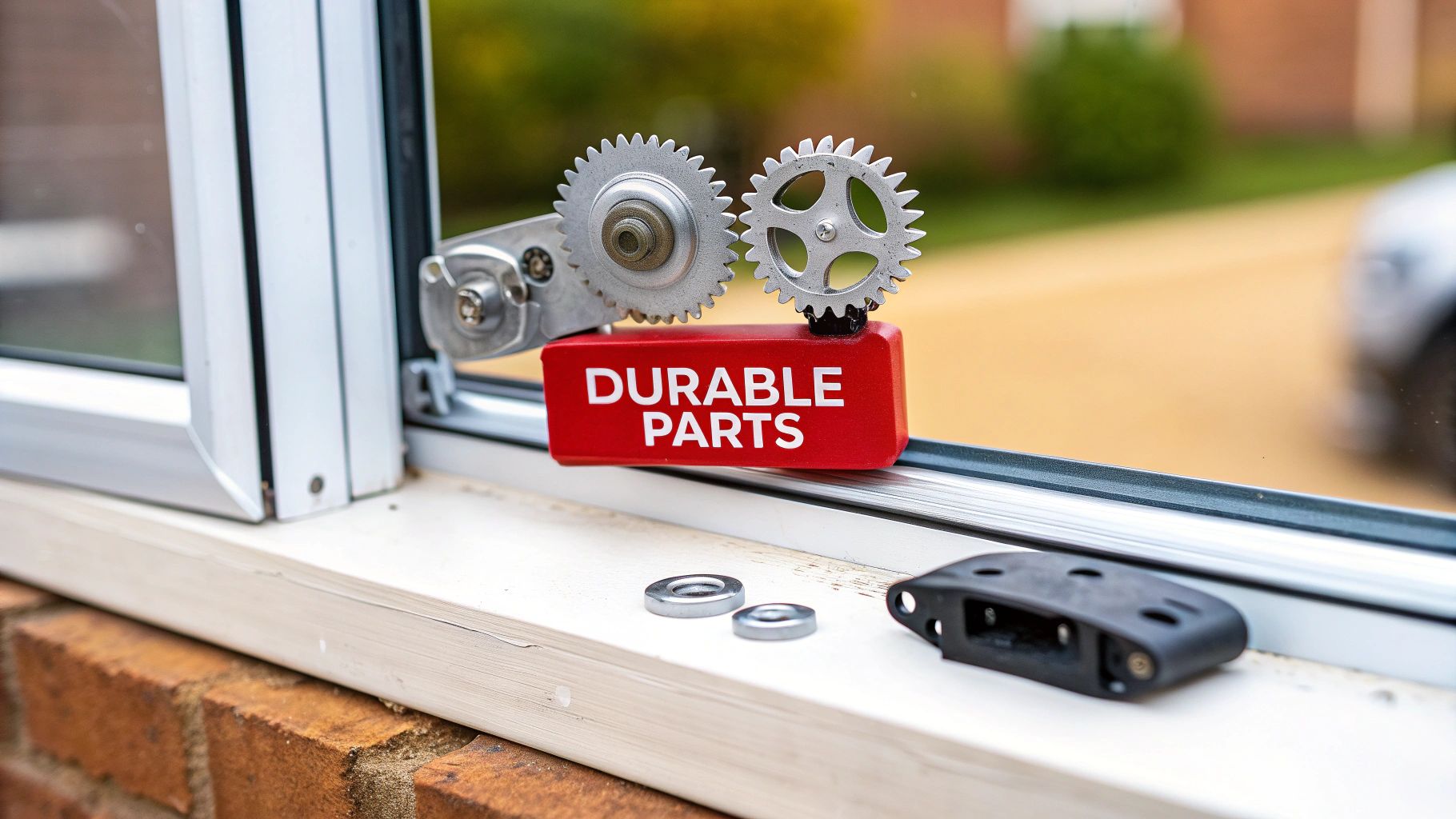
- Look for Metal Internals: This is the most important thing. Prioritize regulators that advertise upgraded metal gears, pulleys, and cable guides. Metal simply holds up to the constant stress and friction far better than plastic, giving you smooth operation for years to come.
- Check the Motor Quality: If you're buying a complete assembly with the motor, make sure it’s been properly tested. A solid motor provides consistent power without straining, which is key to avoiding another premature failure.
- Ensure OEM-Style Connectors: The replacement should have electrical connectors that are identical to the factory part. This turns the installation into a simple plug-and-play job, with no frustrating wire cutting or splicing needed.
Choosing Accurate Cameras and Sensors
From rearview cameras to parking sensors, modern cars are packed with technology that keeps us safe. When a sensor fails, it's not just an inconvenience; it can be a genuine safety risk. The number one goal when replacing any sensor is to restore that original, factory-level accuracy.
Think about it: an aftermarket parking sensor is worthless if it beeps too late or cries wolf every time a leaf blows by. You need to look for brands that guarantee their sensors are calibrated to match factory specifications for detection range and sensitivity. That way, you know it'll work correctly when it really counts.
For something like a rearview camera, a CAPA certification is your best friend. This seal is a guarantee that the camera's picture clarity, field of view, and performance in low light are just as good as the original. It’s about restoring your car's safety features without compromise.
What to Look For in Mirrors and Door Handles
Side mirrors and door handles take a beating every single day. They're constantly being used and are exposed to sun, rain, and snow. For these parts, quality comes down to tough materials and engineering that perfectly mirrors the original’s design and function.
Side Mirrors Checklist:
- Functionality Match: Does your factory mirror have power-adjust, a built-in heater, or a turn signal? Your replacement absolutely must have the exact same features and connectors to work properly.
- Housing Material: The casing should be made from a high-grade, UV-resistant plastic. Cheaper plastics will fade, turn chalky, and become brittle after a year or two in the sun.
- Glass Quality: The mirror itself should be crystal clear and free of any distortion. A wavy or blurry reflection is a dead giveaway of a low-quality part.
When it comes to door handles, especially on trucks and SUVs, the best aftermarket parts are often tougher than the originals. Many factory handles rely on plastic internal levers that are notorious for snapping under pressure. A premium aftermarket handle will often use a stronger polymer or add metal reinforcements at those key pivot points to prevent this exact problem.
By focusing on these specific material and design details, you’re not just finding a part that fits. You’re finding a better part—one that’s been thoughtfully engineered to fix the original's weaknesses and give you better performance for the long haul.
How to Choose Trustworthy Sellers and Brands
You’ve learned how to spot a quality part and double-check the fitment, but where you buy that part is just as important. The best aftermarket component in the world isn't much use if it shows up from a shady seller with a disconnected phone number. Vetting the retailer and the brand is the final, crucial step in making sure your money and time are well spent.
It's a lot like hiring someone to work on your house. You wouldn't just hire the first person who shows up, right? You'd check their reviews, look at their past work, and make sure they stand behind their craftsmanship. The exact same thinking applies when you're buying car parts online.
Evaluating the Online Seller
Before a part ever makes it into your cart, take a few minutes to do some detective work on the seller. A solid, professional retailer will make it easy to find what you need to feel good about your purchase. They aren't trying to hide anything.
Customer reviews are the obvious starting point, but don't just glance at the star rating. You need to dig into the actual comments and look for recurring themes.
Here's what I always look for in reviews:
- Shipping Speed and Accuracy: Are people consistently getting the right parts, and are they arriving on time? Frequent mix-ups are a huge red flag.
- Customer Service Experiences: Let’s be real, sometimes things go wrong. How does the company handle it? Look for comments about helpful, responsive people who actually solve problems.
- Product Quality Feedback: Do the reviews back up the product claims? Look for comments from people who've had the part installed for a while, confirming it fits and holds up.
Beyond what other customers say, the seller's own policies on warranties and returns tell you a lot. A strong warranty isn't just a sales pitch; it's a direct signal of how much confidence the company has in its own products.
A lifetime warranty on a metal part, for example, tells you the manufacturer is betting on that part to last. On the flip side, vague or complicated return policies are a clear warning sign.
If you want a more detailed checklist, this guide on finding the best online auto parts retailer offers a great framework for sizing up any seller you're considering.
Researching Brand Reputation
Once you’ve found a seller you feel good about, it’s time to look closer at the actual brand of the part. Sometimes this is simple—retailers like T1A Auto are also the brand, so you’re buying direct. In other cases, you might be looking at a few different brands on a big marketplace.
A quick Google search for the brand name plus "reviews" or "problems" is your best friend here. This simple search can uncover a goldmine of information on car forums or social media where real mechanics and DIYers share their unfiltered opinions.
Keep an eye out for brands that are open about how their parts are made. Do they talk about the specific grade of steel they use or how their design improves on a common failure point in the original part? Brands that proudly share their engineering details are usually the ones truly committed to quality. That dedication to durability is what separates the best aftermarket car parts from the rest.
By taking these extra few minutes—vetting the seller through their reviews and policies, then digging into the brand's reputation—you’re building a safety net. It’s the best way to ensure you not only get a high-quality part but also the support you need if you ever run into a problem.
Getting Your Hands Dirty: Smart Installation and Maintenance
That feeling of unboxing a brand-new part is fantastic, but the real victory lap comes after a successful installation. A top-shelf part installed poorly is just as bad as a cheap one, so getting this next step right is what truly makes the difference.
Whether you're a weekend warrior with a garage full of tools or you're handing the keys to your trusted mechanic, a few simple checks can save a world of hurt. These aren't just suggestions; they're the habits that separate a quick fix from a lasting repair.
Before You Turn a Wrench
Hold on. Before you dive in, take five minutes to do a pre-flight check. It’s the single best way to avoid that sinking feeling of realizing you have the wrong part halfway through the job.
- The Side-by-Side Test: This is non-negotiable. Lay the new part right next to the old one you just pulled off. Look at everything—every mounting hole, every electrical connector, every curve. This is your last, best chance to spot a problem before it becomes a real headache.
- A Clean Slate: The spot where your new part will live needs to be clean. We're talking about scraping off old gasket gunk, wire-brushing away rust, and wiping down any grime. A clean mating surface is crucial for a tight seal and proper alignment.
- Right Tool for the Job: Don't even think about using pliers on a bolt. Get the right sockets, have a torque wrench handy for anything important, and make sure you have what you need before you start. You'll avoid stripped bolts, busted knuckles, and a lot of cursing.
A part’s performance is only as good as its installation. Properly torquing bolts to the manufacturer’s specs isn’t just some fussy detail—it’s what keeps things from vibrating loose, getting stressed, and failing a thousand miles down the road.
A Little Upkeep Goes a Long Way
Once your new part is in, don't just forget about it. A little bit of attention can dramatically extend its life, just like changing your oil.
Think about it this way: if you've just put in a new window regulator, why not give it a helping hand? A quick spray of silicone lubricant in the window tracks every six months or so will reduce strain on the motor. It’s a tiny effort that can add years to the part's life.
Same goes for those fancy power-folding mirrors. Use the feature every once in a while. It keeps the gears and motors from getting stiff and seizing up. These small habits protect your investment and keep your car running the way it should.
A Few Final Questions About Aftermarket Parts
https://www.youtube.com/embed/O4dyjvIzbQw
Even with all this info, you might still have a few nagging questions holding you back from hitting that "buy" button. Let's tackle some of the most common myths and concerns so you can shop with total confidence.
One of the oldest and most persistent myths out there is that using an aftermarket part will automatically void your car's warranty. Let me set the record straight: in the United States, that’s flat-out false.
Thanks to the Magnuson-Moss Warranty Act, a federal law is on your side. A dealership or manufacturer can't legally deny your warranty claim just because you installed an aftermarket part. The only way they can refuse a repair is if they can concretely prove that the specific part you installed was the direct cause of the failure.
What If a Part Shows Up Damaged?
It's a huge letdown, but sometimes parts get banged up in shipping. It happens. The real test is how the seller handles it, and a good one will have a simple, clear process ready to go.
The second you spot any damage, jump into action:
- Document Everything: Snap clear photos of the shipping box from all angles, especially where it's crushed or torn, before you even open it. Then, take detailed pictures of the damaged part inside.
- Contact Customer Support Right Away: Don't delay. Good companies have support teams waiting to help. They'll walk you through the next steps for a replacement or refund.
- Keep All the Packaging: Resist the urge to toss the box and packing materials. The shipping carrier might need to inspect them as part of the claim process, so hang onto everything until you have a resolution.
Being proactive like this makes the whole process smoother and faster. A company's return policy for damaged goods tells you a lot about how much they value their customers.
Does a Higher Price Tag Always Mean Higher Quality?
Not necessarily. It’s a classic saying that you get what you pay for, but in the world of aftermarket parts, the price isn't the whole story. A steeper price might just be paying for a big brand name or fancy marketing, not better materials or engineering.
Think in terms of value, not just cost. A reasonably priced part built with upgraded metal components and backed by a lifetime warranty is a much smarter buy than an expensive one with a 1-year guarantee and the same old plastic design.
Instead of letting the price guide you, focus on the real signs of quality we've talked about—things like CAPA certifications, genuine customer feedback, and solid warranties. To get a feel for how these parts perform in the real world, it’s always a good idea to check out detailed auto parts reviews from other drivers. That’s how you find the sweet spot of performance, durability, and price.
At T1A Auto, we stand behind our parts with an industry-leading warranty and a commitment to quality you can trust. Find guaranteed-fit parts engineered to last and get your vehicle back on the road with confidence. Shop now at T1Aauto.com.
