


Body shop parts suppliers are the absolute backbone of the collision repair industry. They provide the essential components needed to restore damaged vehicles, and your choice of supplier directly impacts repair quality, cycle time, and ultimately, your shop's bottom line.
A great partnership makes for a smooth, profitable workflow. The wrong one? It just creates headaches and costly delays.
Why Your Parts Supplier Is Your Most Important Business Partner
We've all been there. You have a straightforward fender replacement on the schedule—a job that should take a few hours, tops. But the aftermarket fender from a new supplier arrives, and the mounting holes are off by just a few millimeters.
Suddenly, your technician is wasting valuable time drilling and modifying the part just to make it fit. This one small hiccup throws the entire day's schedule into chaos. The customer gets frustrated, your bay is tied up longer than planned, and your tech's efficiency tanks. This is where the true role of body shop parts suppliers comes into sharp focus. They aren’t just vendors; they are strategic partners whose performance is directly linked to your own.
The Supplier's Impact on Your Shop's Success
Think of it this way: their efficiency is your efficiency. A reliable supplier delivering a perfect-fit part, exactly when they said they would, is the difference between a profitable repair and a logistical nightmare. This relationship touches every single key metric in your shop.
Your supplier's ability to provide the right part, at the right time, with the right fit, is a foundational element of a profitable and reputable collision repair business. It's an extension of your own team's capabilities.
To manage this partnership well, you first have to understand the landscape of parts available. This knowledge is the basis for every sourcing decision you'll make.
- OEM (Original Equipment Manufacturer): These are made by the vehicle's original manufacturer. They guarantee a perfect fit but always come at the highest cost.
- Aftermarket: Produced by third-party companies, these parts offer a much more cost-effective alternative. The catch? Quality and fitment can be all over the map.
- CAPA-Certified: This is a special category of aftermarket parts. They have been independently tested and certified by the Certified Automotive Parts Association to meet strict standards for fit, quality, and safety. For many shops, they represent the ideal balance of cost and reliability.
Understanding Part Quality and Fitment Guarantees
The real difference between a fast, profitable job and a frustrating comeback often comes down to two simple things: part quality and how well it fits. A fender that almost lines up perfectly ends up costing your techs valuable time and your shop money. This is exactly why the certifications and guarantees from your body shop parts suppliers are your best line of defense.
Let's be honest, not all aftermarket parts are created equal. That’s why independent certifications were created—to help you tell the reliable from the risky. In the collision repair world, the gold standard is the seal from the Certified Automotive Parts Association (CAPA).
Think of a CAPA seal less as a sticker and more as an insurance policy. It's a rock-solid promise that the part went through extensive third-party testing to ensure it meets strict standards for fit, finish, and material quality, making it a true equivalent to the original part it's replacing.
Why CAPA Certification Matters
In the U.S. collision repair market, which is now pushing $50 billion a year, efficiency is king. CAPA certification directly fuels that efficiency, and some studies show it can slash rework by as much as 30%. Given that insurers foot the bill for around 80% of all collision repairs, using certified parts also helps keep the claims process running smoothly.
When you use a CAPA-certified part, you're getting:
- Reduced Labor Time: Your techs aren’t wasting time trying to force a part with misaligned mounting points to fit. It just works.
- Fewer Comebacks: The part does what it’s supposed to do, which means fewer premature failures and much happier customers.
- Insurance Approval: Most major insurance carriers either require or strongly prefer CAPA-certified parts for repairs.
Looking Beyond Certifications for Quality Signals
Smart shop managers know how to read the room, even when there isn't a formal certification. You can learn to spot other signs of a supplier's dedication to quality.
A supplier that invests in high-resolution imagery, detailed specifications, and transparent material descriptions is a supplier that is confident in its product. Vague listings and stock photos should be treated as a warning sign.
For instance, a great supplier will proudly point out when they’ve improved on an original design flaw. A classic example is a tailgate latch assembly where a notoriously weak plastic component is re-engineered with a more durable metal piece. This shows the supplier isn’t just a copycat—they’re actively making parts better.
This kind of commitment to engineering is a huge green flag. To learn more about the different types of components available, you can explore our guide on the differences between OEM and aftermarket parts.
It’s easy to get tunnel vision and focus only on the price tag when you’re ordering a part. But that initial price? It’s just the opening line in a much longer story about the true cost of that component. The real expense for your shop is tangled up in your supplier's logistics, a factor that can quietly bleed your profit margins dry before you even notice.
Think of it this way: efficient logistics from your body shop parts suppliers isn’t a nice-to-have perk. It’s absolutely fundamental to their value as a partner.
Let's say you need a new bumper cover. Supplier A has it for $250 with free 2-day shipping. Supplier B lists the same part for $230, but they tack on a $30 charge for 5-day ground shipping. At a quick glance, Supplier B looks like the winner by $10. But is it really?
That three-day difference in shipping means a car is stuck occupying a valuable bay in your shop, tying up space and stopping a job dead in its tracks. This kills your cycle time—the clock is always ticking from drop-off to pickup. When cycle times get longer, you push fewer cars through the shop each week, which puts a hard ceiling on your revenue.
The Hidden Costs of a Slow Supply Chain
Slow shipping is just the tip of the iceberg. There are plenty of other friction points in a supplier’s process that create a domino effect of hidden costs, turning a job that should have been profitable into a breakeven at best, or even a loss.
Here’s what you really need to be looking at:
- Shipping Lead Times: How fast does the part actually get out their door? A supplier who ships the next day keeps your technicians working, not waiting.
- Return Policies: We've all been there—the wrong part arrives, or a customer backs out. How painful is the return process? A supplier with a difficult or expensive return policy just adds administrative headaches and eats into your margins.
- Invoicing and Payments: Is their billing a mess? Confusing invoices and clunky payment systems waste your office manager’s time, and that’s time you’re paying for.
A supplier with fast, transparent shipping and a responsive support team isn't a luxury. They are a competitive advantage that directly protects your shop's profitability and keeps the whole operation running smoothly.
Supplier Logistics The True Cost Analysis
Let's break this down with a realistic comparison. This table shows how the "cheaper" part isn't always the cheaper option once you factor in the real-world costs of dealing with different body shop parts suppliers.
| Evaluation Criteria | Supplier A (Efficient Partner) | Supplier B (Low Price, High Friction) | Impact on Body Shop |
|---|---|---|---|
| Part Price | $250 | $230 | Initial sticker price. |
| Shipping | Free 2-Day Shipping | $30 (5-Day Ground) | Affects immediate cost and job timeline. |
| Return Policy | Free 90-Day Returns | 15% Restocking Fee + Return Shipping | Determines the cost of correcting an error. |
| Technician Wait Time | 0 Hours (Part on schedule) | 2 Hours (Delayed by 3 days) | Idle labor costs money and hurts productivity. |
| True Job Cost | $250 | ~$440+ (Part + Shipping + Labor) | The total financial impact on the job. |
When you do the math, Supplier B’s supposedly "cheaper" part actually costs your shop $190 more. That’s before you even consider the damage to your shop’s reputation from the delay. And if it was the wrong part? The 15% restocking fee would add another $34.50 to your bill, plus whatever it costs to ship it back.
Finding a partner who gets this is non-negotiable. If you want more tips on what to look for in a vendor, check out our guide on the best online auto parts stores.
Developing a Strategic Supplier Vetting Process
Finding the right body shop parts suppliers shouldn't be a shot in the dark. We've all been there: a bad part shows up, the repair stalls, and suddenly a profitable job is bleeding money and your shop's reputation is on the line. That reactive, fire-fighting approach is a business killer.
A much better way is to get ahead of the problem. By creating a proactive, strategic vetting process, you turn parts procurement from a daily headache into a genuine competitive advantage. This means going deeper than just glancing at a price list and actually putting potential partners through their paces before they get anywhere near a customer's car.
The aim here isn't to build a massive catalog of every vendor on the planet. Instead, you want a small, rock-solid network of trusted partners. I recommend starting by researching and shortlisting three to five promising suppliers that look good on paper. Once you have that list, the real work begins.
This is where you find out if the marketing promises hold up. It’s all about direct conversations, asking pointed questions, and seeing how they treat you long before you're sending them big, regular orders.
The Power of the Trial Order
In my experience, the single best way to test a new supplier is with a strategic trial order. This isn't just about buying a part; it's a dry run of their entire system, from ordering to delivery to support. It’s a low-risk way to see exactly what you're getting into.
Here’s a simple way to do it:
- Pick a Common Repair: Choose a frequent, non-critical job. Think side mirror replacement, a door handle, or a bumper cover—something you do all the time.
- Place a Small Order: Buy only what you need for that single job.
- Evaluate the Full Experience: Pay close attention to everything. How easy was it to find the part on their website? Did you get a clear order confirmation? What did the packaging look like when it arrived?
- Test Their Support: Give their customer service line a call with a legitimate question about the order. See how long it takes to get a human on the phone and whether they actually know what they're talking about.
This small investment of time and money gives you a crystal-clear picture of what it’s like to work with them. Did the part fit like a glove, or did your tech have to fight with it? Was the shipping notification accurate? The answers to these small questions tell you everything you need to know.
A supplier’s performance on a small, simple order is a direct indicator of how they will perform when you’re facing a complex, high-stakes repair with a tight deadline.
This diagram highlights how the "cost" of a part is more than just the number on the invoice.
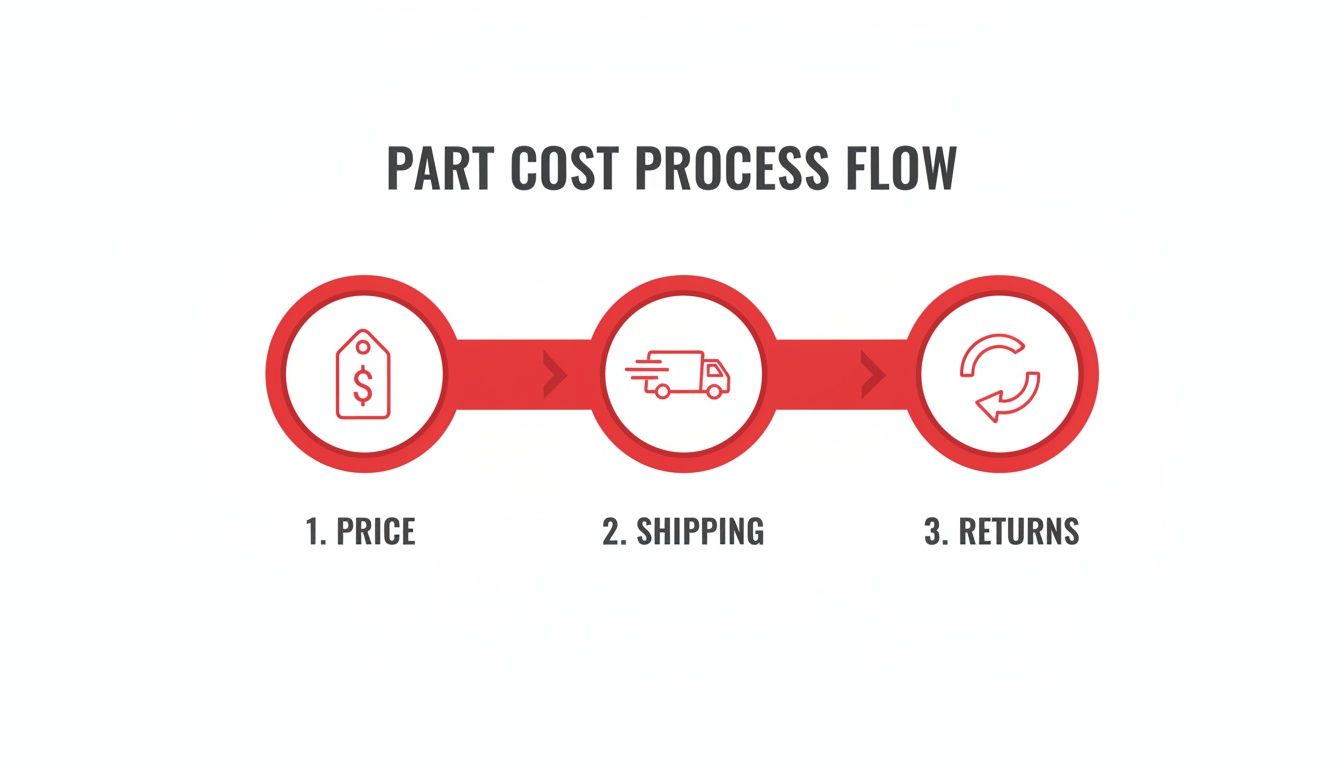
As you can see, the true cost is a blend of the initial price, the reliability of their shipping, and how painless (or painful) their returns process is.
Why Supplier Diversification Is Crucial
Finally, whatever you do, don't put all your eggs in one basket. The global automotive aftermarket is exploding—it's projected to hit USD 860.08 billion by 2025. With the average vehicle age in the U.S. climbing to 12.5 years, the demand for collision repair isn't slowing down. You can dig into more of this data on Precedence Research.
All that growth puts a ton of strain on supply chains. By building relationships with at least two or three properly vetted body shop parts suppliers, you insulate your business from the inevitable stockout, shipping delay, or quality control issue from any single vendor. Think of it as insurance for your workflow. This diversification is your best defense against disruption, ensuring you can always keep cars moving through the shop and deliver for your customers.
Spotting the Red Flags in a Parts Supplier
Finding the right parts supplier isn't just about ticking boxes on a checklist; it's also about knowing what to run away from. Spotting the warning signs early can save your shop a world of hurt—from expensive delays and frustrating comebacks to a tarnished reputation. Think of this as your field guide to sniffing out trouble before it impacts your bottom line.
A huge red flag is any kind of fuzzy language in their business terms, especially when it comes to warranties. If a supplier's warranty policy is vague, buried in the fine print, or just plain confusing, it’s a good sign they don't truly stand behind their products. A partner you can trust will be proud of their warranty—like a lifetime guarantee on metal components—and will state it loud and clear.
Along those same lines, a lack of verifiable certifications should make you hesitate. If a supplier throws around terms like “OEM-quality” but can’t show you a CAPA certification or provide any real data to back it up, you're the one taking all the risk on fit and finish.
Unresponsive and Unhelpful Support
Another major deal-breaker is poor communication. If a potential supplier is tough to get a hold of when they're trying to win your business—taking days to return calls or emails—just imagine how hard they'll be to reach when you have a warranty claim or a part arrives damaged. A supplier who doesn't invest in solid, responsive customer service isn't looking for a partnership.
Here’s a simple test: Before placing a big order, call their support line with a basic technical question. How they respond (or don't respond) will tell you everything you need to know about how much they value their customers.
A supplier’s communication habits before the sale are a direct preview of their support after the sale. If they are unresponsive when trying to earn your business, they will be unreachable when you need their help.
Inconsistent Quality and Pricing
Finally, be cautious of suppliers whose quality is all over the map. In the global auto parts market, valued at USD 545.31 billion, consistency is everything. Sure, aftermarket parts can be 30-50% cheaper than OEM, but a single bad part can erase all those savings with one costly comeback. With vehicle recalls on the rise, it's more important than ever to source from suppliers who guarantee every single component. You can learn more about auto parts market trends and forecasts.
Keep an eye out for these tell-tale signs of a bad fit:
- Vague or Missing Fitment Data: They need to provide crystal-clear make, model, and year compatibility for every part, no exceptions.
- A Low-Effort Website: If their site is filled with low-resolution images or generic stock photos, it shows a lack of investment in their own business. Why would they invest in yours?
- No Customer Reviews or Testimonials: A reputable supplier will have a history of happy customers who are willing to go on the record for them.
By learning to spot these issues from a mile away, you can quickly weed out the wrong vendors and focus your energy on building strong relationships with body shop parts suppliers who are truly invested in your success.
Your Essential Supplier Vetting Checklist

When it comes to your body shop parts suppliers, making smart, consistent decisions is everything. It's the difference between a smooth workflow and a shop full of headaches. This checklist isn't just theory; it's a practical tool to help you score potential partners and make sure anyone you work with is a genuine asset to your business.
Think of this as your repeatable, no-guesswork guide to vetting vendors. It’s designed for busy managers who need to know they’re building a supplier network that truly supports their shop’s reputation for quality, efficiency, and happy customers.
Part Quality and Certification
Let’s be honest, the foundation of every repair is the part itself. Before you even think about placing an order, dig into their commitment to quality.
- Do they offer a clear selection of CAPA-certified parts, especially for critical components like cameras and sensors?
- Is there an explicit, easy-to-find fitment guarantee for every part? No one has time for surprises.
- Are their product photos high-resolution pictures of the actual part, not just generic stock images?
- Do they proudly point out material upgrades, like when they’ve replaced an original plastic piece with a more durable metal one?
If you want to get into the weeds on why these details are so important, you can learn more about the value of CAPA-certified components in our detailed guide.
Logistics and Support
A perfect part that shows up late might as well be the wrong part. A supplier's operational efficiency is every bit as crucial as the quality of their inventory.
Your supplier’s logistics are a direct extension of your shop's workflow. A slow, disorganized partner will create bottlenecks that eat into your cycle time and kill your profitability.
Use these questions to figure out how they’ll perform when a customer’s car is on the lift and you're on a tight deadline:
- Lead Times: Are their shipping and handling times spelled out clearly? Are they competitive?
- Customer Support: Can you actually get a human on the phone or a quick email response during your business hours?
- Business Terms: Does the supplier offer a straightforward, no-hassle lifetime warranty on their most important parts?
- Return Policy: Is their return process simple and free? You should be looking for at least a 90-day window.
Supplier Vetting Checklist
To tie it all together, we've organized these points into a formal checklist. Use this table to score each potential supplier consistently. This turns the process from a gut feeling into a data-driven decision, ensuring every new partner strengthens your operation.
| Category | Evaluation Point | Yes/No/NA | Notes |
|---|---|---|---|
| Part Quality | Offers CAPA-certified parts for key components. | ||
| Part Quality | Provides a clear, written fitment guarantee. | ||
| Part Quality | Website uses high-resolution images of actual parts. | ||
| Part Quality | Highlights material improvements (e.g., metal over plastic). | ||
| Logistics | Stated lead times are competitive and reliable. | ||
| Logistics | Shipping and handling fees are reasonable and transparent. | ||
| Support | Customer support is easily reachable by phone/email. | ||
| Support | Support team is knowledgeable and based in North America. | ||
| Warranty | Offers a clear, lifetime warranty on key parts. | ||
| Returns | Provides a free return policy with at least a 90-day window. | ||
| Inventory | Offers a diverse selection relevant to your shop's needs. | ||
| Systems | Provides a modern, easy-to-use online ordering platform. |
By methodically working through this list for every potential partner, you build a resilient supply chain that you can count on, job after job.
Got Questions About Body Shop Parts? Let's Clear Things Up.
Diving into parts sourcing can feel like a minefield, but knowing the landscape helps you make smarter calls for your shop. For any manager, lining up the right parts suppliers is the backbone of efficient vehicle maintenance and delivering repairs you can stand behind.
Let’s get straight to the questions I hear most often from shop and fleet managers.
What’s the Real Difference Between OEM, Aftermarket, and CAPA-Certified Parts?
Think of it as a quality and cost spectrum. On one end, you have OEM (Original Equipment Manufacturer) parts. These come straight from the vehicle’s maker, so you know the fit and finish will be perfect. The trade-off? They carry the highest price tag.
Then you have standard aftermarket parts. These are made by other companies, and while they can save you a lot of money, the quality can be a real gamble. It's a mixed bag out there.
CAPA-certified parts are the sweet spot right in the middle. These aftermarket parts go through rigorous independent testing to prove they meet or exceed the same standards for fit, function, and durability as their OEM counterparts. This certification is your shop's seal of approval—a guarantee of quality that insurance companies often look for when approving claims.
How Can I Test a New Supplier Without a Major Commitment?
Start small. The absolute best way to vet a new supplier is with a low-stakes trial order. Don't go all-in right away.
Pick a common, non-critical part for a standard repair, maybe a door handle or a side mirror. This simple test lets you see their entire process in action.
A small trial order reveals everything: the ease of online ordering, shipping speed, packaging quality, and the actual fitment of the parts. It’s a low-risk X-ray into their entire operation before you commit.
This approach gives you a real-world look at how they operate before you start relying on them for bigger, more critical jobs.
Why Does a Supplier’s Return Policy Matter So Much?
Because mistakes happen. A solid, no-nonsense return policy is your financial safety net. Parts get misordered, a customer might cancel a job, or a box shows up looking like it lost a fight with a forklift.
If a supplier makes returns a headache, they’re adding friction and cost to your workflow. You end up eating the cost or wasting time arguing.
Look for a partner who offers at least a 90-day free return window. It shows they’re confident in what they sell and that they actually want to be a partner, not just a vendor. A good policy protects your bottom line and keeps cars moving through your bays instead of sitting around waiting on a part.
At T1A Auto, we provide CAPA-certified components and a lifetime warranty on key parts, all backed by a 90-day, hassle-free return policy. Discover guaranteed-fit parts for your shop today at https://t1aauto.com.
