


When we talk about car window parts, we're really talking about a handful of components tucked away inside your door that work together to move the glass up and down. This system is made up of four main players: the window regulator, the power window motor, the control switch, and of course, the window glass itself. Getting a handle on how these parts interact is the key to figuring out what’s wrong when your window stops working.
Understanding Your Car Window System
So, what really happens when you press that window button? It’s easy to take for granted, but there’s a clever little system inside your door panel making it all happen. Think of it like a miniature elevator built just for your window glass.
It's a simple analogy, but it works. The control switch on your door is the button panel, telling the elevator to go up or down. The power window motor is the engine that provides the muscle. The window regulator is the lift mechanism—the collection of arms and cables that does the actual work. And the window glass? That's the elevator car, riding smoothly along its track.
This diagram shows how these core parts fit together.
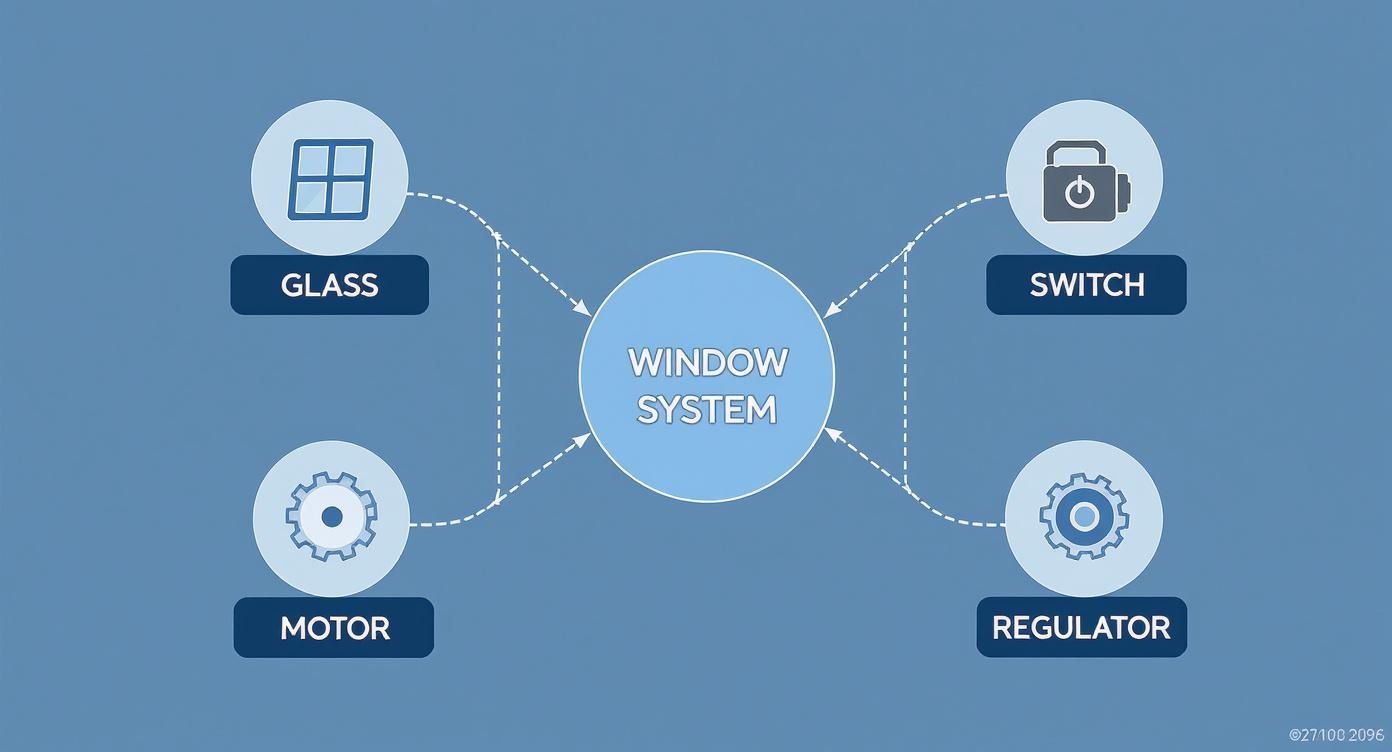
As you can see, they're all connected. A problem with one part can easily masquerade as a failure in another. For instance, a dead switch can make you think the motor has burned out, which is why knowing the whole system is so important.
The Key Players in Your Door
Let's get properly introduced to the main components. Each one has a specific job, and knowing what's what is the first step in any diagnosis.
- The Window Regulator: This is the mechanical backbone of the whole operation. It’s the assembly of arms, gears, or cables that physically guides and lifts the glass. It keeps the window on its track so it moves straight up and down without tilting.
- The Power Window Motor: This is the brawn. It’s a small but mighty electric motor that provides the torque needed to drive the regulator. No motor, no movement.
- The Control Switch: This is your command center. Pressing it completes an electrical circuit, signaling the motor to turn one way or the other, which in turn raises or lowers the window.
In this guide, we’re going to pull back the curtain on this system. We’ll break down how each part works, what the common symptoms of failure are, and what you can do to fix it. And while we're focused on the moving parts here, it's also helpful to understand how everything seals up. To learn more about that, you might find this resource on What Is A Window Seal useful.
By the time we’re done, you’ll be able to confidently figure out why your window is stuck and know exactly what your next move should be.
How Window Regulators and Motors Work Together
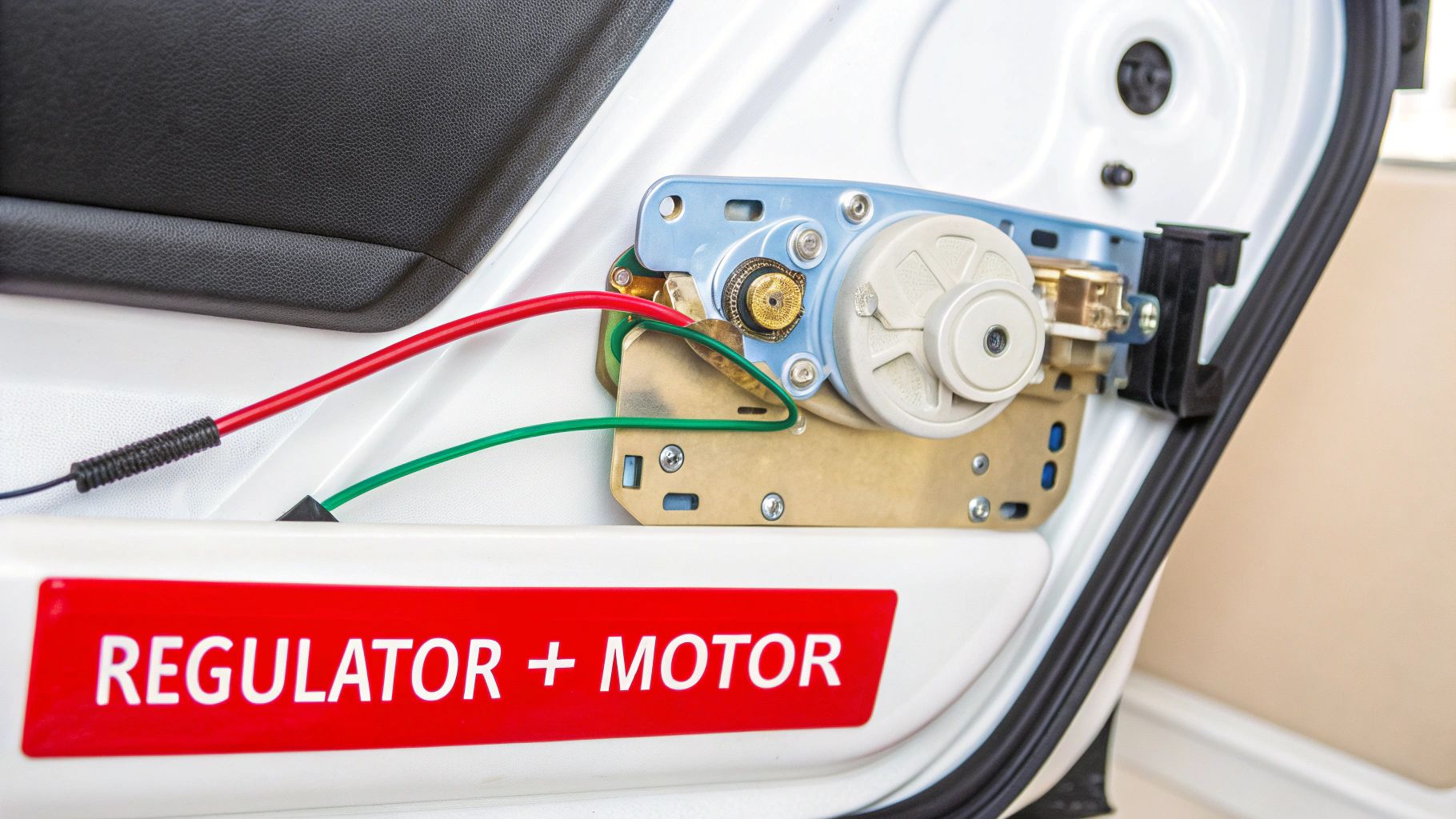
Peek inside your car door, and you'll find a powerful duo responsible for moving your window: the window regulator and the power window motor. Think of them as the muscle and the mind of the operation. The motor supplies the raw power, while the regulator is the clever mechanical assembly that turns that power into the smooth, controlled glide of your window glass.
This partnership is the heart of your entire power window system. Getting a handle on how these two parts work together is the key to figuring out what’s wrong when your window starts acting up, since a problem with one almost always affects the other.
It’s no surprise that these systems have become more complex. The global market for automotive glass and its components is massive—it was valued at around USD 23.6 billion in 2022 and is expected to climb to nearly USD 30.6 billion by 2027. This boom is fueled by more cars being built and the huge popularity of SUVs, which have larger windows that need seriously tough lift mechanisms. If you're curious, you can read more about the trends in the automotive glass market to see where the industry is heading.
The Window Regulator: The Mechanical Backbone
The window regulator is the unsung hero tucked away inside the door panel. It's the whole mechanical rig that holds, guides, and moves the window glass. If the motor is the engine, the regulator is the lifting crane—the tracks, arms, and cables that keep the glass from tilting, jamming, or just dropping into the door.
You'll usually run into one of two main designs:
- Cable-Driven Regulators: This is what you'll find in most modern cars. It uses a network of steel cables, pulleys, and a central drum to hoist a bracket attached to the glass. They’re light and don't take up much space, but the trade-off is that those cables can fray and eventually snap, causing the window to fail suddenly.
- Scissor-Style Regulators: Common in older or heavy-duty vehicles, this design uses a pair of crisscrossing metal arms that open and close like scissors. A big gear drives the motion. These things are built like tanks but are much heavier and bulkier than their cable-driven cousins.
No matter the type, the regulator's core job is the same: to give the window a stable, predictable path to follow.
The Power Window Motor: The Compact Powerhouse
The power window motor is a small electric motor that punches way above its weight. When you hit the window switch, it gets an electrical signal that tells it to spin one way to raise the window or the other to lower it. Simple enough.
But this motor isn't just spinning freely. It has a gear reduction system built right in. This is the secret sauce—it multiplies the motor's torque, giving it the grunt needed to lift a heavy pane of glass against the friction of the weatherstripping and the wind pushing against it.
Key Takeaway: The motor’s main purpose is turning electricity into rotational force. Without its internal gears, it would be far too weak to budge the window. That's why a dying motor often makes the window move painfully slow.
The motor bolts directly onto the regulator, where its small output gear (often called a pinion gear) locks into the regulator's mechanism.
Creating a Seamless Motion
So, how does it all come together? Here's the play-by-play when you hit the switch:
- Power zips from the switch to the motor.
- The motor’s pinion gear starts spinning.
- This gear turns the regulator's main drive. On a cable system, it winds or unwinds the cables from the drum. On a scissor-style, it moves the large gear that opens or closes the arms.
- The regulator's arms or brackets push the glass up or pull it down.
- The glass slides smoothly along the dedicated tracks inside the door frame.
The whole sequence is over in seconds, giving you that effortless motion you expect. The motor and regulator are so tightly integrated that they’re often sold as one complete unit. It makes sense, really. The daily grind wears on both parts. When one gives out, the other has usually been overworked and isn't far behind. Replacing them together is the smartest, most reliable way to get a lasting fix.
Diagnosing Common Car Window Failures
Figuring out why your car window is stuck can feel daunting, but it's often simpler than you think. You just need to play detective. By listening carefully and observing exactly what the window is (or isn't) doing, you can usually zero in on the problem part right in your own driveway.
Let's walk through the clues. This guide will help you connect the symptoms you're seeing—the sounds, the slow movement, or the complete silence—to the most likely mechanical or electrical culprit. No more guesswork, just a clear path to getting it fixed.
Symptom: Window Is Completely Unresponsive
You hit the switch and... nothing. No hum, no click, no movement. Just dead air. When this happens, it's almost always an electrical issue, not a mechanical one.
Before you start tearing the door panel off, always check the easy stuff first. Pop open your fuse box. A single blown fuse can kill power to one or all of your windows, and it's a five-minute fix that could save you hours of headache.
If the fuses are good, your next stop is the window switch. These things get a ton of use, and the internal contacts eventually wear out or get gunked up. If other windows work fine from the driver's master switch but the one in question doesn't, that's a huge clue pointing to a faulty switch in that specific door.
Still no luck? The problem could be a dead power window motor. This means the motor has either burned out internally or isn't getting the electrical signal it needs to run. If you've already confirmed the fuse and switch are working, the motor is the next logical suspect.
Symptom: Loud Grinding or Popping Noises
You press the button, and your ears are assaulted by a horrible grinding, crunching, or popping sound. That's not a subtle hint—it’s the sound of a mechanical meltdown inside your door. The window regulator has failed.
Those awful noises are the sound of metal and plastic parts in serious distress. On regulators that use a cable system, it typically means a steel cable has frayed and is getting chewed up in the spool, or it has snapped completely. The motor is still trying to work, but it's just grinding the broken cable against the pulleys.
Expert Tip: The second you hear that grinding, stop. Don't touch the switch again. Forcing it can burn out a perfectly good motor and might cause the window glass to suddenly drop and shatter inside the door.
If you have an older scissor-style regulator, a loud "pop" usually means a gear tooth has sheared off or one of the metal arms has bent or jumped off its track. Either way, the mechanism is toast, and the entire window regulator assembly needs to be replaced.
Symptom: Window Moves Slowly or Struggles
Is your window creeping up and down like it's running a marathon? Does it seem to labor, maybe even stopping and starting on its way? This is the classic sign of a dying power window motor.
The motor is simply getting old and losing its strength. It just doesn't have the torque to lift that heavy slab of glass anymore. Over thousands of cycles, the internal components wear out, leading to weak, slow, and frustratingly unreliable operation. You'll often notice it goes down okay (thanks to gravity) but can barely fight its way back up.
But hold on—before you blame the motor, check the window tracks. Dirt, grime, and old, hardened rubber seals can create a ton of friction, making the motor work way harder than it should. This can look exactly like a weak motor. A quick cleaning of the window channels might solve the problem. If the tracks are clean and the window still struggles, the motor is likely on its last legs. Our guide on how to test a window motor can give you a definitive answer.
Symptom: Glass Is Tilted or Has Fallen into the Door
This one's impossible to miss. Your window is either sitting crooked in the frame or has vanished completely into the door panel. This is a catastrophic window regulator failure, plain and simple.
The part responsible for physically holding the glass has broken. It almost always happens in one of two ways:
- Broken Lift Plate: The plastic or metal clip connecting the regulator's moving arm to the bottom of the glass has snapped clean off.
- Snapped Cable: In a cable-style regulator, the main lift cable has broken, leaving absolutely nothing to hold the window's weight.
Once this happens, the glass is completely unsecured and free to drop. It’s not just a pain; it’s a security risk for your vehicle. The only fix here is to replace the entire window regulator and motor assembly.
To make diagnosis even easier, here's a quick-reference table that matches the symptom you're experiencing with the most likely culprits.
Common Window Failure Symptoms and Likely Causes
| Symptom | Most Likely Cause | Secondary Cause(s) to Check |
|---|---|---|
| Window won't move at all (no sound) | Window Switch or Blown Fuse | Failed Window Motor, Damaged Wiring |
| Window makes grinding/clicking noises | Window Regulator (snapped cable or broken gear) | Debris in the Door, Stripped Motor Gear |
| Window is slow, struggles, or stops | Window Motor (wearing out) | Dirty/Dry Window Tracks, Failing Regulator |
| Window is tilted or has fallen | Window Regulator (broken lift plate or cable) | Loose Mounting Bolts, Broken Glass Channel |
| Window only works from one switch | Window Switch (master or individual) | Damaged Wiring, Lockout Switch Engaged |
| Window works intermittently | Window Motor or Window Switch (failing) | Loose Wire Connection, Overheating Motor |
Using this table can help you quickly narrow down the possibilities and give you confidence in what parts you need to look for.
How to Choose the Right Car Window Parts
Alright, you’ve figured out what’s broken. Now for the crucial part: getting the right replacement. This might seem daunting with all the options out there, but it really just comes down to a few key decisions. Nailing this choice from the get-go will save you a ton of time, money, and the headache of a repair gone wrong.
First things first, you have to guarantee the part will fit. Modern cars are incredibly precise. A window regulator from a 2015 Ford F-150 might look identical to one for a 2018 model, but trust me, it won't fit. You absolutely have to match the new part to your vehicle's exact year, make, and model.
This is where a good vehicle lookup tool, like the one we have at T1A Auto, becomes your best friend. Just plug in your car’s details, and our system will instantly show you only the parts that are a guaranteed match for your ride.
Finding Your Perfect Match
Using a vehicle finder tool takes all the guesswork out of the equation. It confirms that the bolt patterns, electrical hookups, and overall dimensions are a direct swap for what's currently in your door.
- Year, Make, and Model: This is the absolute bare minimum you need to know.
- Sub-Model or Trim: Little details matter. A coupe and a sedan version of the same car often use different parts.
- Door Position: Don't forget to specify which door you're working on—front driver, front passenger, rear left, or rear right.
Getting these details locked down is the foundation for a smooth, stress-free installation.
OEM vs. Aftermarket Parts
Once you know what fits, you’ll run into the classic crossroads: go with an OEM (Original Equipment Manufacturer) part from the dealer, or pick a quality aftermarket part? OEM parts are the exact same ones your car came with from the factory. They’re a sure thing in terms of fit, but they come with a hefty price tag.
On the other hand, high-quality aftermarket parts are made by different companies to meet—and often beat—the original specs. They hit that sweet spot of performance, durability, and value, which is why they're a favorite for everyone from weekend warriors to professional mechanics. To really dig into the differences, check out our detailed guide on OEM vs. aftermarket parts.
Pro Tip: Here’s a little inside baseball for you. Many top-tier aftermarket brands, including T1A Auto, actively seek out and fix the weak points in original designs. For example, if an OEM part uses a plastic piece that’s known to fail, we’ll often upgrade it to a more durable metal component. You end up with a part that’s actually better and longer-lasting than the original.
This commitment to improving on the original is one of the biggest perks of choosing a premium aftermarket brand.
Understanding Quality and Materials
Let’s be clear: not all aftermarket parts are built the same. The quality of the materials is everything—it's what determines how long your fix will actually last. You want to see robust materials like reinforced plastics and high-grade steel, especially for the hardworking bits like regulator cables and gear housings.
This is especially true today, with parts coming from all over the world. The Asia-Pacific region, led by manufacturing giants like China and Japan, produces a massive volume of automotive components, including car window parts. With such a sprawling supply chain, it’s vital to buy from a supplier who is upfront about their material quality and manufacturing standards.
When you're shopping, keep an eye out for certifications that scream quality and safety.
- CAPA Certification: The Certified Automotive Parts Association (CAPA) is an independent third party that puts parts through the wringer. A CAPA seal is your proof that the part has been tested to ensure its fit, form, and function are just as good as the original.
- Lifetime Warranties: A good brand will stand by its work. A lifetime warranty, particularly on a part that features upgraded metal components, is a powerful sign that the manufacturer is confident in its product’s durability.
Choosing reliable car window parts from a trusted source like T1A Auto means you're not just patching a problem—you're investing in a durable, long-term solution for your vehicle.
7. A Guide to Installation and Maintenance
So, you’ve got your new parts, and you’re ready to get your hands dirty. Great! Tackling this repair yourself is totally doable. This section will walk you through what the replacement process actually looks like and give you some pro tips to make sure your new components last for the long haul.
Think of this as a bird's-eye view to set your expectations for a weekend project, not a replacement for a detailed, vehicle-specific repair manual.
A Realistic Look at Installation
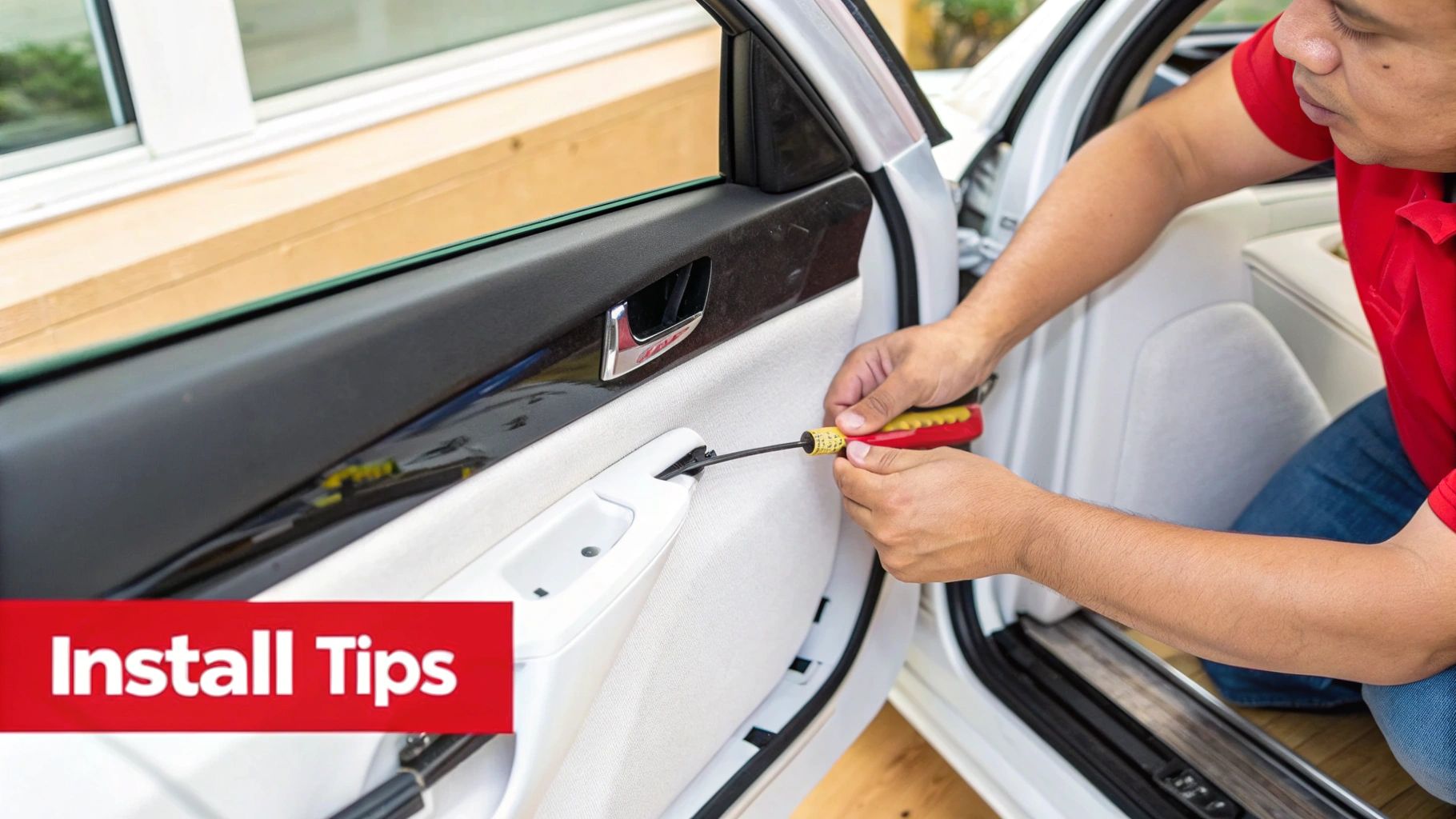
Let’s be honest: replacing a window regulator and motor isn't rocket science, but it does require a bit of patience. For most DIYers with a basic toolset, it's a very manageable job. The trickiest part, nine times out of ten, is getting the interior door panel off without snapping any of those brittle plastic clips.
Here's a general breakdown of what the job entails:
- Disconnect the Battery: Always, always do this first. It’s a simple safety step that prevents any nasty electrical surprises.
- Pop Off the Door Panel: This usually means finding a few hidden screws (check inside the door handle and armrest) before you can gently pry the panel loose. You'll then need to unhook the electrical plugs for your window switches and locks.
- Peel Back the Weather Barrier: Behind the panel, you'll find a plastic or foam sheet. Carefully pull this back just enough to get to the regulator. Try not to rip it, as it's your main defense against moisture.
- Secure the Window Glass: Now you can see inside the door. The first thing you need to do is get the window glass out of your way. Use strong tape (painter's tape or duct tape works well) to secure it in the fully closed position by taping it over the top of the door frame.
- Remove the Old Assembly: Unplug the motor, then start unbolting the old regulator from the door frame itself. You'll also need to unbolt the clamps that physically grip the bottom of the window glass.
- Install the New Parts: Now, just reverse the process. Bolt the new regulator and motor into place, making sure everything lines up just right.
- Attach the Glass: Carefully lower the glass back down and bolt it securely into the clamps on the new regulator.
- Give It a Test Run: Before you put everything back together, reconnect the window switch and the battery. Run the window up and down a few times to make sure it moves smoothly and doesn't bind up.
- Reassemble Everything: If it all checks out, you're on the home stretch! Stick the weather barrier back on, snap the door panel into place, and you're done.
For a more in-depth look with pictures and specific pointers, check out our guide on how to install a window regulator.
Proactive Maintenance for a Longer Lifespan
Once your new window parts are in, a little bit of care goes a long way in preventing another failure down the road. Your power window system does a lot of heavy lifting, and the secret to a long life is simply reducing strain.
Key Insight: The number one killer of window motors and regulators is friction. When the motor has to fight stiff, gritty window channels, it overheats and puts a massive strain on all the mechanical parts, leading to burnout and breakage.
Here are a few easy habits that make a world of difference:
- Clean the Window Tracks: Every few months, take a cloth and wipe out the rubber channels that the glass slides in. A little silicone spray on the cloth helps clean out the gunk and keeps the rubber slick. This one simple step can drastically cut down on friction.
- Condition the Rubber Seals: The weatherstripping around the window can get dry, hard, and sticky over time. Wiping them down with a rubber conditioner keeps them soft and pliable, letting the glass glide by effortlessly.
- Avoid Slamming Doors: It might sound small, but slamming a car door sends a shockwave through every component inside. Over time, these vibrations can loosen bolts and even crack the plastic pieces on the regulator.
These little maintenance tasks dramatically reduce the daily wear and tear on your car's window parts. Taking a proactive approach ensures you get the most out of your repair, giving you years of smooth, reliable operation.
Your Top Questions About Car Window Parts, Answered
Even after getting familiar with all the window components, you probably still have a few questions. That's completely normal. Let's tackle some of the most common things we hear from drivers, so you can feel confident handling your repair.
We'll clear up any lingering confusion about repair strategy, costs, and safety. Think of this as the final piece of the puzzle you need to get the job done right.
Should I Replace the Window Motor and Regulator Together?
Absolutely. In almost every case, replacing both the window motor and the regulator at the same time is the best move you can make. These two parts are a team, and they live a hard life, constantly working together inside your door. If one gives out, you can bet the other has been under a ton of stress and isn't far behind.
The toughest part of the entire job is just getting the door panel off to access them in the first place.
By swapping them out as a single, matched assembly, you're not just fixing the problem—you're preventing another one. It saves you the headache of tearing that door apart all over again in a few months, making it the smartest, most cost-effective solution in the long run.
How Much Does It Cost to Fix a Car Window?
The final bill can swing pretty widely depending on your car's make and model, and whether you do the work yourself or take it to a shop. Going the DIY route will always be the most wallet-friendly option.
You can usually find a high-quality replacement regulator and motor assembly for somewhere between $50 and $150. If you head to a mechanic, you’re also paying for labor—typically one or two hours' worth. That can easily push the total cost to anywhere from $250 to over $500, especially if you're driving a luxury or European car.
Taking a little time to diagnose the problem and order the right car window parts yourself can literally save you hundreds of dollars.
Is It Safe to Drive with a Broken Car Window?
Driving around with a broken window is a bad idea for a few big reasons. First, a window stuck in the down position is an open invitation to thieves and leaves your car's interior exposed to the elements.
Worse yet, a window that has dropped down inside the door is a real hazard. It could jam the door's locking mechanism or even shatter from bumps in the road, leaving you with a dangerous mess of glass. For your own safety and peace of mind, use some strong tape to secure the window in the 'up' position and get it fixed as soon as you can.
It's also smart to be prepared for emergencies. Knowing how to properly use tools like car safety hammers can be critical if you ever need to get out of your vehicle quickly.
What Is the Difference Between OEM and Aftermarket Parts?
This is one of the most important questions for any car repair. Knowing the difference helps you get the best value without sacrificing quality.
- OEM (Original Equipment Manufacturer) Parts: These are the exact same parts that were installed on your car at the factory. You buy them from a dealership, and while they guarantee a perfect fit, they also come with a much higher price.
- Aftermarket Parts: These are made by other companies, not the car manufacturer. The best aftermarket brands design their parts to meet or even exceed the original specs, offering a fantastic blend of performance and affordability.
When you choose a trusted aftermarket brand, you're getting a part that works just as well as the original—and sometimes even better—without paying that steep dealership markup.
At T1A Auto, we're all about premium aftermarket car window parts that are built to last. We upgrade common failure points with stronger metal components and back every part with a lifetime warranty, so you can fix your vehicle with total confidence. Find the guaranteed-fit parts for your car or truck today at https://t1aauto.com.
