


You order a replacement door handle for your truck, wait for delivery, remove the old part, and discover that the new one doesn't fit. Or it fits well enough to install, then snaps the first time someone pulls it. The vehicle may be stuck in the driveway, the repair appointment may be wasted, and every hour spent arguing with support adds to the cost.
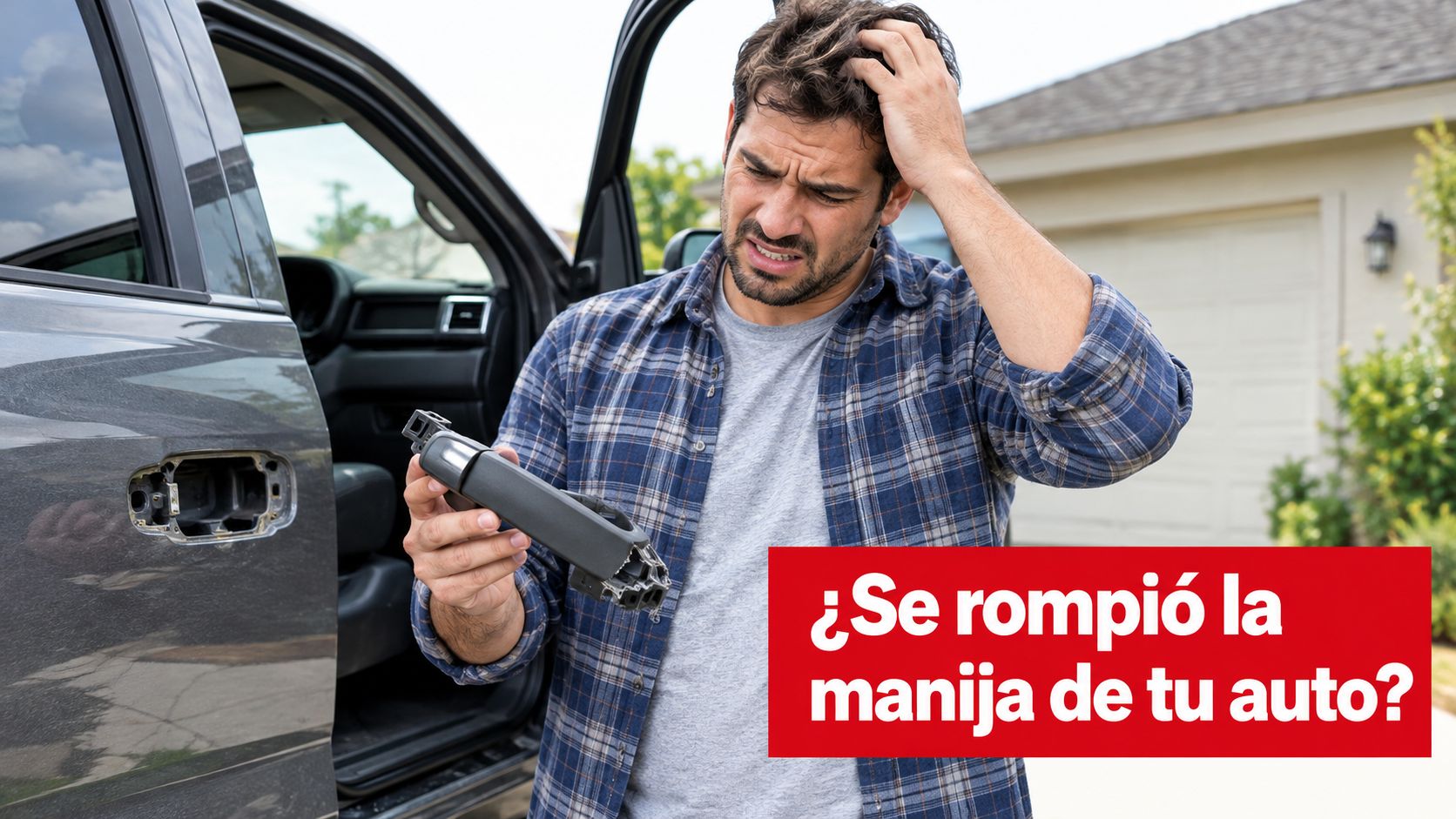
That's why a customer satisfaction guarantee matters in automotive parts. It shouldn't mean a vague promise to “make things right” after the sale. It should tell you whether the part fits, what happens if it arrives damaged, how long coverage lasts, who pays return shipping, and how quickly a real person will respond.
For a DIY owner, a bad-fit part can turn a straightforward repair into a second order, another teardown, and possibly a tow. A mechanic loses bay time and customer confidence. A fleet manager deals with downtime multiplied across vehicles. Before buying, it's also useful to understand how retailers measure the quality of their customer experience, including resources on how to improve your Shopify CSAT.
Table of Contents
- Why Customer Satisfaction Matters in Auto Parts
- The Psychology and Economics of Guarantees
- Key Components of an Effective Guarantee
- How T1A Auto Delivers on the Promise
- Beyond the Product, Service Guarantees
- Navigating Warranties and Returns
- How to Make a Claim, a Step-by-Step Guide
- Choosing a Reliable Parts Retailer
Why Customer Satisfaction Matters in Auto Parts
A wrong shirt size is annoying. A wrong mirror, window regulator, latch, or door handle can leave a vehicle unusable while the owner waits for a replacement. The difference is practical, not emotional. Automotive parts are tied to fitment, installation, safety, transportation, and work schedules.
A customer satisfaction guarantee reduces some of that uncertainty before the order is placed. It tells the buyer that the retailer has considered common failure points, including incorrect compatibility, shipping damage, premature failure, and dissatisfaction with the buying process. The strongest policies make the remedy visible before checkout, not hidden behind a support ticket after something goes wrong.
The real cost of a bad-fit part
Suppose a pickup owner orders a tailgate handle based on a broad vehicle description. The package arrives, but the mounting points don't line up. The owner now has an unusable vehicle, an opened package, and a repair that can't move forward. If the retailer asks for repeated photos, vehicle details, and explanations before acknowledging the problem, the part's price becomes only one part of the loss.
A repair shop faces a different version of the same problem. A technician may have scheduled labor around the part, removed the original component, and discovered that the replacement is wrong. The shop may need to reschedule the customer, source another component, or absorb time it can't bill.
Practical rule: A guarantee should protect the buyer from the retailer's avoidable mistakes, not merely repeat the manufacturer's warranty language.
A useful guarantee acts as a trust signal. It shows that the seller is willing to define responsibility for fitment, defects, returns, and recovery. That commitment matters most when the product can't be evaluated fully until it reaches the vehicle.
The promise also needs to distinguish between product protection and service responsibility. A part warranty may cover a defective component. A service guarantee should address slow replies, incorrect fitment guidance, unresolved tickets, and confusing claims procedures. Those are different failures, and a serious parts retailer should write them separately.
The Psychology and Economics of Guarantees
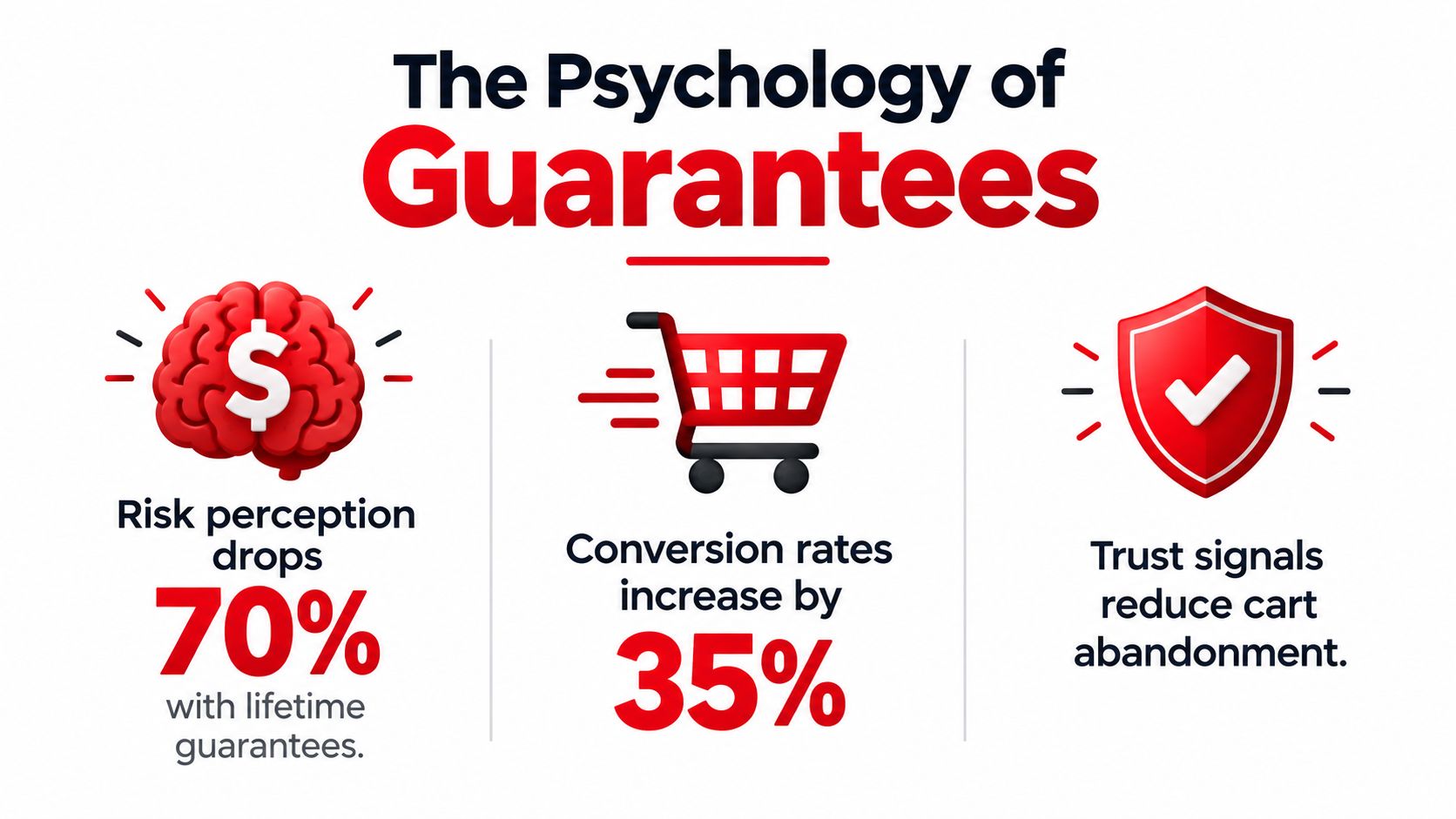
Guarantees work because they change the buyer's perception of risk. A shopper can't always verify whether an aftermarket component will match the original mounting points, survive daily use, or arrive without damage. A clear remedy lowers the perceived cost of being wrong.
Foundational experiments by economists James Andreoni and B. Douglas Bernheim examined bargaining games in which participants received US$10 and faced binding guarantees, nonbinding guarantees, or no guarantee. When sellers offered a guarantee, buyers offered approximately US$5.60 to US$5.70. Without a guarantee, offers were only US$1.80 to US$2.70. The study is available in the American Economic Association research paper.
The point isn't that every buyer will behave like an experiment participant. The point is that a stated guarantee can make a customer more willing to commit money before receiving the product. It functions as a signal that the seller expects the transaction to work and has accepted some responsibility if it doesn't.
A promise needs enforcement
The same experimental research exposes the weakness of empty language. Sellers who offered a nonbinding guarantee gave buyers an average of US$7.30 after buyers initially offered US$5.60. But when sellers could freely choose whether to honor refunds, only 17% of refund requests were honored, according to the same study.
That distinction matters in auto parts. “Satisfaction guaranteed” sounds reassuring, but it doesn't tell the buyer whether a wrong-fit part qualifies, whether installation affects eligibility, or whether the remedy is a refund, replacement, or store credit. A promise becomes credible when the retailer defines coverage and consistently delivers the stated remedy.
A 2022 peer-reviewed study of 574 survey responses in the Chinese consumer market found that perceived service guarantees improved customer value by reducing perceived risk and improving perceived service quality. The researchers reported support for all nine tested hypotheses, while also finding that customers evaluated guarantees differently across age, education, and income groups. The peer-reviewed study on service guarantees and customer value reinforces a practical lesson: clarity matters because customers don't all interpret the same promise in the same way.
The strongest guarantee therefore does two jobs. It reassures the buyer before purchase, then gives the support team a specific operating procedure after purchase. Without the second part, the first is just marketing.
Key Components of an Effective Guarantee
A useful guarantee has four design requirements: unconditional coverage where appropriate, a meaningful commitment, plain-language terms, and low-friction invocation. These features work together. Remove one, and the policy becomes harder to trust or harder to use.
Coverage that addresses the actual risk
“Unconditional” doesn't mean every claim is automatically approved. It means the policy should cover the failure the buyer reasonably thinks the promise covers. If the retailer advertises guaranteed fitment, the policy should address a part that doesn't match the listed vehicle, not only a factory defect.
The policy should identify:
- Covered components: State whether the promise applies to the entire assembly, selected hardware, upgraded materials, or only manufacturing defects.
- Vehicle compatibility: Explain how fitment is verified and what happens when the retailer's listing or guidance is wrong.
- Remedies: Name the available outcome, such as replacement, refund, repair, or shipping reimbursement.
- Boundaries: Separate misuse, improper installation, modifications, normal wear, and shipping damage rather than hiding everything under broad exclusions.
A commitment with practical value
A lifetime warranty on an upgraded metal component communicates something different from a limited warranty on a standard item. The duration should match the product's intended value and expected failure risk. A short return window serves a different purpose, usually allowing the buyer to inspect the part and decide whether to keep it.
A meaningful guarantee also covers the operational details. The customer should know whether the retailer will provide a replacement before receiving the failed part, whether return shipping is covered, and what happens if the vehicle is immobilized.
Language a buyer can understand
A policy shouldn't require legal interpretation. Use short sentences and scenario-based examples. “Return the unused part within the stated window” is clearer than a paragraph filled with undefined eligibility terms.
Write separate answers for common questions: Can the part be returned after installation? Does a fitment error qualify? Who pays labor? What evidence is necessary? What happens when support misses its response target?
A claim process that doesn't punish the customer
Low-friction invocation means the customer can start a claim through a visible channel, provide the necessary information once, and receive a clear next step. Photo evidence or diagnostic information may be reasonable for some failures, but the retailer shouldn't demand repetitive proof when its own fitment record already establishes the mismatch.
The research on guarantee design and customer engagement identifies these same design dimensions as important to customer participation and recommendation. For auto parts, the practical translation is simple: verify the vehicle before purchase, retain the order-level compatibility record, standardize the claim form, and define a resolution target.
How T1A Auto Delivers on the Promise
T1A Auto provides a useful example of how product coverage can be separated by component type. Its policy structure includes a lifetime warranty for upgraded metal parts, a 3-year warranty for standard items, and free 90-day returns. Those terms address different buyer concerns rather than forcing every issue into one generic satisfaction statement.
The upgraded metal coverage is relevant when a replacement is designed to address a failure-prone plastic component. The standard warranty covers a defined period for other parts. The return policy gives the buyer a separate route for a part that is unused, unwanted, or identified as unsuitable within the stated return period.
A transparent policy could read like this:
Example policy language: “If the part doesn't fit the vehicle identified at purchase, contact support with the order number and vehicle details. We'll review the fitment record and provide the applicable replacement or refund instructions. Warranty coverage, return eligibility, installation exclusions, and service remedies are handled under their separate stated terms.”
That separation prevents a common mistake: treating a return window, a product warranty, and a fitment guarantee as interchangeable. They aren't. A return window addresses the purchase decision. A warranty addresses product failure. A fitment promise addresses compatibility.
For additional context on how lifetime coverage can apply to replacement components, see T1A Auto's guide to lifetime warranty car parts.
The retailer also states that it guarantees fitment, offers replacement or refunds for parts that arrive damaged or defective, provides free standard shipping on orders over $75, and targets responsive support with 24-hour resolution. Those service commitments matter because a warranty has little practical value if the buyer can't reach the company or has no clear path to a decision.
The buyer should still read the applicable terms before ordering. A guarantee is strongest when the customer understands which promise applies to the specific part and which evidence the claim process requires.
Beyond the Product, Service Guarantees
Most auto-parts policies focus on the component. That's incomplete. A customer can receive a physically sound part and still have a failed buying experience because support gave incorrect fitment advice, ignored a time-sensitive question, or took too long to resolve a claim.
A service guarantee covers the retailer's conduct. It can define acknowledgment times, escalation rules, ownership of the case, update frequency, and a remedy when the company misses its stated service commitment. It shouldn't be confused with a product warranty, which covers the part itself.

A 2025 survey of 1,500 adults found that only 11% said all customer-service inquiries were resolved, while 13% said their problems were rarely or never resolved effectively. 75% identified long waits as a major frustration, and 71% believed businesses should financially reimburse customers for poor service interactions. These figures are reported in the survey on customer-service waits and resolutions.
What a service commitment should include
For a parts retailer, a service-level promise should answer practical questions:
- Acknowledgment: When will the customer know the ticket is assigned to a person?
- Ownership: Which team member or department is responsible for the next decision?
- Fitment help: What happens if the retailer's advice leads to an incorrect order?
- Escalation: What can the customer do if the first response doesn't resolve the issue?
- Remedy: Is there shipping reimbursement, replacement priority, credit, or another defined response?
Research on service recovery also shows why the process matters. In a quasi-experimental study spanning 23 countries, customers exposed to unsatisfactory recovery showed higher mean guarantee-invocation intentions, 6.1 versus 3.7, than customers receiving satisfactory recovery. Separate research with 318 participants found that a no-questions-asked guarantee increased perceived fairness, satisfaction, firm credibility, and repurchase intent. The service-recovery research supports a direct operational conclusion: fast, fair recovery protects trust better than a complicated policy that technically offers coverage.
Navigating Warranties and Returns
Buyers often use “warranty,” “guarantee,” and “return policy” as if they mean the same thing. They don't. A return window usually addresses the buyer's decision after purchase. A warranty addresses a product that fails under stated conditions. A satisfaction or service guarantee may address fitment, support quality, or the remedy process.
| Coverage type | Main purpose | Questions to ask |
|---|---|---|
| Lifetime warranty | Protects an eligible component for the stated lifetime terms | What parts qualify, and what exclusions apply? |
| Limited warranty | Covers an eligible part for a defined period or condition | Does it cover defects, normal use, or only selected failures? |
| Return window | Allows a buyer to send back an eligible purchase within the stated period | Can the part be installed, and who pays return shipping? |
| Fitment guarantee | Addresses compatibility with the identified vehicle | How was fitment verified, and what remedy follows a mismatch? |
| Service guarantee | Addresses support performance and claim handling | What response time, escalation path, and remedy are promised? |
The Federal Trade Commission explains that an auto warranty and an auto service contract are different arrangements. Its guidance also notes that warranty coverage may be denied when damage results from improper installation or modifications. Read the FTC guidance on auto warranties and service contracts before assuming that every installation-related problem is covered.
Installation, labor, and returns
A customer should ask whether a part can be returned after installation, whether labor is reimbursed, and what evidence is needed to show a fitment problem. Don't assume that a free return policy covers technician time, diagnostic fees, towing, or consequential damage. Those responsibilities must appear in the written terms.
For a retailer-specific process, review the T1A Auto return policy before ordering. Buyers who sell through marketplaces may also encounter different refund structures, including what a returnless refund means on Amazon. The name of the process matters less than knowing whether the customer keeps the item, sends it back, receives shipping reimbursement, or accepts another remedy.
A clear policy should map each scenario separately. Wrong fitment, shipping damage, defective operation, buyer's remorse, installation error, and delayed support shouldn't all be handled by one vague sentence.
How to Make a Claim, a Step-by-Step Guide
A strong claim is factual, organized, and easy for support to verify. Don't begin with a long emotional explanation, even when the situation is frustrating. Start with the order, the vehicle, the symptom, and the remedy you're requesting.
- Collect the order record. Save the order number, purchase date, part number, vehicle year, make, model, trim, and any fitment information shown at checkout.
- Document the condition. Take clear photos of shipping damage, mounting points, connectors, labels, and the installed or uninstalled part. If the issue is functional, record the relevant diagnostic code or a concise description of the failure.
- Stop before causing more damage. Don't modify, drill, force, or repeatedly reinstall a part while waiting for instructions. Those actions may complicate an installation-related claim.
- Use the designated channel. Submit the claim through the retailer's support form or email. Ask directly for a replacement, refund, fitment review, or troubleshooting decision.
- Request a timeline. Ask when support will respond, whether a return label is required, and what happens next. Keep every reply in one thread.
- Escalate with a summary. If the first response doesn't solve the problem, send a short timeline with the original issue, prior instructions, evidence supplied, and unresolved question.
A practical claim form can use five fields: order details, vehicle details, problem description, evidence, and requested remedy. That structure gives the support agent the information needed to decide without making the customer repeat the story.
Make the remedy explicit: “The part doesn't match the vehicle listed on the order. I've attached photos of the mounting points. Please confirm whether you'll issue a replacement or refund and provide the return instructions.”
For marketplace sellers and buyers dealing with delivery or order disputes, guidance on how to defend your Amazon A to Z claims can help clarify the importance of maintaining organized records. The same discipline applies to direct retailer claims.
Choosing a Reliable Parts Retailer
A reliable retailer makes the promise readable before checkout and usable after failure. Look for four things: specific coverage, a meaningful remedy, plain language, and a low-effort claim path.
Check whether the policy identifies the actual component, warranty duration, fitment process, return conditions, installation exclusions, and response expectations. If the retailer can't explain who pays shipping or what happens after a wrong-fit order, assume the policy will be difficult to use.
Then test the service experience before placing a time-sensitive order. Send a precise fitment question and judge whether the response addresses the vehicle details rather than sending a generic product link. A retailer that handles a pre-purchase question carefully is more likely to have an organized process when a claim arises, though the written policy still controls.
T1A Auto's catalog includes replacement door handles, tailgate assemblies, mirrors, window regulators, cameras, sensors, latches, hinges, cables, and related hardware. Its stated coverage separates lifetime protection for upgraded metal parts, a 3-year warranty for standard items, and free 90-day returns. You can also review guidance on selecting an online auto parts retailer before comparing suppliers.
A customer satisfaction guarantee should reduce uncertainty, not disguise it. Read the terms, save the order record, verify fitment before purchase, and choose a retailer that treats response time as part of the customer experience.
T1A Auto offers vehicle-specific aftermarket parts, upgraded metal components with lifetime warranty coverage, standard items with a 3-year warranty, and free 90-day returns under its stated terms. Visit T1A Auto to verify fitment, review coverage, and choose a replacement backed by a clear path to support.
