


That odd buzzing or clicking coming from your car door isn't just a minor annoyance. It’s one of the clearest early warning signs that your door lock actuator is on its last legs—your car's way of telling you something is wrong before the lock gives up for good.
Your First Warning Signs: Clicking and Buzzing Noises
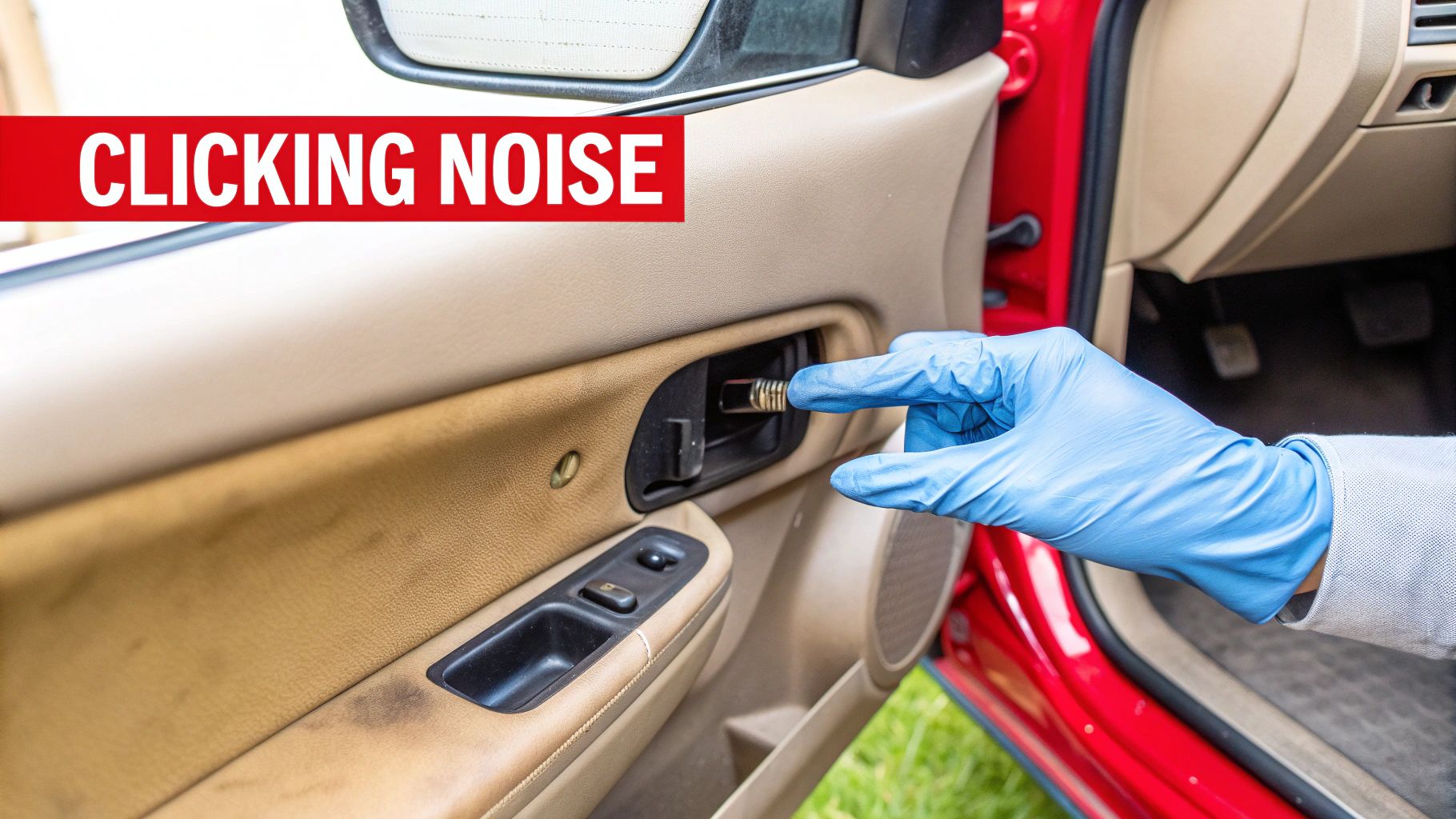
Picture a bicycle with a stripped gear. You can pedal all you want, but the chain just slips and clicks, never quite catching to move the wheel forward. A failing door lock actuator is a lot like that.
When you hit the lock or unlock button, you're sending a signal to a small electric motor inside the actuator. That motor is supposed to turn a set of plastic gears, which then move the physical lock. After thousands of lock and unlock cycles, however, those little gears wear down, and their teeth can't mesh together properly anymore.
The motor is still running and trying to do its job, but the worn-out gears just grind against each other. That’s the source of that unmistakable buzzing or rapid-fire clicking sound.
Why Do Actuator Gears Wear Out?
This kind of mechanical breakdown is almost guaranteed over a vehicle's lifetime. In fact, data shows that a distinct buzzing or clicking noise is a key symptom in about 40% of diagnosed failures in cars and light trucks.
It all comes down to wear and tear. The internal gears can strip or jam after enduring somewhere between 80,000-120,000 operations—a milestone easily reached by high-mileage vehicles. You can dig deeper into the market trends for these automotive parts at HTF Market Insights.
Think about it: every time you lock up at the grocery store or unlock the car for your morning commute, you’re adding another cycle to the actuator’s lifespan. Eventually, that repetitive stress takes its toll.
Key Takeaway: That clicking or buzzing is the sound of a part trying to work but failing mechanically. It's a clear warning that the actuator is on the verge of total failure, which could leave your vehicle unsecured.
Decoding Common Door Lock Actuator Noises
Struggling to figure out what that noise means? This quick guide can help you decipher what your car door is telling you and what you should do next.
| Symptom You Hear | What It Likely Means | Next Steps to Take |
|---|---|---|
| A single, loud click | This could be normal, but if it's new or louder than other doors, it may point to an early alignment issue in the mechanism. | Compare the sound to your other doors. If it's noticeably different, keep an eye on it for other symptoms. |
| A rapid series of clicks | The internal gears are stripped and can't get a grip. The motor has power but can't fully engage the lock. | This is a definite sign of impending failure. You should plan to replace the actuator soon before it quits working altogether. |
| A continuous buzzing sound | The actuator's motor is spinning freely because the gears are completely stripped or jammed. The lock mechanism isn't moving at all. | The actuator has failed. It's time to replace it immediately to make sure your door can lock and unlock properly. |
Paying attention to these sounds is the best way to catch the problem early. A noisy actuator is one that’s about to fail, so addressing it quickly will save you the headache of a door that won't lock or, even worse, won't open.
When Your Power Locks Completely Stop Working
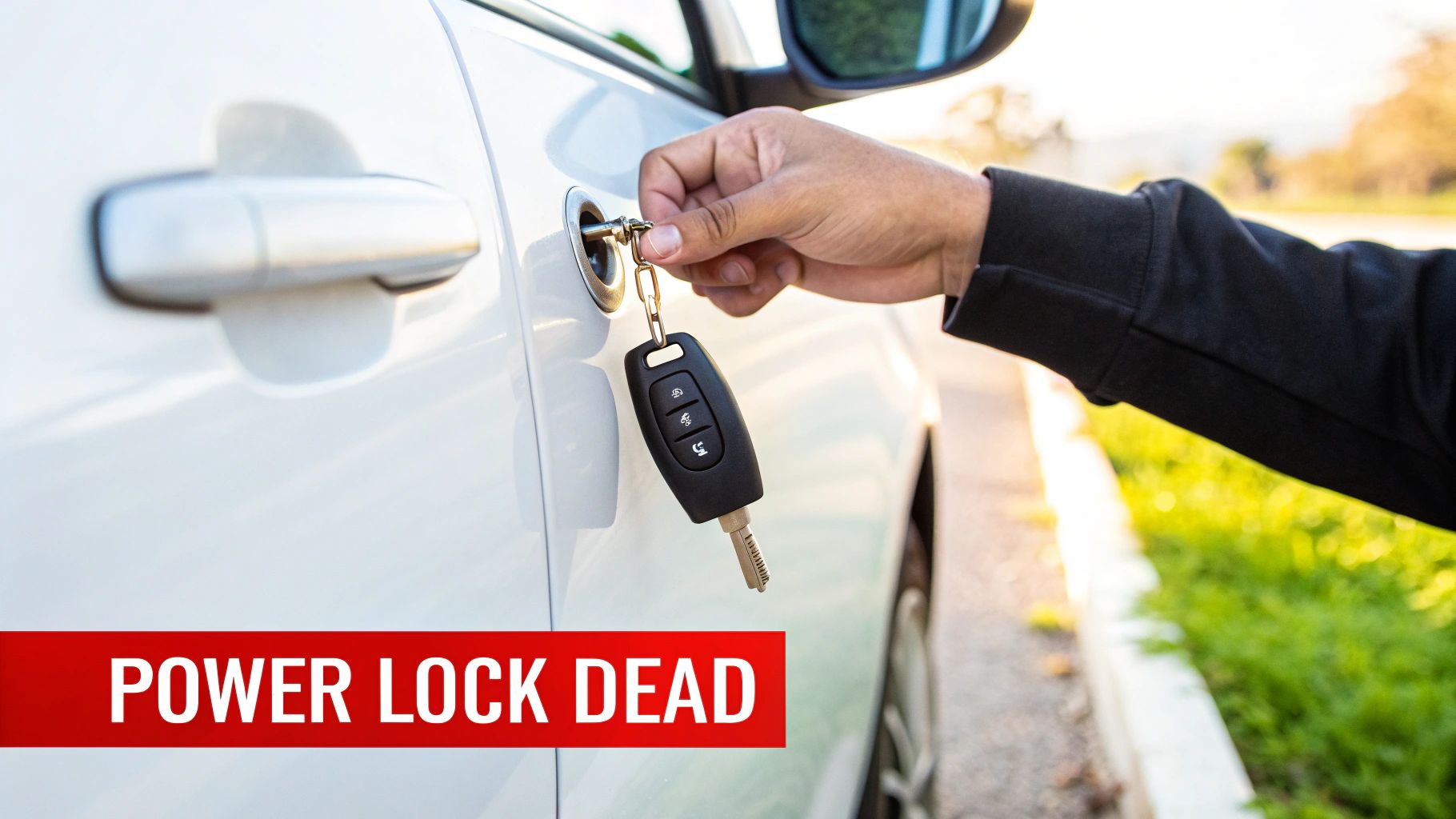
While weird noises are a heads-up, the most undeniable sign of a bad door lock actuator is when one door just gives up completely. You hit the lock button on your key fob or the switch inside, and... nothing. You’re left fumbling for the physical key, locking and unlocking that one door the old-fashioned way.
Think of the actuator as the brawn of your car's locking system. Your key fob sends the electrical command, but the actuator is the little motor that provides the muscle to physically move the lock. It’s the part doing the actual work.
When that muscle fails—usually from a fried motor or stripped internal gears—the electrical command has nowhere to go. The signal is sent, but the door just sits there. This is the final stage of actuator failure, and it’s a pretty clear one.
Pinpointing the Actuator as the Culprit
It's tempting to think it might just be a blown fuse, but when only a single door stops working, the actuator is almost always the guilty party. Your car's power locking system is typically wired to a single fuse.
If that fuse had blown, all of your power locks would stop working at the same time. The fact that the problem is isolated to just the front passenger door or the rear driver's side door is your biggest clue.
A single, non-responsive door lock is the clearest sign that a specific actuator has failed, not the central locking system. This detail helps you avoid chasing down incorrect electrical issues and focus on the real source of the problem.
This kind of failure is incredibly common, especially as vehicles get older. Industry service data shows that improper locking affects up to 25% of vehicles over 10 years old. The problem often boils down to the tiny electric motor inside the actuator wearing out after 100,000 to 150,000 cycles—a lifespan easily reached in popular, frequently used vehicles like Ford and Toyota trucks. You can explore more data on the automotive parts market to see how these trends play out.
Why You Can Still Use the Manual Lock
Even with a dead actuator, you can still lock the door manually with your key or the physical tab inside. Why? Because the power actuator and the manual mechanism are two separate paths to the same destination.
Here’s a simple way to think about it:
- Power Lock: The key fob talks to the actuator, which moves the lock.
- Manual Lock: The physical key turns a cylinder that moves the exact same lock mechanism.
When the actuator fails, it only breaks the "power" part of that equation. The fact that you can still lock the door by hand confirms the underlying latch and linkages are in good shape. This is a crucial diagnostic step that helps you confidently point the finger at the actuator.
The Problem of Erratic and Unpredictable Door Locks
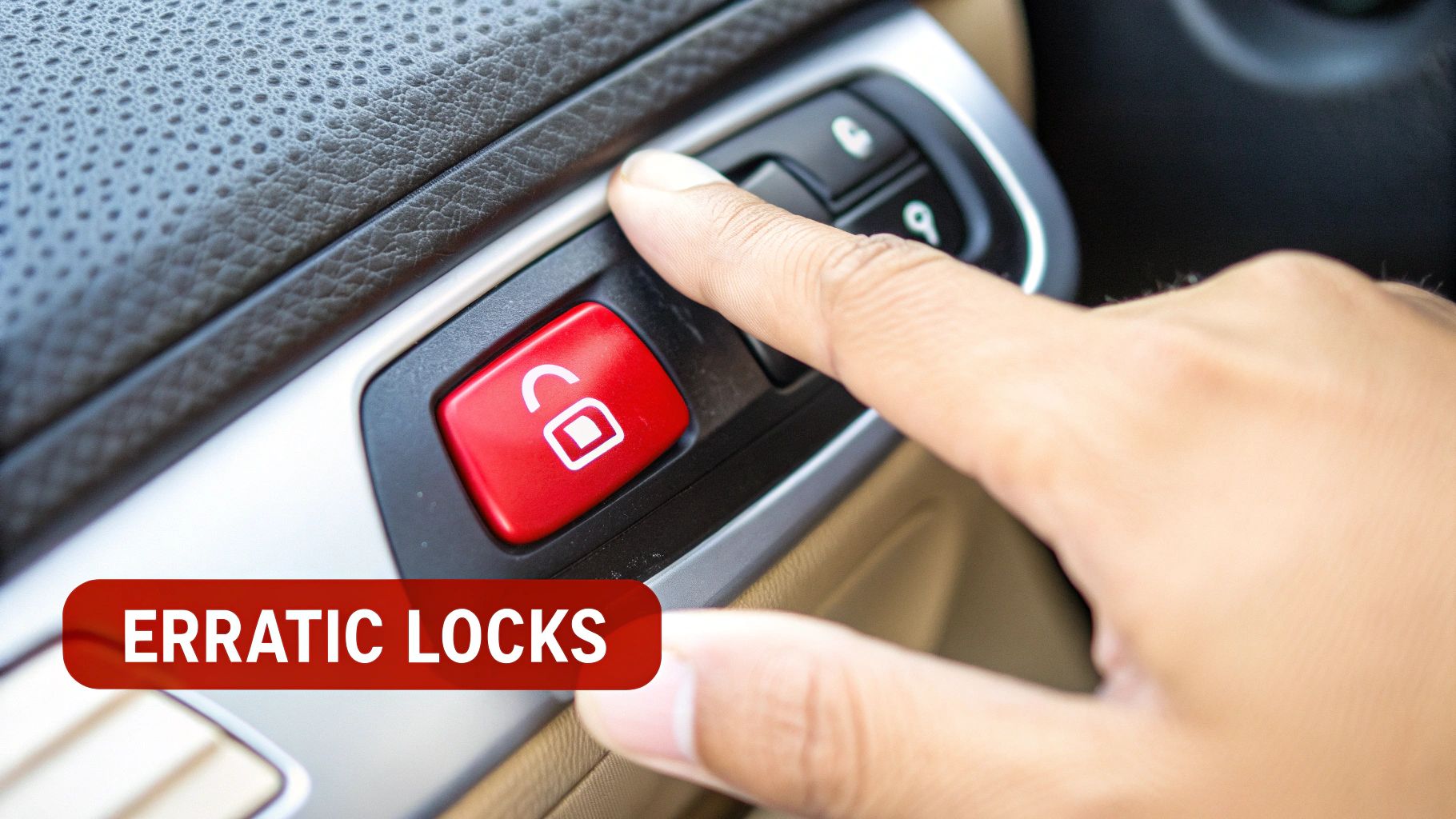
Sometimes a door lock actuator doesn’t just quit all at once. Instead, it starts to get… weird. It becomes unpredictable, working one minute and ignoring you the next. This is that "ghost in the machine" feeling, and it’s one of the most common signs that your actuator is on its way out.
Think about an old TV remote. You know the one. At first, it works perfectly, but soon you find yourself mashing the power button two or three times just to get it to respond. That’s exactly what happens with a dying actuator. This kind of spotty performance is a classic symptom that its internal parts are worn and can't keep up anymore.
Usually, this erratic behavior points to a motor that's losing its strength or some early-stage corrosion building up on the electrical contacts. The part hasn’t completely given up, but it’s definitely struggling to do its job.
Sluggish and Inconsistent Performance
When an actuator is healthy, it snaps the lock open or shut with a quick, solid thud. But as it starts to fail, you'll notice a real lag. The movement becomes slow and labored, almost like it's fighting against something. Sometimes it might even get stuck halfway, leaving your vehicle unsecured.
This sluggish response is more than just a minor annoyance—it’s a clear sign of mechanical fatigue. In fact, when doors take 2-5 seconds longer to respond or only partially lock, it's a tell-tale symptom of actuator wear. This issue pops up in about 20-30% of vehicles once they pass the 100,000-mile mark. If you want to dive deeper, you can find additional insights on automotive door mechanisms and see how use and abuse take their toll.
Heavier doors make the problem even worse. For instance, this slow response is particularly common in 45% of pickup trucks like the GMC Sierra. The extra weight and constant use put a lot of strain on already weakened internal parts, like the solenoids and linkages.
Ignoring these on-again, off-again issues is a real gamble. A lock you can't rely on could fail at the worst possible moment, leaving you locked out or unable to secure your vehicle when you need to most.
Power Locks Acting on Their Own
Things can get even stranger. If the failing actuator has an internal electrical short, it can cause the locks to go haywire. You might find them locking and unlocking all by themselves, either while you’re driving down the road or when the car is just sitting in the driveway. This is a dead giveaway that the component is malfunctioning and needs to be replaced.
Catching these door lock actuator symptoms early means you can tackle the problem proactively. Swapping out an inconsistent actuator before it completely dies saves you the headache of getting locked out and gives you peace of mind that your vehicle is secure. It lets you fix the problem on your own terms.
How to Diagnose a Faulty Door Lock Actuator
So, you've noticed some of the classic signs of a failing door lock actuator. What's next? Before you jump to conclusions or head to the mechanic, a few simple, logical tests can help you confirm the diagnosis right in your own driveway.
This isn't about needing a garage full of fancy tools. It's about being methodical. By running through these checks, you can confidently rule out other culprits like a blown fuse or a stuck lock and know for sure if the actuator is the problem.
Start with Your Eyes and Ears
The best diagnostic tools you have are the ones you were born with. A few quick visual and auditory checks can tell you a lot about what’s going on and which door is causing the headache.
-
The Listening Test: Hop in the car, close the doors, and hit the lock and unlock switch a few times. Pay close attention to each door. A healthy actuator makes a distinct thunk or clack. The bad one will likely be completely silent or make those weird grinding or buzzing sounds we talked about.
-
The Group Test: As you hit the switch, watch all the door lock plungers. Do the other three doors lock and unlock as they should? If they do, that’s a great sign. It tells you the problem is isolated to one door and not a system-wide failure like a bad relay or fuse.
-
The Manual Test: Now focus on the problem door. Try using the manual lock tab on the inside. Does it slide back and forth easily? If it feels gritty, stiff, or won't budge, the issue might be a seized mechanical latch, not the electronic actuator.
Diagnostic Insight: If you hear a noise coming from the door when you press the button, but the lock doesn't actually move—and all the other doors are working fine—you’ve almost certainly found your culprit. The actuator is getting power, but its internal gears are shot. That's a textbook mechanical failure inside the unit.
Moving on to Electrical Confirmation
If the simple checks all point to a bad actuator, one final electrical test will give you 100% certainty. This step helps you definitively tell the difference between a dead part and a wiring issue, which can sometimes look like the same problem. For this, you'll need a basic multimeter.
You'll have to get to the actuator's electrical connector, which usually means taking off the interior door panel. Once you unplug the actuator, you can check if power is even getting to it. For a complete walkthrough, you can learn how to test a door lock actuator in our detailed guide.
Essentially, you'll set your multimeter to DC volts and touch the probes to the terminals inside the connector. When a friend presses the lock or unlock button, you should see a quick 12-volt reading on your meter. If you see voltage but the actuator does nothing, the part is officially dead. No voltage? Then you’re looking at a wiring, switch, or fuse problem instead.
Choosing the Right Replacement Actuator
Alright, you've done the hard part and figured out the actuator is toast. Now comes the important decision: what do you replace it with? This isn't just about grabbing the first part that fits. It's your chance to put in a real, long-term fix instead of just slapping on a band-aid that's going to fail again in a few years.
You're basically looking at two paths: a standard Original Equipment Manufacturer (OEM) part or a high-quality aftermarket upgrade.
Before you choose, think about why the original part failed in the first place. Car manufacturers often use plastic gears inside their actuators. It saves them money on the assembly line, but those little plastic teeth are a ticking time bomb. After thousands and thousands of lock/unlock cycles, they eventually strip out or crack. That’s the root cause of the buzzing and clicking noises you probably heard right before it gave up completely.
This flowchart visually lays out the diagnostic steps we've covered, helping you trace the symptoms back to the source.
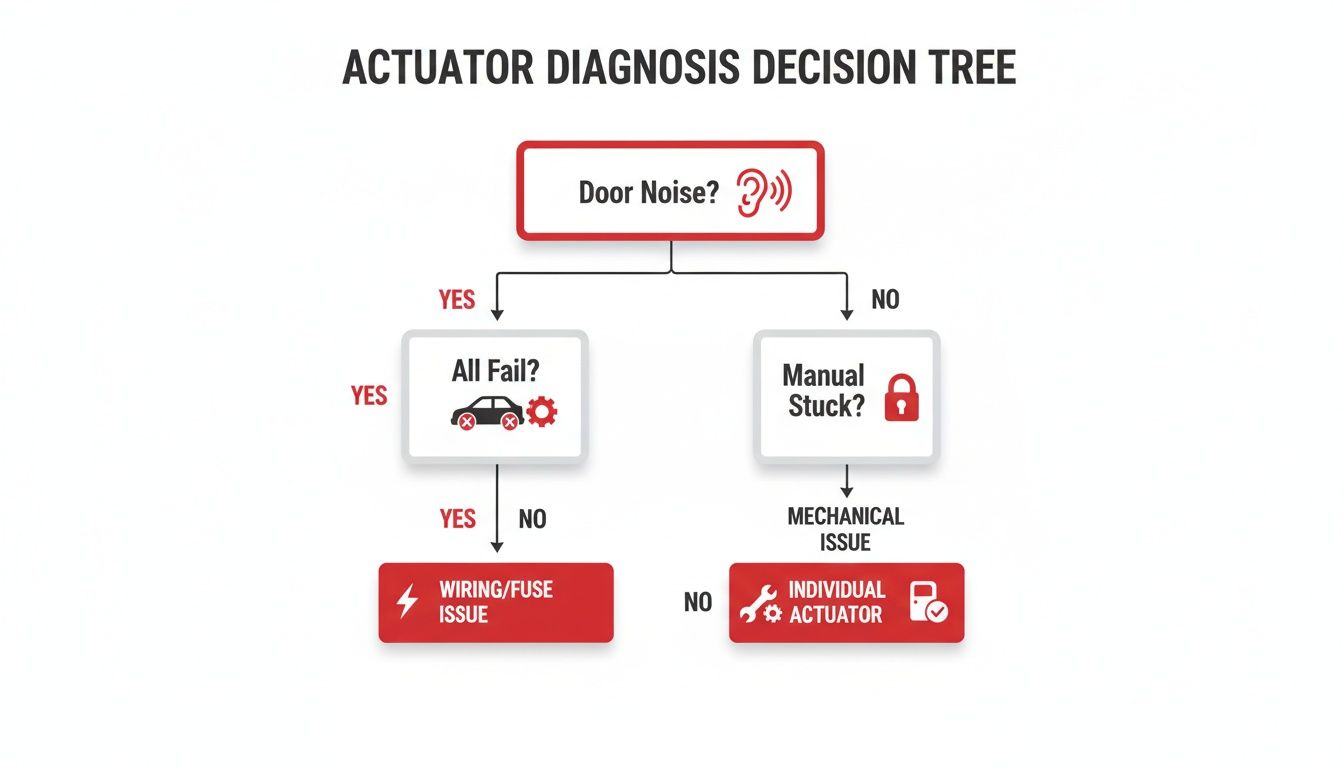
When you see that only one door is acting up and the manual lock still feels fine, it’s a dead giveaway. You’ve successfully isolated the problem to the actuator itself.
Upgrading for Durability
This is where a good aftermarket part really shines. Companies like T1A Auto don't just copy the original design; they identify the weak spot and fix it. Instead of using the same old plastic that's destined to fail, their actuators are engineered with tougher internal parts that can handle the daily grind without wearing out.
So, when you choose an upgraded part, you’re not just swapping out a broken component. You're installing a beefier, more reliable version designed to outlast the original. If you want to get into the nitty-gritty, we have a whole guide that explores the key differences between aftermarket parts vs OEM components.
A quality aftermarket actuator doesn't just fix your current problem; it gives you confidence for the long haul. By tackling the root cause of the failure—those flimsy internal materials—you're making a smart investment in your vehicle’s security and convenience.
Pro Tip: When you're shopping for a replacement, look closely at two things: the materials it's made from and the warranty it comes with. A lifetime warranty is a huge tell. It means the manufacturer is so confident in their improved design that they're willing to back it up forever.
Comparing Your Replacement Options
To make the best call, you need to weigh the long-term value. An OEM part gets your door working again, sure, but a well-made aftermarket part enhances it for better reliability down the road.
This table highlights the key differences to help you choose the best replacement part for a long-lasting and reliable repair.
OEM vs Quality Aftermarket Actuator Comparison
| Feature | Standard OEM Actuator | Upgraded Aftermarket Actuator |
|---|---|---|
| Internal Gears | Typically made of plastic, prone to stripping over time. | Often engineered with more durable materials for longevity. |
| Common Failure | Mechanical wear and tear is a known issue. | Designed to correct the original part's common weak points. |
| Warranty | Usually limited to 1-2 years, covering defects only. | Often includes a much longer or even lifetime warranty. |
| Long-Term Value | May require another replacement down the road. | Offers a more permanent fix, reducing future repair costs. |
Ultimately, choosing an upgraded aftermarket part means you likely won't have to deal with this same headache again in a few years, saving you time, money, and frustration.
Finding and Installing Your New Actuator
Okay, you've diagnosed the problem and pinpointed the bad actuator. Now for the satisfying part: getting the right part and swapping it out.
The absolute easiest way to dodge compatibility headaches is to use a simple year, make, and model lookup tool when ordering. This takes all the guesswork out of the equation and guarantees the part you get is a direct fit for your car.
While every car is a little different, the basic roadmap for this job is pretty universal. You'll need to get the interior door panel off, which gives you access to the actuator. From there, you'll unplug the electrical connector, unclip the linkage rods, and swap the old unit out for the new one.
Tools and General Steps
Good news—you can tackle this with a basic set of hand tools you likely already have. Having these ready will make the job go much smoother.
- Socket Set and Ratchet: You'll need these to unbolt the door panel and the actuator itself.
- Screwdriver Set: Most cars use a mix of Phillips and flathead screws, so have both handy.
- Trim Removal Tools: Don't skip these! Using proper plastic pry tools is the secret to popping off door panel clips without scratching your paint or breaking the plastic.
Once the new actuator is bolted in, just reconnect the rods and the electrical plug. Before you put the door panel back on, give the power locks a quick test to make sure everything is working perfectly.
Important Note: A good repair is about more than just the installation. Always choose a part from a supplier that stands behind their product with a solid warranty. That peace of mind is priceless.
If you pop the panel off and find it’s more complex than you’re comfortable with, there's no shame in calling in a pro. For those who'd rather have an expert handle the diagnosis or the installation, specialists in automotive locksmith services can get the job done right.
Common Questions About Door Lock Actuators
So, you've figured out what's wrong, but you probably still have a few questions rolling around in your head. Let's tackle some of the most common ones so you can move forward with the repair feeling confident.
Can a Bad Actuator Drain My Battery?
Absolutely. While it’s not the most frequent symptom, a failing door lock actuator can definitely be the culprit behind a dead battery.
What happens is the actuator can develop an internal electrical short, creating a small but constant power draw. You might hear this called a parasitic drain. If the motor inside gets stuck, it might keep trying to work over and over, even when your car is turned off.
This quiet, continuous drain won't kill your battery overnight, but over a few days, it can be enough to leave you stranded. If you're dealing with both weird door lock behavior and a battery that keeps dying, the actuator should be at the top of your suspect list.
Should I Replace All the Actuators at Once?
Typically, you only need to replace the one that's actually broken. That said, it's smart to think about the bigger picture.
All the actuators in your vehicle are the same age and have been through the same amount of use. When one goes, it's often a sign that the others aren't far behind.
For this reason, many experienced mechanics and DIYers will replace them in pairs (like both front doors at once) or even all four. It's a preventative move that can save you from having to tear into another door panel a few months down the road.
If you want to get a better handle on how these parts work, check out our guide on what is a door lock actuator to see why they eventually wear out.
Is It Safe to Drive with a Faulty Actuator?
Driving with a bad actuator is a gamble with both your safety and your car's security.
If a door won't lock, your car is an open invitation for thieves. On the flip side, a door that won't unlock is a serious safety hazard. Imagine trying to get a passenger out quickly in an emergency and the door is stuck shut. Because of these risks, putting off the repair isn't a good idea. Getting it fixed as soon as you can is always the best move.
For a reliable, long-lasting fix, T1A Auto offers premium aftermarket door lock actuators engineered with durable materials to outlast the original. Backed by a lifetime warranty and guaranteed fitment, our parts restore your vehicle's security and your peace of mind. Find the perfect part for your vehicle at t1aauto.com.
