


In fleet management, unpredictability is the enemy of profitability. Unexpected downtime, costly emergency repairs, and compliance violations can derail operations and erode margins. The single most effective defense against these disruptions is a proactive, systematic approach to vehicle care, centered around a comprehensive fleet vehicle maintenance checklist. This isn't merely about ticking boxes; it's about building a foundational culture of reliability and safety that protects your assets, your drivers, and your bottom line. A standardized checklist transforms maintenance from a reactive, costly scramble into a predictable, controlled process.
This guide provides the framework for that process. We will break down the ten essential checklist categories every fleet manager must implement to create a robust maintenance program that prevents problems before they start. Moving beyond generic advice, this article provides specific, actionable steps for each critical inspection area, including:
- Daily Pre-Trip Inspections: Empowering drivers to be the first line of defense.
- Preventive Maintenance Schedules: Systematically addressing wear and tear on components like brake pads, engine belts, and suspension parts.
- System-Specific Audits: Deep dives into brakes, electrical systems, and engine components.
- Compliance and Safety: Ensuring adherence to regulations like CVSA and OSHA standards.
By implementing the detailed checklists outlined here, you will gain control over your fleet's health, reduce operational risks, and maximize vehicle uptime. We will cover the what, why, and how of each inspection, offering practical tips and a downloadable master checklist to put these strategies into action immediately. This is your blueprint for turning vehicle maintenance from a liability into a strategic advantage.
1. Daily Pre-Trip Vehicle Inspection (DVIR) Checklist
The Daily Vehicle Inspection Report (DVIR) is the foundational element of any effective fleet vehicle maintenance checklist. This standardized, driver-led inspection is conducted before the vehicle's first trip of the day to identify and document any existing or potential safety hazards and mechanical issues. Mandated by the Department of Transportation (DOT) for commercial motor vehicles, the DVIR process is a non-negotiable legal requirement that ensures every vehicle is roadworthy and safe before it begins its route.
This daily ritual is more than just a compliance task; it is your first line of defense against unexpected breakdowns, costly on-road repairs, and potential accidents. By catching minor issues like low tire pressure, a burnt-out headlight, or a fluid leak early, you prevent them from escalating into major system failures.
Why It’s a Critical First Step
A rigorous DVIR process directly impacts safety, compliance, and operational efficiency. Fleets like those at UPS and major interstate trucking companies rely on these daily checks to maintain their stellar safety records and avoid hefty fines from regulatory bodies like the Federal Motor Carrier Safety Administration (FMCSA). The principle extends beyond heavy-duty trucks; rideshare companies like Uber and Lyft also encourage drivers to perform similar daily safety checks to protect passengers and assets.
How to Implement an Effective DVIR Process
To maximize the effectiveness of your daily inspections, consider these actionable strategies:
- Digitize Your Records: Transition from paper forms to mobile apps. Digital DVIRs provide real-time data, allow drivers to upload photos of defects, and instantly notify the maintenance team of critical issues.
- Provide Clear Resources: Create simple, durable reference materials. Laminated checklists kept in each vehicle's cab ensure drivers don't miss a step. To streamline your daily inspections, you can utilize various readily available free pre-start checklist templates that can be customized for your specific vehicles.
- Incentivize Thoroughness: Encourage drivers to report issues, no matter how small, without fear of blame. Offer small incentives for proactive defect reporting to foster a culture of safety and shared responsibility.
- Close the Loop: Establish a clear process for reviewing all submitted defect reports. Hold weekly meetings between fleet managers and the maintenance team to prioritize repairs and integrate findings into the long-term preventive maintenance schedule.
2. Preventive Maintenance Schedule (PMS) Checklist
Where the DVIR is a daily, driver-led check, the Preventive Maintenance Schedule (PMS) is the long-term, mechanic-executed strategy that forms the backbone of your fleet vehicle maintenance checklist. This comprehensive schedule outlines all required service tasks based on specific time or mileage intervals, such as every 10,000 miles or every three months. This proactive approach is designed to service or replace components before they fail, preventing costly unplanned downtime and extending vehicle lifespan.
A PMS moves your maintenance operations from a reactive "fix-it-when-it-breaks" model to a proactive, data-driven one. It ensures that critical tasks like oil changes, transmission fluid flushes, brake inspections, and timing belt replacements are performed consistently across every asset. This systematic approach is crucial for managing total cost of ownership and maximizing vehicle availability.
Why It’s a Critical Long-Term Strategy
A well-executed PMS directly impacts your bottom line by reducing catastrophic failures, improving fuel efficiency, and increasing vehicle resale value. Major logistics companies like FedEx adhere strictly to mileage-based PMS to keep their massive delivery fleet reliable, while rental car companies like Enterprise use time-based schedules to ensure vehicle safety and customer satisfaction. The principle is non-negotiable for any operation where vehicle reliability is paramount, including municipal bus fleets and emergency services.
How to Implement an Effective PMS
To build a robust and efficient Preventive Maintenance Schedule, consider these actionable strategies:
- Align with OEM Guidelines: Start by using the vehicle manufacturer’s recommended service intervals as your baseline. Adjust these intervals based on the vehicle's specific duty cycle, for instance, a delivery van operating in heavy city traffic may require more frequent brake inspections.
- Use Fleet Management Software: Automate scheduling, track work orders, and monitor maintenance history with specialized software. These tools can send automated alerts to managers and technicians when service is due, eliminating manual tracking errors.
- Create Vehicle-Specific Plans: Avoid a one-size-fits-all approach. A heavy-duty truck will have a vastly different maintenance schedule than a light-duty passenger van. Tailor each PMS to the vehicle's make, model, age, and operational demands.
- Maintain Meticulous Records: Document every service task performed. This detailed history is invaluable for diagnosing future issues, proving compliance, and substantiating warranty claims. For deeper insights, explore more fleet management best practices to optimize your operations.
3. Commercial Vehicle Safety Inspection (CVSA) 21-Point Checklist
The Commercial Vehicle Safety Inspection (CVSA) 21-Point Checklist is a standardized, comprehensive protocol used by certified inspectors and law enforcement across North America. While the daily DVIR is a driver-led safety check, the CVSA inspection is a much more rigorous audit designed to ensure commercial motor vehicles meet strict safety and mechanical fitness standards established by the Commercial Vehicle Safety Alliance. This inspection is the gold standard for roadside safety enforcement.
Adopting this protocol internally transforms a fleet’s maintenance from reactive to proactive. It prepares your vehicles to pass official roadside inspections at any time, significantly reducing the risk of being placed out-of-service, facing fines, or seeing your company's safety score negatively impacted. This systematic check covers everything from brake systems and steering mechanisms to lighting, tires, and cargo securement, leaving no room for error.
Why It’s a Critical Compliance Step
A strong internal CVSA inspection program is a direct reflection of a fleet's commitment to safety and regulatory compliance. Major carriers like J.B. Hunt and Schneider National integrate CVSA standards into their own periodic maintenance programs to stay ahead of enforcement. They understand that a vehicle failing a roadside check not only disrupts a delivery but also damages their reputation and increases insurance premiums. This framework is a core part of any successful fleet vehicle maintenance checklist.
How to Implement an Effective CVSA Inspection Process
To leverage the CVSA standards for maximum benefit and ensure your fleet is always road-ready, consider these strategies:
- Conduct Proactive Internal Audits: Don't wait for an official roadside inspection. Perform your own CVSA-level inspections on a quarterly basis or before a vehicle is dispatched on a long-haul trip.
- Train Technicians to CVSA Standards: Ensure your maintenance team is thoroughly trained on the specific criteria and out-of-service conditions outlined in the official CVSA guidelines. This ensures they inspect vehicles with the same critical eye as a DOT officer.
- Use Inspection Data for Targeted Improvements: Analyze the results of your internal inspections to identify recurring issues or trends. If a certain model of vehicle consistently has brake adjustment issues, for example, you can prioritize corrective actions or training.
- Document and Close the Loop: Maintain meticulous records of every inspection, defect found, and corrective action taken. This documentation is crucial for demonstrating compliance and creating a continuous improvement cycle for your fleet’s maintenance program.
4. Tire Management and Rotation Checklist
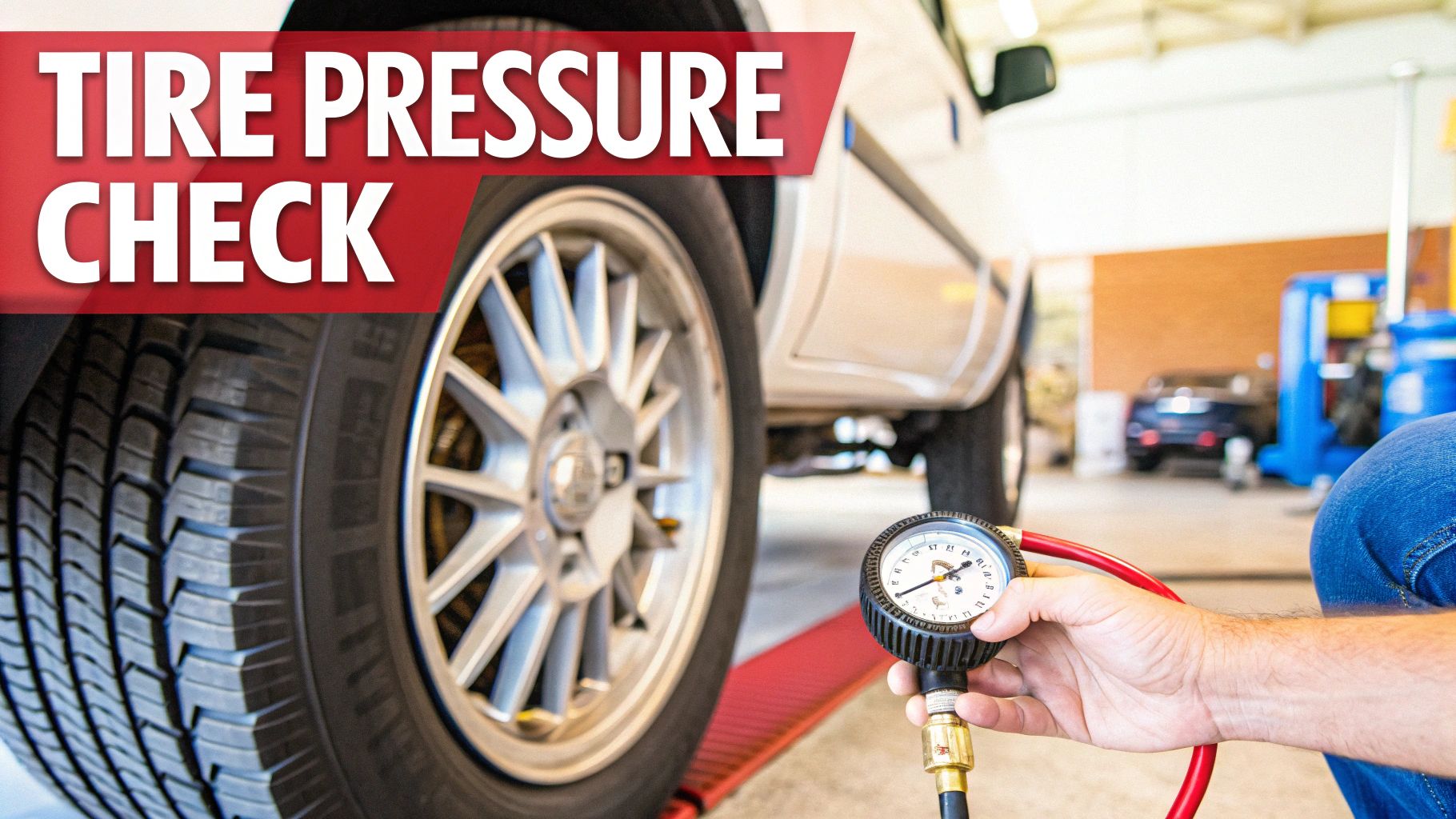
A specialized tire management and rotation checklist is an indispensable part of any comprehensive fleet vehicle maintenance checklist. This focused process goes beyond simple visual checks to include regular pressure monitoring, scheduled rotations, tread depth analysis, and clear replacement criteria. Since tires are one of the largest and most frequent operational expenses after fuel and depreciation, a formal management program is non-negotiable for controlling costs, ensuring safety, and maximizing fuel efficiency.
This ongoing a-la-carte task ensures that one of your most critical assets is properly cared for. Neglecting tires can lead to catastrophic failures, unplanned downtime, and significant safety liabilities, making proactive management a high-return investment.
Why It’s a Critical Step
Proper tire management directly impacts vehicle safety, fuel economy, and budget. An underinflated tire can reduce fuel efficiency by up to 3% and wears out significantly faster. Leading logistics companies like Amazon and DHL Express use telematics and Tire Pressure Monitoring Systems (TPMS) to track tire data in real-time, preventing roadside blowouts and optimizing fuel consumption across thousands of vehicles. Similarly, fleets operating in harsh conditions, such as those managed by Waste Management, rely on rigorous tire inspection protocols to avoid costly equipment damage and service interruptions.
How to Implement an Effective Tire Management Process
To build a robust tire management program that reduces costs and enhances safety, consider these actionable strategies:
- Install and Monitor TPMS: Equip all vehicles with a Tire Pressure Monitoring System. These sensors provide automated, real-time alerts for low pressure, allowing for immediate correction before it impacts fuel economy or causes excessive wear.
- Establish a Strict Inspection Cadence: Mandate tire pressure checks at least every two weeks, in addition to daily visual inspections. Document tread depth monthly to forecast replacement needs and identify alignment or suspension issues indicated by uneven wear patterns.
- Implement Strategic Rotation Schedules: Create and enforce tire rotation schedules based on vehicle type and mileage. Using the correct rotation pattern (e.g., front-to-back, cross-rotation) for FWD, RWD, or AWD vehicles extends the life of your entire tire set.
- Partner with Tire Vendors: Develop relationships with tire management specialists like Michelin or Goodyear. These partners often provide fleet discounts, advanced analytics, and cradle-to-grave tire management services, which can significantly streamline your operations and reduce overall costs.
5. Fluid Level and Quality Checklist
Monitoring fluid levels and their condition is a fundamental aspect of any proactive fleet vehicle maintenance checklist. This routine check involves inspecting all critical vehicle fluids, including engine oil, coolant, transmission fluid, brake fluid, power steering fluid, and even windshield washer fluid. Proper fluid management is essential for preventing catastrophic engine damage, system overheating, transmission failure, and compromised braking performance.
This ongoing task serves as a vital health check for the vehicle's core systems. Low or contaminated fluids are often the first indicators of a developing problem, such as a leak or internal component wear. By regularly checking and topping off fluids, you ensure key components are properly lubricated, cooled, and functioning under optimal pressure, directly extending the vehicle’s service life.
Why It’s a Critical System Check
Consistent fluid management directly impacts vehicle reliability, safety, and long-term operational costs. Fleet managers for organizations like the United States Postal Service and the Coca-Cola delivery network implement weekly or monthly fluid checks to minimize on-road breakdowns and maintain tight delivery schedules. Similarly, police and emergency vehicle fleets monitor fluids bi-weekly to ensure vehicles are in a constant state of readiness for high-stress situations.
How to Implement an Effective Fluid Check Process
To maximize the effectiveness of your fluid management program, consider these actionable strategies:
- Standardize the Routine: Train drivers to perform quick fluid checks during routine fuel stops. Create and install durable, laminated guides under the hood of each vehicle model, clearly marking the location of each fluid reservoir and dipstick.
- Invest in Fluid Analysis: For high-value assets, use professional fluid analysis services. Sending oil or coolant samples to a lab can detect microscopic metal particles or chemical contaminants, providing early warnings of internal engine or transmission wear long before a failure occurs.
- Manage Inventory and Disposal: Stock the specific OEM-approved fluid types required for each vehicle in your fleet to maintain warranties and ensure optimal performance. Establish and enforce clear procedures for the environmentally compliant disposal of used fluids and filters.
- Empower Your Drivers: Train all drivers to recognize the signs of a fluid leak, including puddles under the vehicle or unusual smells. Foster a culture where reporting a small drip is encouraged, as it can prevent a major component failure down the road.
6. Brake System Inspection Checklist
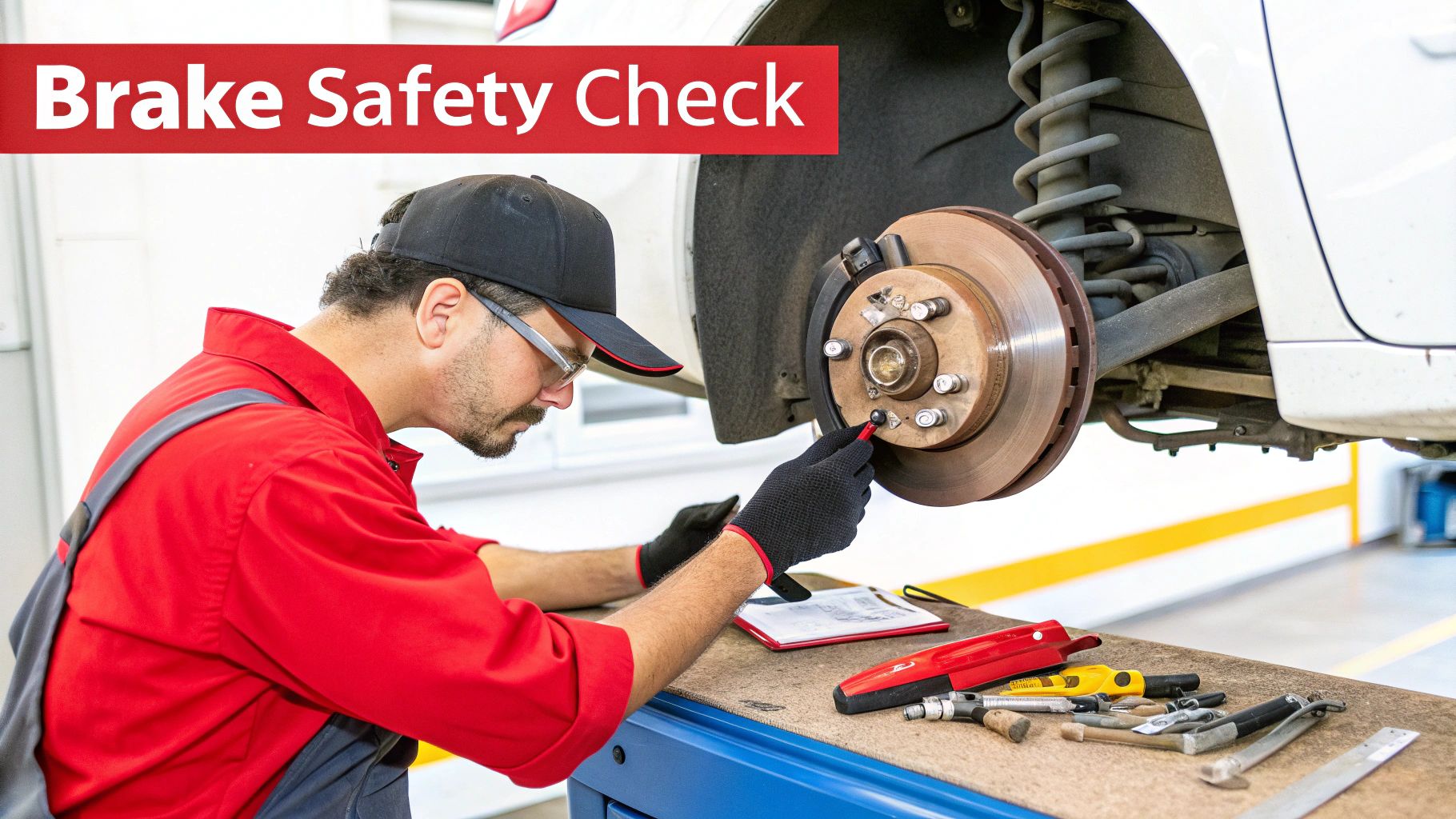
The brake system is arguably the most critical safety component in any vehicle, making a dedicated inspection protocol an essential part of your fleet vehicle maintenance checklist. This focused check goes beyond a quick daily look, involving a detailed examination of all brake system components, including pads, rotors, drums, calipers, fluid, lines, and advanced Anti-lock Braking System (ABS) hardware. Since brake failure is a leading cause of severe accidents, this inspection is a non-negotiable process for ensuring driver safety and regulatory compliance.
This in-depth inspection prevents catastrophic failures by identifying wear and tear before it compromises performance. Catching a worn brake pad, a corroded brake line, or a low fluid level early on can mean the difference between a routine repair and a tragic on-road incident, protecting both your assets and the public.
Why It’s a Critical Safety Step
A rigorous brake inspection program is fundamental to operational safety and risk management. Leading heavy-duty brake system manufacturers like Meritor and Wabco build their reputations on reliability, a standard fleets must uphold through meticulous maintenance. For instance, fleets like Werner Enterprises conduct comprehensive brake inspections every six months, while waste-hauling vehicles, subjected to heavy loads and frequent stops, require even more frequent monitoring to prevent overheating and failure.
How to Implement an Effective Brake Inspection Process
To ensure your fleet’s braking systems are always in peak condition, integrate these actionable strategies into your maintenance schedule:
- Standardize Inspection Points: Create a detailed checklist covering brake pad/shoe thickness, rotor/drum condition, fluid levels and clarity, hose and line integrity, and caliper function. For air brake systems, ensure certified inspectors conduct regular checks.
- Utilize Diagnostic Tools: Invest in brake testing equipment, such as roller or plate brake testers, for objective performance assessments. These tools provide measurable data on brake force and balance, removing guesswork from diagnostics.
- Document Everything: Maintain meticulous records of every inspection, repair, and component replacement. This data helps identify wear patterns, predict future service needs, and provides a crucial liability shield. When choosing replacement parts, it's vital to understand the differences between your options. You can explore a detailed comparison between OEM and aftermarket parts to make an informed decision for your fleet's needs.
- Train Your Technicians: Ensure your maintenance team is thoroughly trained on modern brake systems, including ABS and electronic stability control diagnostics. Continuous education keeps them proficient with evolving technologies.
7. Engine and Engine Bay Inspection Checklist
The engine is the heart of every vehicle, and a systematic engine bay inspection is a cornerstone of any robust fleet vehicle maintenance checklist. This proactive check goes beyond basic fluid levels to assess the health of critical components like belts, hoses, filters, and spark plugs. A clean and well-inspected engine bay allows technicians to spot potential issues like fluid leaks, frayed wires, or worn belts before they lead to catastrophic failure.
This regular inspection is your primary strategy for preventing costly engine-related breakdowns and ensuring vehicles operate at peak performance and fuel efficiency. By identifying and replacing wearing parts on a set schedule, you move from a reactive repair model to a proactive maintenance culture, drastically reducing vehicle downtime and extending engine life.
Why It’s a Critical Proactive Step
A detailed engine inspection directly impacts vehicle reliability, operational costs, and longevity. Leading logistics companies like Estes Express Lines and Federal Express have sophisticated programs to monitor belt and hose conditions, using data to predict component failure. Similarly, rental giants like Hertz adhere to strict replacement intervals, often changing air filters every 15,000 miles to maintain engine health and fuel economy across their vast fleet.
How to Implement an Effective Engine Inspection Process
To maximize the effectiveness of your engine and engine bay inspections, consider these actionable strategies:
- Establish Clear Replacement Intervals: Don't wait for failure. Set replacement schedules for belts, hoses, filters, and spark plugs based on manufacturer recommendations, but adjust for severe operating conditions like extreme temperatures or high-idling environments.
- Create Visual Aids: Develop laminated engine bay diagrams for each vehicle model in your fleet. Labeling the locations of key components helps new technicians perform consistent and thorough inspections.
- Prioritize Cleanliness: Mandate regular engine bay cleaning. A clean engine runs cooler and makes it significantly easier to spot oil, coolant, or other fluid leaks in their earliest stages, preventing minor issues from becoming major repairs.
- Standardize Quality Parts: Use high-quality, OEM-equivalent replacement parts. Partner with suppliers who understand the demands of fleet vehicles to reduce the frequency of premature component failures and protect your engine investment.
8. Lighting and Electrical Systems Checklist
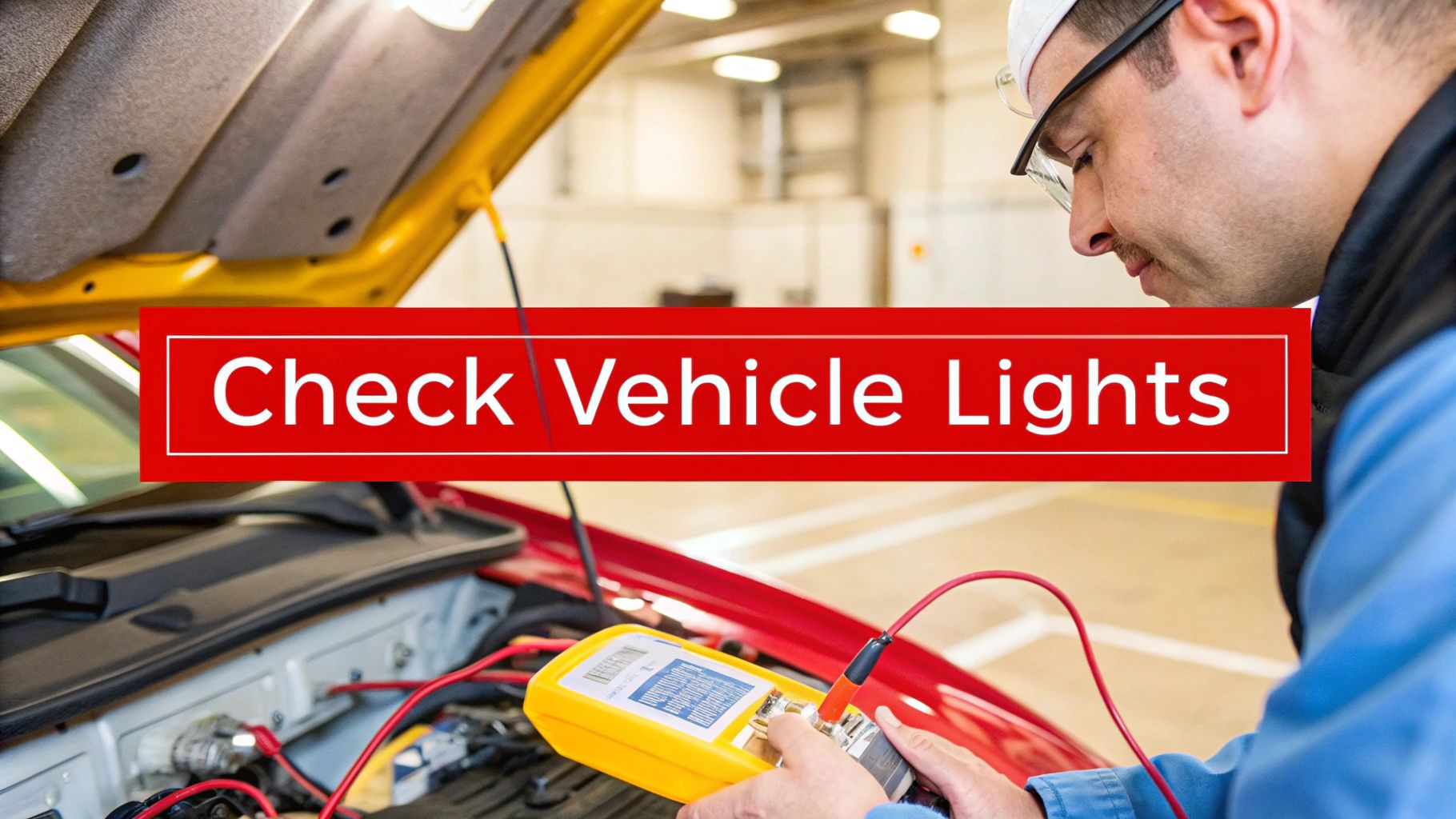
A comprehensive lighting and electrical systems check is a non-negotiable part of any fleet vehicle maintenance checklist. This inspection covers all interior and exterior lights, wiring, fuses, and the battery to ensure the vehicle remains visible, functional, and compliant with road safety regulations. Functional lights are critical for driver and public safety, especially during night operations or adverse weather conditions, making this check a cornerstone of responsible fleet management.
This routine is essential for preventing compliance violations and ensuring operational safety. A single failed headlight or brake light can result in a traffic citation, vehicle downtime, and a tarnished safety record. By systematically inspecting the entire electrical system, you can identify issues like corroded connections or a failing alternator before they cause a critical failure on the road.
Why It’s a Critical Component
Properly functioning lighting and electrical systems are mandated by the National Highway Traffic Safety Administration (NHTSA) for a reason: they prevent accidents. Fleets such as emergency response services and construction companies prioritize lighting functionality to ensure their vehicles are highly visible in all conditions. Similarly, delivery services like OnTrac conduct rigorous light checks to maintain compliance and protect their drivers and cargo during early morning or late-night routes. A proactive approach to electrical maintenance minimizes the risk of unexpected and dangerous system failures.
How to Implement an Effective Electrical System Check
To ensure your fleet’s electrical systems are consistently reliable, integrate these actionable strategies into your maintenance schedule:
- Stock Essential Components: Keep a ready supply of common replacement parts like bulbs, fuses, and relays for each vehicle model in your fleet. This minimizes downtime for simple repairs.
- Perform Regular Battery Tests: Use a multimeter to test battery voltage monthly. A reading below 12.4 volts may indicate a weak battery that needs charging or replacement before it fails.
- Protect Electrical Connections: Apply dielectric grease to bulb sockets and connectors during replacement or annual inspections. This simple step prevents corrosion, a common cause of electrical faults. If you suspect deeper issues, you can discover more by reading about how to diagnose car electrical problems.
- Document and Analyze Failures: Track every electrical repair in your maintenance logs. This data helps identify recurring problems with specific vehicle models or components, allowing you to make more informed purchasing and maintenance decisions.
9. Suspension, Steering, and Alignment Checklist
The suspension, steering, and alignment checklist is a critical, often quarterly, component of any comprehensive fleet vehicle maintenance checklist. This inspection focuses on the systems that control vehicle stability, handling, and tire wear. It involves a detailed examination of components like shocks, struts, springs, tie rods, ball joints, and the steering gearbox to ensure they function correctly and safely under various load conditions.
This proactive check is vital for preventing accidents caused by poor handling, reducing driver fatigue, and maximizing the life of your tires. A misaligned vehicle or a failing suspension component not only creates an unsafe driving experience but also accelerates wear on other parts, leading to a cascade of expensive, premature repairs.
Why It’s a Critical Safety and Cost-Saving Measure
Proper suspension and alignment directly impact operational costs and driver safety. Long-haul trucking companies like Schneider National perform detailed suspension inspections every six months to ensure vehicle stability and extend tire life across millions of miles. Similarly, delivery services like Amazon monitor suspension performance to ensure their vans can handle demanding urban routes without compromising driver control or safety. Ignoring these systems leads to uneven tire wear, poor fuel economy, and potential loss of vehicle control.
How to Implement an Effective Suspension and Steering Process
To integrate this check effectively into your maintenance schedule, consider these actionable strategies:
- Monitor Tire Wear Patterns: Uneven wear, such as feathering or cupping, is a clear indicator of alignment or suspension problems. Train drivers and technicians to spot these signs during daily and weekly checks.
- Invest in or Partner for Alignment: For larger fleets, investing in in-house alignment equipment from manufacturers like Hunter can offer significant ROI. Smaller fleets can establish partnerships with certified service providers for regular, cost-effective alignment checks.
- Conduct Diagnostic Test Drives: During routine maintenance, a short test drive can reveal subtle issues. Check for steering wheel "pull" or "drift" on a straight road and listen for clunking or creaking noises over bumps, which signal worn suspension parts.
- Document and Track Repairs: Maintain a detailed log of all suspension and steering repairs for each vehicle. This data helps identify recurring issues with specific vehicle models or routes, allowing for more targeted preventive maintenance.
10. OSHA Compliance and Driver Safety Checklist
Beyond the vehicle itself, a comprehensive fleet vehicle maintenance checklist must address the safety and regulatory compliance of the work environment where maintenance occurs. The OSHA Compliance and Driver Safety Checklist is a procedural framework designed to ensure that all fleet operations, from the maintenance bay to the driver's seat, adhere to the strict standards set by the Occupational Safety and Health Administration (OSHA). This involves evaluating ergonomics, hazardous material handling, tool safety, and overall workshop conditions.
This checklist is not just about avoiding fines; it’s about creating a culture of safety that protects your most valuable assets: your people. By systematically auditing your procedures against OSHA benchmarks, you prevent workplace injuries, reduce liability, and ensure that every team member, whether a mechanic or a driver, goes home safe. It operationalizes safety from a vague goal into a set of measurable, daily actions.
Why It’s a Critical Compliance Step
A commitment to OSHA standards is fundamental to operational integrity and employee well-being. Companies like FedEx and major construction fleets integrate rigorous safety programs to minimize on-the-job accidents, which in turn reduces workers' compensation claims and boosts team morale and productivity. These monthly or quarterly safety audits are essential for identifying risks like improper lifting techniques or inadequate ventilation in the garage before they lead to serious incidents.
How to Implement an Effective OSHA and Safety Process
To embed OSHA compliance deep within your operations, consider these actionable strategies:
- Conduct Monthly Safety Audits: Schedule and perform regular inspections of the maintenance facility and driver practices. Use a standardized checklist to assess tool condition, chemical storage, electrical safety (including lockout/tagout procedures), and emergency preparedness.
- Provide Regular OSHA Training: Keep all personnel updated on the latest safety protocols. This includes training on hazard communication, emergency response procedures, and the correct use of personal protective equipment (PPE). Ensuring the safety of your personnel extends to fundamental personal protective equipment; refer to this ultimate guide to choosing appropriate CSA work boots for expert guidance.
- Establish Clear Documentation: Maintain detailed records of all safety training sessions, incident reports, and corrective actions taken. This documentation is crucial for demonstrating compliance during an official OSHA inspection and for identifying recurring safety issues.
- Monitor Ergonomics: Pay close attention to tasks that involve repetitive motion, heavy lifting, or awkward postures. Provide ergonomic tools and training to maintenance staff to prevent musculoskeletal and repetitive strain injuries.
10-Point Fleet Maintenance Checklist Comparison
| Item | Implementation Complexity 🔄 | Resource Requirements ⚡ | Expected Outcomes 📊 | Ideal Use Cases 💡 | Key Advantages ⭐ |
|---|---|---|---|---|---|
| Daily Pre-Trip Vehicle Inspection (DVIR) Checklist | Low — short, routine driver-led checks | Minimal — driver time; optional mobile app | Improves roadworthiness; early defect detection | Daily-operated fleets, delivery, on-road drivers | ⭐ Ensures DOT compliance; quick to perform |
| Preventive Maintenance Schedule (PMS) Checklist | Medium — needs scheduling and coordination | Moderate–high — software, parts, maintenance staff | Fewer unexpected failures; longer vehicle life; cost savings | High-utilization fleets, rental, long-haul operations | ⭐ Reduces TCO; enables forecasted maintenance |
| CVSA 21-Point Checklist | High — comprehensive, technical inspections | High — certified inspectors, time, specialized tools | Standardized safety scoring; avoids citations | Regulatory audits, pre-dispatch compliance checks | ⭐ Thorough safety validation; regulatory credibility |
| Tire Management and Rotation Checklist | Medium — recurring monitoring and rotation plans | Moderate — TPMS, gauges, vendor support | Extended tire life; improved fuel economy | Heavy-mileage fleets, rough-terrain, delivery services | ⭐ High ROI; reduces blowouts and fuel use |
| Fluid Level and Quality Checklist | Low–Medium — routine checks with occasional analysis | Low–moderate — fluids inventory, analysis services | Prevents engine/transmission failure; early leak detection | Fleets with heavy engine loads, long-haul, emergency vehicles | ⭐ Cost-effective prevention; preserves performance |
| Brake System Inspection Checklist | High — detailed, safety-critical procedures | High — trained techs, brake testers, parts | Prevents brake failures; meets DOT/FMCSA standards | Buses, heavy trucks, vehicles carrying hazardous loads | ⭐ Critical safety assurance; reduces liability |
| Engine and Engine Bay Inspection Checklist | Medium — mechanical checks and component swaps | Moderate — diagnostic tools, spare parts, filters | Fewer engine failures; maintained efficiency | Construction, long-haul, high-duty-cycle fleets | ⭐ Low-cost interventions that extend engine life |
| Lighting and Electrical Systems Checklist | Low–Medium — visual and electrical tests | Moderate — multimeter, bulbs, connectors, diagnostics | Ensures visibility; avoids roadside citations | Night operations, delivery, emergency response fleets | ⭐ Low-cost fixes that maintain safety and compliance |
| Suspension, Steering, and Alignment Checklist | Medium–High — requires measurement and testing | High — alignment equipment or service, parts | Improved handling; reduced uneven tire wear | Fleets with alignment wear, heavy-load vehicles | ⭐ Extends tire life; improves ride and safety |
| OSHA Compliance and Driver Safety Checklist | Medium — ongoing training and documentation | Moderate — PPE, training programs, audits | Fewer workplace injuries; regulatory compliance | Maintenance shops, large driver pools, corporate fleets | ⭐ Reduces liability; improves safety culture |
Putting Your Checklist into Action for a More Reliable Fleet
Navigating the complexities of fleet management can feel like an endless cycle of reacting to problems. The comprehensive fleet vehicle maintenance checklist detailed throughout this guide is your strategic blueprint to break that cycle. It’s about transforming your operational approach from reactive and costly repairs to proactive, predictive maintenance that saves time, money, and protects your most valuable assets: your vehicles and your drivers.
We've covered the critical inspection points, from daily pre-trip walkarounds to in-depth annual system reviews. The key isn't just knowing what to check, but understanding why each item matters. A seemingly minor issue, like a dim headlight noted during a daily check, can prevent a costly fine or a serious nighttime accident. Similarly, a consistently logged low fluid level in the monthly checklist can signal a slow leak, allowing for an inexpensive fix before it leads to catastrophic engine failure.
Shifting from a Document to a Dynamic System
The true power of a fleet vehicle maintenance checklist is unlocked when it evolves from a static piece of paper into a living, dynamic part of your operational culture. This involves more than just ticking boxes; it requires a commitment to consistency, communication, and continuous improvement.
- Empower Your Drivers and Technicians: Your team on the ground is your first line of defense. Thoroughly train them not just on how to complete the checklists, but on the importance of their observations. Foster an environment where reporting a potential issue is encouraged and rewarded, not seen as an inconvenience.
- Leverage Technology: Manual tracking is prone to error and inefficiency. Implementing a Fleet Management System (FMS) can automate scheduling for preventive maintenance, digitize Daily Vehicle Inspection Reports (DVIRs), and provide real-time data on vehicle health. This data is invaluable for identifying trends, such as a specific vehicle model experiencing recurring brake issues, allowing you to adjust your maintenance strategy accordingly.
- Focus on Data-Driven Decisions: Don't let your completed checklists gather dust. Regularly analyze the data they provide. Are you seeing a spike in tire wear across the fleet? It might be time to review your tire management protocol or investigate alignment issues. This analytical approach turns routine checks into powerful business intelligence.
The Lasting Value of Quality and Consistency
Ultimately, the goal is to build a fleet that is not just operational but reliable, safe, and profitable. Every inspection performed and every part replaced contributes to this goal. The checklists provided, from the OSHA compliance review to the detailed engine bay inspection, are designed to work in concert to create a robust shield against unexpected downtime and regulatory penalties.
Remember, consistency is the cornerstone of any successful maintenance program. A checklist that is followed diligently every single day provides far more value than a perfect but sporadically used one. By integrating these practices into your daily workflow, you cultivate a culture of safety and responsibility that extends from the manager's office to the driver's seat. The long-term benefits are undeniable: extended vehicle lifecycles, lower total cost of ownership, improved driver morale, and a stronger reputation for reliability in your industry. This proactive stance isn't an expense; it's one of the most crucial investments you can make in the long-term success of your fleet.
When your inspections reveal the need for a replacement, choosing the right part is critical to upholding the integrity of your maintenance program. For durable, high-quality components designed to meet the demands of fleet vehicles, explore the extensive catalog at T1A Auto. From CAPA-certified cameras to upgraded metal door handles and reliable fuel system parts, T1A Auto provides the dependable solutions you need to keep your fleet on the road and running strong.
