


When you're looking for the best aftermarket parking sensors, you want something that delivers the same safety and accuracy as a factory part without the dealership price tag. For truck owners, especially those with an F-150 or Silverado, a high-quality kit from a specialist like T1A Auto is a game-changer. It’s a cost-effective way to prevent those annoying dings and finally gain some confidence in tight parking spots.
This upgrade is all about getting serious value by blending reliable performance with an affordable price.
Why Aftermarket Parking Sensors Are Such a Smart Upgrade
You don't need to book an expensive appointment at the dealership to get modern tech in an older vehicle or a base-model truck. The aftermarket world has come a long way, offering parking assistance systems that look and perform just as well as the factory-installed stuff.
For most drivers, the decision to add these sensors comes down to a few key reasons:
- A Major Safety Boost: Think of these sensors as an extra set of eyes. They'll alert you to low-lying obstacles, kids on bikes, or other cars lurking in your blind spots. This is a huge deal for bigger vehicles where rear visibility is a real challenge.
- Stress-Free Parking: Squeezing into a tight city spot or navigating a chaotic parking lot gets a whole lot easier. The alerts—whether beeps or visual cues—help you judge distances down to the inch, saving your bumper from scrapes and impacts.
- Real Cost Savings: Going with an aftermarket solution can easily save you hundreds of dollars compared to what a dealer would charge for an OEM installation. You get the same practical benefits and peace of mind without paying for the brand name.
Beyond just avoiding collisions, many drivers are always on the lookout for other top car accessories that make their vehicle more functional, and parking sensors are easily one of the most practical additions you can make.
The real difference between dealer and aftermarket parts usually comes down to cost and quality control. While dealerships charge a premium just for the logo, a reputable aftermarket supplier can deliver a part that meets—or even beats—the original specs for less.
The trick is learning to spot the difference between a reliable, budget-friendly kit and one that’s just plain cheap and ineffective. This guide will walk you through everything that matters, from sensor technology and durability certifications to installation tips.
If you want to get deeper into how these parts stack up, check out our article on the differences between OEM and aftermarket components for more insight.
Comparing Ultrasonic and Electromagnetic Sensor Technology
When you're looking for an aftermarket parking sensor, the first big choice you'll make is the technology itself. The two main players are ultrasonic and electromagnetic. They both help you avoid bumping into things, but they get the job done in very different ways. Knowing how each one works is the key to picking the right system for your car and where you drive.
Ultrasonic sensors are what you’ll find on most vehicles, and for good reason. Think of them like a tiny sonar system for your bumper. They send out high-frequency sound waves, and when those waves hit an object, they bounce back. The system’s brain times how long it takes for the echo to return, calculates the distance, and lets you know you're getting close.
Electromagnetic sensors, on the other hand, work by creating an invisible bubble or field around your bumper. When something—a pole, a wall, another car—enters that field, it creates a disturbance. The system picks up on that change and sounds an alarm. A big plus here is that the sensor is a strip that sticks to the inside of the bumper, so you don't have to drill any holes.
Ultrasonic Sensors: The Reliable Workhorse
For the vast majority of drivers and situations, ultrasonic is the way to go. This technology gives you extremely accurate, pinpoint detection. It doesn't just tell you something is behind you; it tells you where it is in relation to each specific sensor. That kind of precision is a lifesaver when you're trying to squeeze into a tight parallel spot or back up a big truck.
Their dominance in the market says it all. Ultrasonic parking sensors hold over 60% of the global market share. This makes them the default choice for body shops repairing bumpers on hard-working trucks like the GMC Sierra or Toyota Tundra. The entire parking sensor market was valued at a massive USD 10.26 billion in 2023 and is only expected to climb, with a huge part of that growth coming from aftermarket reverse sensors. You can dive deeper into these trends in this detailed industry report.
This decision tree can help you figure out if an aftermarket system is the right move for your needs and budget.
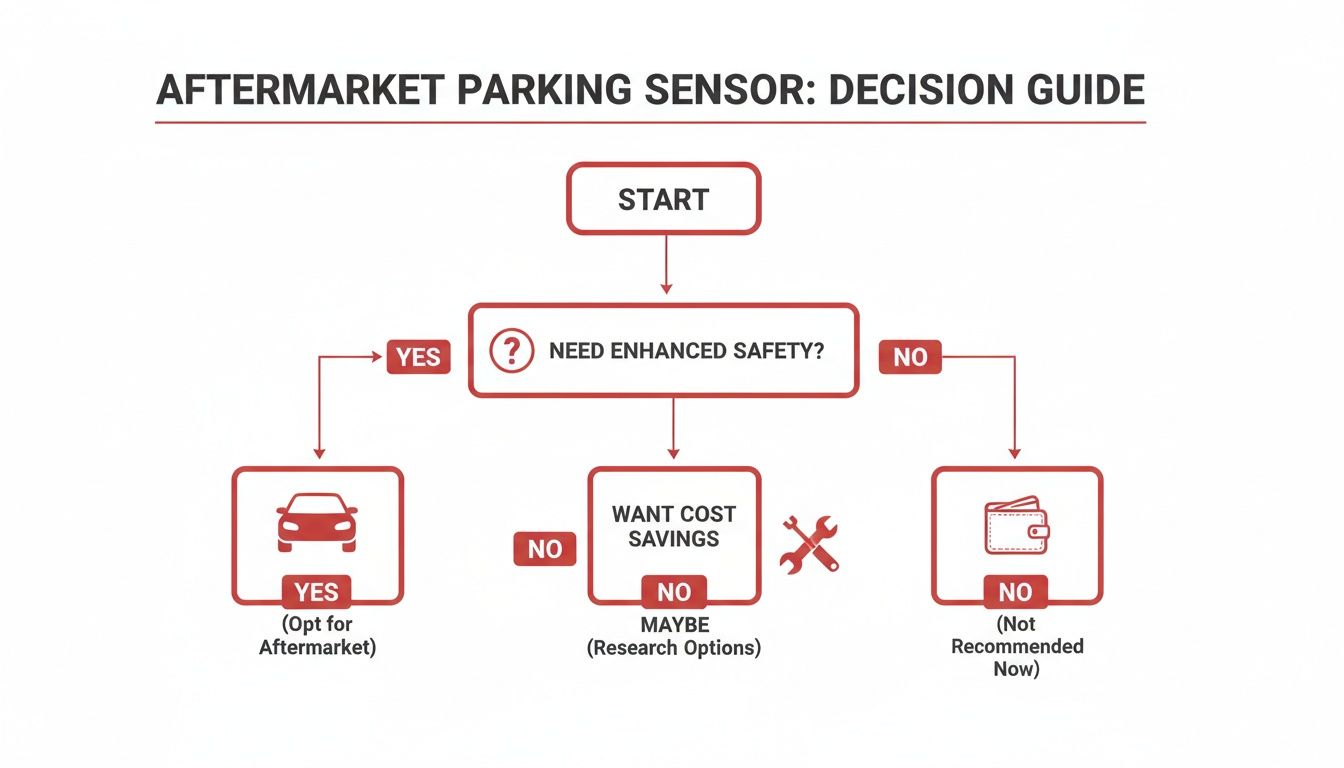
As the guide shows, if you're looking to boost safety without breaking the bank, adding an aftermarket kit is a pretty straightforward "yes."
Electromagnetic Sensors: The No-Drill Alternative
The biggest selling point for electromagnetic sensors is, without a doubt, the clean installation. Because the sensor is just an adhesive strip that you stick inside the bumper, your car's exterior looks completely untouched. This is a huge bonus for anyone with a classic car, a leased vehicle, or anyone who just shudders at the thought of drilling into their bumper.
But that stealthy install comes with a few performance compromises. Electromagnetic systems create a single, wide detection zone instead of the precise, targeted zones of ultrasonic sensors. This can make it a little trickier to judge exactly where that pesky curb or pole is located.
To break it down even further, here's a direct comparison of how the two technologies stack up in the real world.
Head-to-Head Sensor Technology Comparison
| Attribute | Ultrasonic Sensors | Electromagnetic Sensors |
|---|---|---|
| Detection Method | Uses high-frequency sound waves (sonar) to detect obstacles. | Creates an electronic field and detects disturbances within it. |
| Accuracy | High. Pinpoints the obstacle's location relative to individual sensors. | Moderate. Creates a general detection zone; less precise on location. |
| Installation | Requires drilling holes in the bumper for each sensor head. | No-drill. An adhesive strip is mounted on the inside of the bumper. |
| Weather Performance | Very good. Can be affected by heavy ice/mud buildup but reliable in rain. | Fair. Susceptible to false alarms from heavy, flowing water on the bumper. |
| Best For | Daily drivers, trucks, SUVs, and anyone prioritizing maximum accuracy. | Classic cars, leased vehicles, or owners who want a 100% stock appearance. |
| Appearance | Visible, paintable sensor heads on the exterior of the bumper. | Completely invisible from the outside. |
While excellent for preserving aesthetics, electromagnetic sensors can be more susceptible to false alerts from heavy rain, as a sheet of water flowing over the bumper can disrupt the field. Ultrasonic sensors, while potentially affected by thick ice or mud buildup, are generally more reliable in wet conditions.
Ultimately, for most practical uses—from the family sedan to the fleet van—the proven accuracy and all-weather dependability of ultrasonic sensors make them the stronger, more reliable choice for an aftermarket upgrade.
Key Features to Evaluate Before You Buy
Okay, so you've got a handle on the different sensor technologies. That's a solid start. But what really separates a dependable safety upgrade from a gadget that’ll just frustrate you is the nitty-gritty details. Getting these right is how you end up with a system that feels like it came straight from the factory.
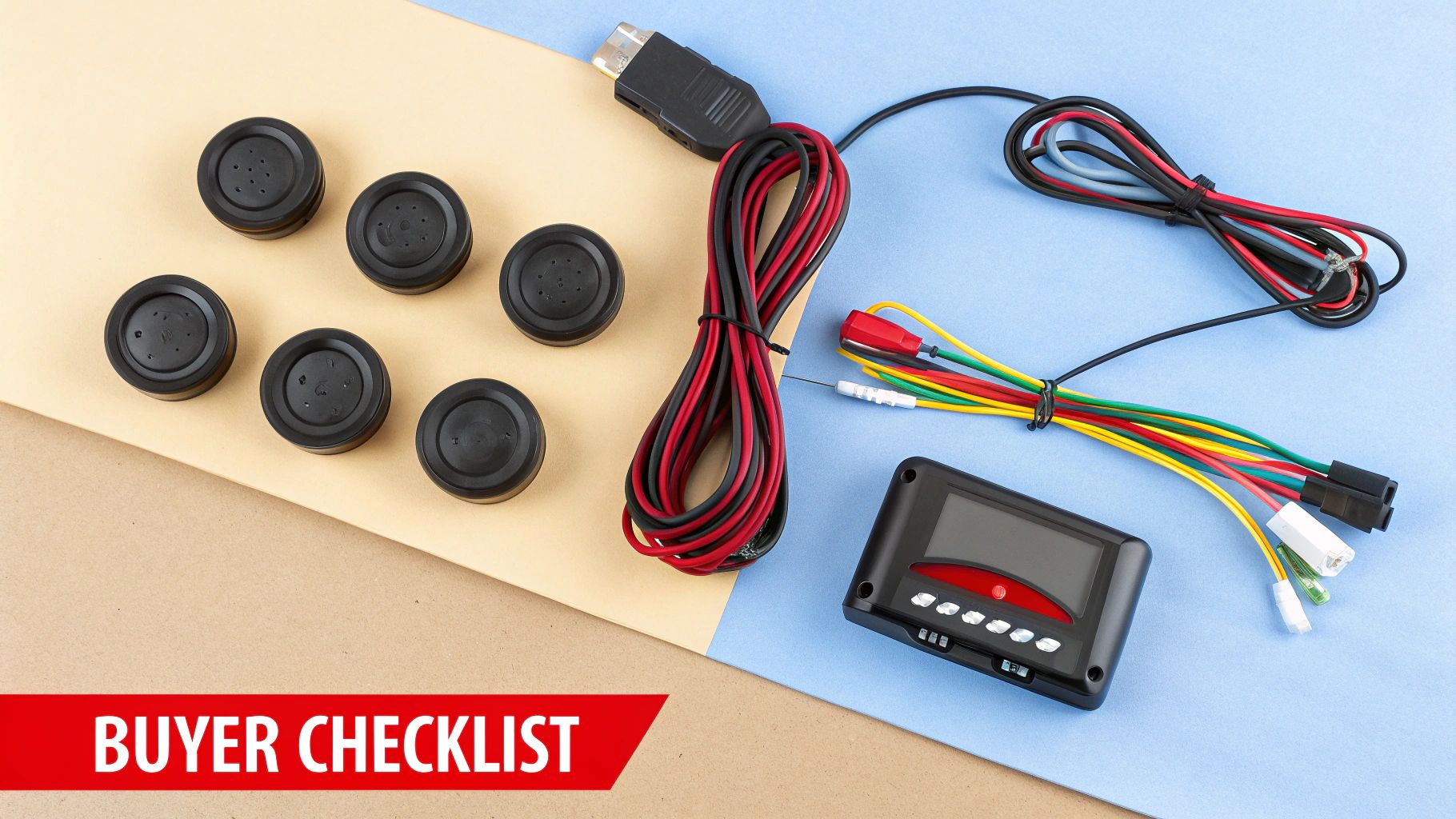
Let's walk through the features that genuinely matter in day-to-day use, so you can pick a kit that’s perfectly matched to your car and how you drive.
Sensor Count and Detection Range
One size definitely does not fit all here. The number of sensors you need is all about your vehicle's footprint. Getting this wrong means leaving dangerous blind spots wide open.
- 4-Sensor Kits: This is your go-to for most cars—sedans, coupes, and smaller SUVs. It provides a solid field of view across the rear bumper, covering you for everyday parking maneuvers.
- 6-Sensor Kits: Got a bigger ride like a full-size SUV or a standard pickup? This is your sweet spot. The setup typically puts four sensors out back and two on the front corners, which is a lifesaver for avoiding those annoying scrapes when pulling into tight garage spots.
- 8-Sensor Kits: For the big rigs—large trucks, commercial vans, and RVs—this is the only way to go. With four sensors up front and four in the rear, you’re getting near 360-degree protection. It’s what you need to confidently navigate a beast of a vehicle through a crowded lot.
Don't forget about detection range, either. Any decent system should start picking up objects from at least 8 feet away, giving you plenty of time to react. But the real magic happens in that final 1 to 3 feet, where the alerts need to be dead-on accurate.
Alert Systems: Audio vs. Visual
How a system gets your attention is a huge part of the experience, and it really comes down to personal preference.
- Audible Beeps: This is the classic, no-nonsense approach. The beeps get faster as you get closer, turning into a solid tone right before you’d make contact. It's simple, effective, and lets you keep your eyes on the mirrors where they belong.
- Visual LED/LCD Displays: For those of us who are more visual, these displays are fantastic. They usually show a color-coded bar that shrinks with distance and can even point out which side the obstacle is on. A quick glance is all you need for confirmation.
- Combination Systems: These give you the best of both worlds—the urgent beeps and the handy visual reference. It’s the most comprehensive feedback you can get, and it builds a ton of confidence.
Think about your own driving habits. If you’re the type who trusts your mirrors and wants an alert you can feel more than see, a clean audio-only system is perfect. If you like having that extra layer of data right on your dash, a visual display is a great addition.
Weather Resistance and Aesthetics
Last but not least, let's talk about how these things hold up and look. Aftermarket parts need to survive everything the road throws at them while blending in with your vehicle's design.
Look for a kit with an IP67 rating or higher. This isn’t just jargon; it means the sensors are completely sealed against dust and can handle being submerged in water. Rain, snow, car washes—they’ll take it all in stride.
And on the aesthetic front, always go for paintable sensors. This simple feature lets you match them to your bumper color perfectly. The result is a clean, seamless look that appears factory-installed, which is great for your car's overall look and even its resale value.
Looking Beyond the Box: Durability, Quality, and Certifications
Once you get past the tech specs and features, what really separates the best aftermarket parking sensors from the rest is how they’re built. A sensor that gives up the ghost after a single bad winter or starts giving you flaky readings is more trouble than it's worth. This is where material quality, legitimate certifications, and solid warranties make all the difference.
Putting in the effort to find a durable product means you only have to do the job once. That saves you a ton of time, money, and hassle in the long run.
The CAPA Certification: Your Assurance of Quality
When you’re sorting through aftermarket parts, the CAPA (Certified Automotive Parts Association) seal is the single most important thing to look for. CAPA is an independent, non-profit organization, and its certification is a guarantee that a part meets—or even beats—OEM standards for fit, form, and function. This isn't just some marketing sticker; it's proof the part has been through the wringer.
A CAPA-certified sensor gives you peace of mind with:
- Precise Fitment: You know the part is engineered to pop right into your bumper just like the factory original, no fudging or modifications needed.
- OEM-Equivalent Performance: Its accuracy and response time have been tested and verified to perform just like the sensor that came with your vehicle.
- Material Integrity: The plastics and metals have been proven to stand up to the elements without failing before their time.
If you're serious about a quality repair or upgrade, insisting on CAPA certification should be your first move. To really get into the weeds on this, check out our detailed guide on why CAPA-certified parts a smarter choice.
Material Quality and Real-World Longevity
The stuff a sensor is made of is critical to its survival. A lot of budget-friendly kits use basic plastics that get brittle from sun exposure or crack in the cold. Premium sensors, on the other hand, are built with better components. You’ll want to look for sensors made with corrosion-resistant metals and high-grade, weather-sealed plastics.
This is a huge deal for truck owners or anyone living where the weather gets nasty. Road salt, grime, and moisture will eat away at cheap parts in no time. A well-built sensor is designed to resist all that, ensuring it works reliably year after year. The demand for these tougher components is exploding, with the global automotive parking sensors market hitting USD 7.84 billion in 2023. It’s projected to reach a massive USD 23.27 billion by 2030, growing at a 16.8% compound annual rate. You can explore the full market research on this rapid growth if you're curious.
Why a Strong Warranty Is a Must-Have
At the end of the day, a company's warranty tells you exactly how much they believe in their own product. A flimsy 90-day warranty is a pretty big red flag that they don't expect it to last.
A comprehensive warranty, especially a lifetime guarantee on the important bits, is a powerful promise. It shows that the manufacturer engineered the part for the long haul and is ready to back it up, protecting your investment from defects and unexpected failures.
Getting Your New Sensors Installed (And Fixing Common Glitches)
Picking out the right aftermarket parking sensors is a great first step, but the installation is where it all comes together. Don't be intimidated if a kit looks complex. Most are designed for the average DIYer with a handful of tools and a bit of patience. A clean install is the key to getting accurate readings and avoiding annoying false alarms.
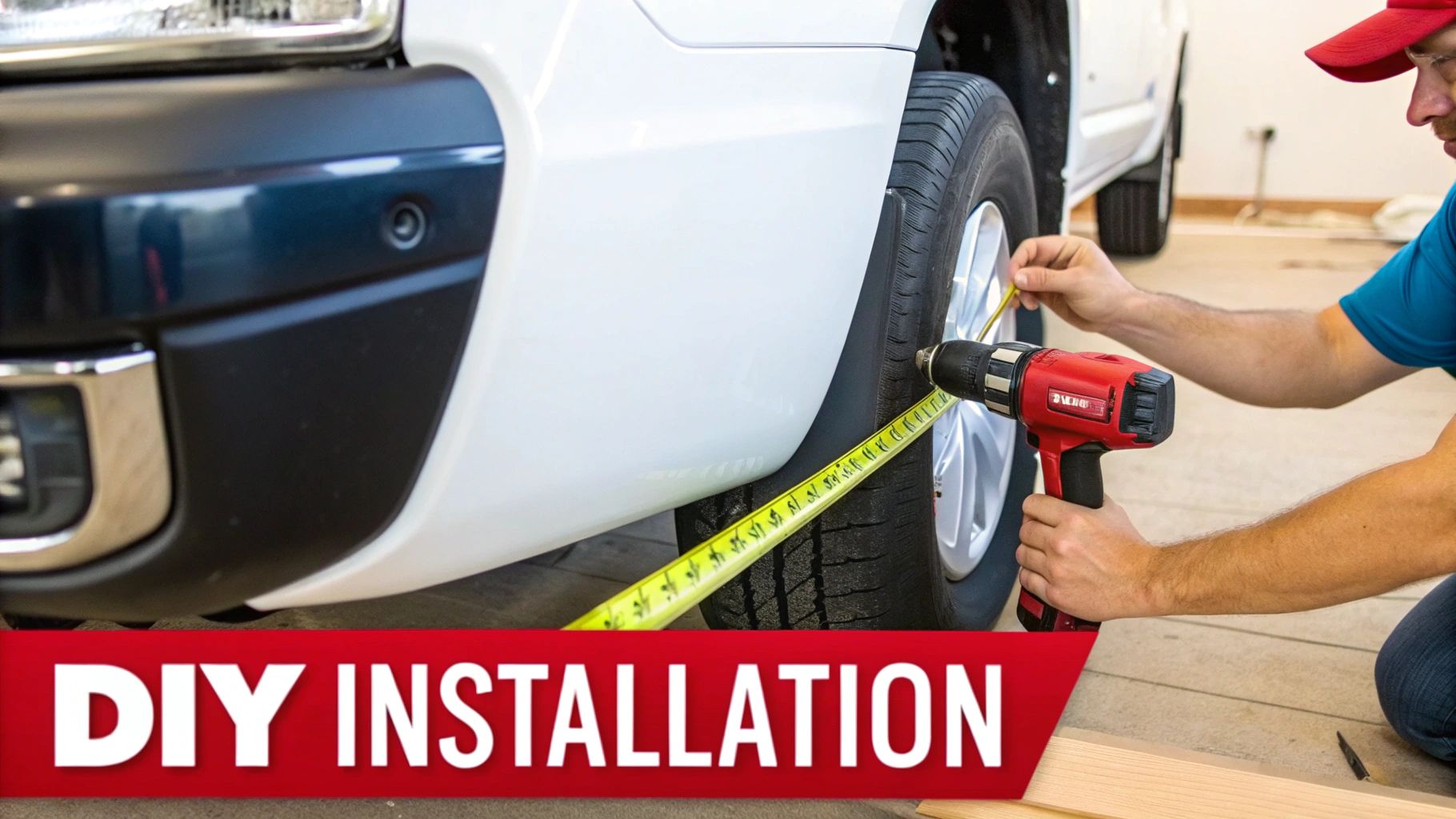
For a typical ultrasonic kit, the process starts with careful measurement. You'll need to mark out the sensor locations on your bumper to ensure they're evenly spaced—this is absolutely critical for getting full, gap-free coverage. Good kits usually come with a hole saw bit that's perfectly matched to the sensor size, which makes drilling the holes much less stressful. Once they're drilled, you just feed the wires through and pop the sensors into place.
Wiring It All Up
After the sensors are mounted, it's time to connect them to the control module. This little box is the system's brain and can usually be tucked away neatly in the trunk. Each sensor’s wire will have its own dedicated port on the module, so you just plug them in.
The final piece of the puzzle is power. The easiest and most common way to do this is by tapping into your car’s reverse light circuit. This is a smart setup because it means the sensors only power on when you put the car in reverse, so they aren't beeping and drawing power unnecessarily. For a more granular breakdown, check out our guide on how to install parking sensors.
Solving Common Installation Headaches
Even the most careful installation can hit a snag or two. The good news is that most problems are easy to fix with a bit of troubleshooting. If the system isn't behaving perfectly right away, don't worry—the solution is often straightforward.
Here are a few common issues and their quick fixes:
- Constant Beeping: This usually happens when a sensor is aimed too low and is picking up the ground as an obstacle. Take a look at the sensor's angle and make sure it's pointing straight out from the bumper, not tilted down.
- No Power or Works On and Off: Nine times out of ten, this is a loose connection at the reverse light. Go back and check your wiring splice—make sure it’s tight, secure, and making a solid electrical contact.
- False Alerts: A sensor that isn't snapped firmly into the bumper can vibrate and trigger a false alarm. Make sure each one is seated securely. Also, clear away any dirt, mud, or ice that might be caked onto the sensor's face.
Here's a pro tip that can save you a ton of frustration: test the system before you put your bumper back on completely. Turn the ignition on (engine off), put the car in reverse, and have a friend walk behind it. You'll be able to confirm that each sensor is working and giving the right alerts. This simple check can save you from the headache of having to pull everything apart again.
Got Questions About Parking Sensors? We’ve Got Answers.
Even after you’ve done your homework on sensor types and features, a few questions might still be bouncing around in your head. Let's tackle some of the most common ones we hear from drivers, so you can make your final choice with total confidence.
Can I Really Install Aftermarket Parking Sensors Myself?
You bet. For anyone comfortable with basic hand tools, installing an aftermarket parking sensor kit is a very doable weekend project. Most quality kits are designed with the DIYer in mind and come with everything you need, including a correctly sized hole saw for the bumper, all the wiring, and step-by-step instructions.
The job usually involves removing the bumper cover, carefully drilling the holes for the sensors, routing the wires to a central control box, and tapping into a power source—most people use the reverse light circuit. If you choose a kit that’s made for your specific vehicle, it's even more straightforward.
Will Aftermarket Sensors Stick Out or Look Tacky?
Not if you choose the right ones. The best aftermarket sensors are designed to look like they came straight from the factory. High-end kits include sensor heads that are paintable, so you can match them perfectly to your vehicle’s color code for a completely integrated look.
When you install them flush and follow the recommended spacing, they’re virtually identical to OEM sensors. For total peace of mind, look for CAPA-certified parts; this certification is a guarantee that the fit and finish meet rigorous quality standards, ensuring a professional appearance.
A clean, factory look all comes down to precision. Take your time with the measurements, drill carefully, and always paint the sensor heads before you snap them into the bumper. This gives you a durable, perfectly blended finish.
What’s the Real Cost to Add Aftermarket Sensors?
This is where you can really save some money. A good DIY parking sensor kit typically runs between $50 and $200. The price difference usually comes down to the number of sensors and whether it includes extra features, like a digital display for your dashboard.
If you’d rather have a professional handle the job, expect to add another $150 to $300 for labor. Either way, it’s a bargain compared to going to a dealership for an OEM retrofit, which can easily cost over $500. A quality aftermarket kit delivers the same performance and peace of mind for a fraction of the price.
Ready to add that extra layer of safety and convenience to your vehicle? At T1A Auto, we focus on providing CAPA-certified, direct-fit parking sensors built for lasting performance and hassle-free installation. Explore our collection of premium parking sensors and find the perfect fit for your car or truck today.