


You're halfway through a chilly morning commute when a yellow horseshoe-shaped symbol with an exclamation point lights up on the dashboard. The tires look fine, the car still feels normal, and the first thought is probably, “Can I keep driving, or do I need to pull over?”
Treat the low tire pressure symbol as a prompt to check, not as a precise reading of which tire needs air or how much. The right next step is straightforward: inspect the tires, measure their pressure while cold, and compare each reading with the number on the driver-door placard. A reset can come later, after you know the tires are correctly inflated and the system is working.
Table of Contents
- A Commute That Starts With a Glowing Horseshoe
- What the Low Tire Pressure Symbol Actually Means
- Steady Light Versus Flashing Light and What Each Signals
- Measuring Tires and Inflating Them the Right Way
- Why Cold Mornings Make the Symbol Look Moody
- Resetting and Relearning the TPMS After Service
- Sensors, Tools, and When to Call a Shop
- Key Takeaways Before You Reset the Light
A Commute That Starts With a Glowing Horseshoe
That amber symbol is easy to mistake for a general maintenance reminder. It isn't. It's the driver-facing warning from your Tire Pressure Monitoring System (TPMS), which alerts you when it detects significant underinflation or, depending on the vehicle and warning behavior, a system fault.
The light may come on during a drive, after an overnight temperature drop, or following tire service. A tire can look normal even when its pressure is low, so a quick glance at the wheels can't confirm that everything is fine. And if the light disappears after the car warms up, that doesn't prove the underlying issue has gone away.
A useful way to think about the symbol is as a threshold alarm. It tells you to check the tires, but a pressure gauge tells you what each tire contains. That distinction matters because a warning might not illuminate for a small pressure change, and some vehicles need to be moving before the system can detect a problem.
The practical response is to find a safe place to stop, look for visible damage, and measure all the tires with a gauge. If pressure is low, inflate to the vehicle's placard specification. If the warning returns, flashes, or remains on after correct inflation, investigate for a leak or TPMS fault instead of repeatedly resetting it.
What the Low Tire Pressure Symbol Actually Means
The low tire pressure symbol is the dashboard telltale produced by your vehicle's TPMS. In the United States, Federal Motor Vehicle Safety Standard No. 138 sets performance requirements for TPMS-equipped light vehicles. It requires a warning when one or more tires reaches at least 25% below the vehicle manufacturer's recommended cold inflation pressure, subject to the standard's specified minimum-pressure rule. The regulation was phased in beginning in October 2005 and reached full application for qualifying light vehicles produced after September 1, 2007. Passenger cars, light trucks, and vans from model year 2008 onward generally have this warning capability, as described in the NHTSA TPMS final rule.
That threshold is deliberately about significant underinflation, not a small shift from the placard setting. Suppose the driver-door placard calls for 38 psi. A drop of 25% from that recommendation works out to 28.5 psi, so the warning is meant to alert you around that range under the applicable conditions. The icon isn't a gauge, and it doesn't promise that every tire sitting slightly above the trigger is at its ideal pressure.
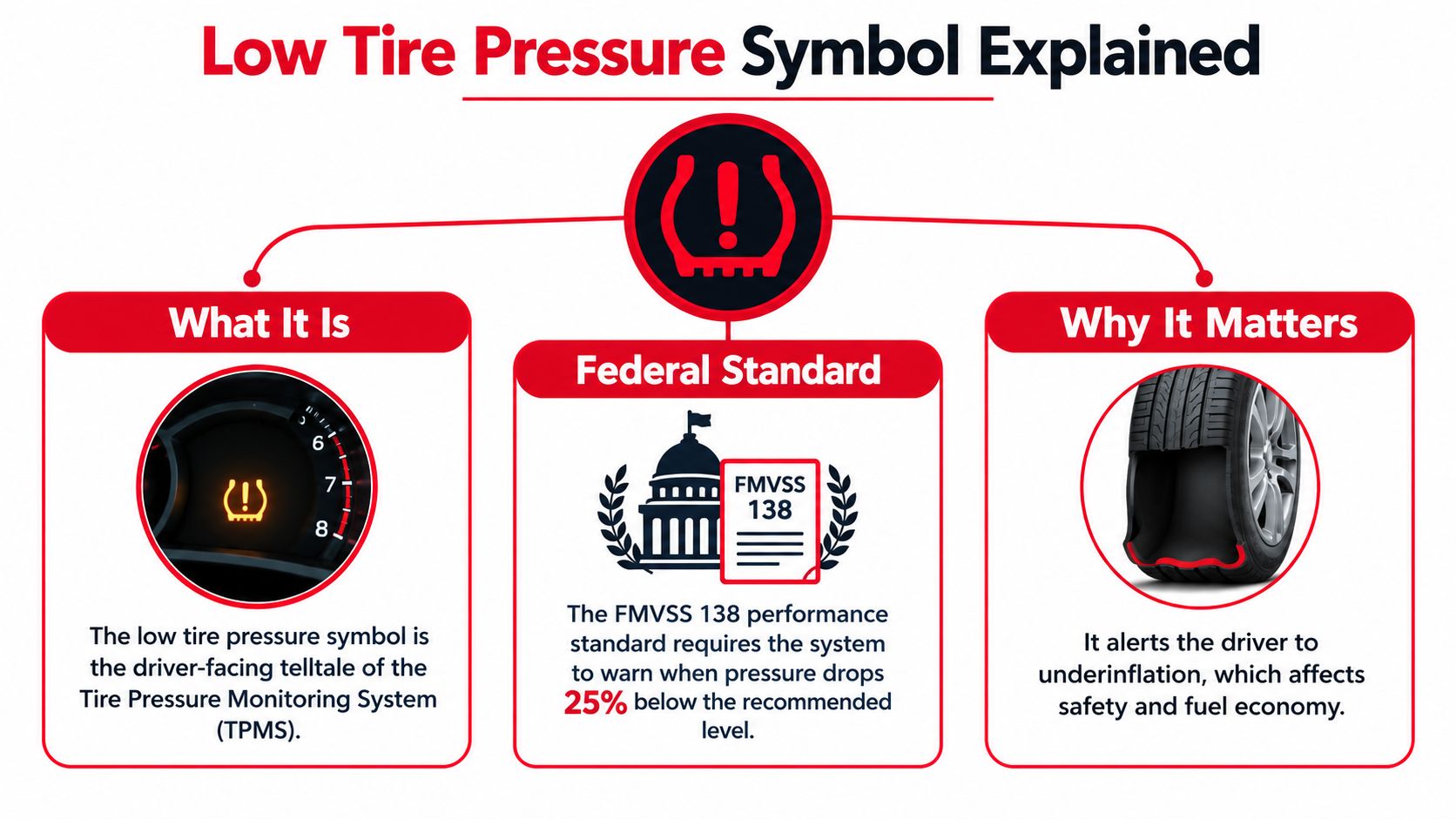
Use the placard, not the tire sidewall
The correct target pressure is on the vehicle's tire-information placard, usually on the driver-side door jamb. The number molded onto a tire's sidewall is a maximum rating, not the vehicle's recommended inflation setting. For a reliable comparison, measure when the tires are cold, before driving has warmed them.
| Placard pressure (psi) | Roughly 25% below (psi) | Likely status |
|---|---|---|
| 32 | 24 | At or below the approximate warning threshold |
| 35 | 26.25 | At or below the approximate warning threshold |
| 38 | 28.5 | At or below the approximate warning threshold |
These are threshold illustrations, not target pressures. Inflate to the placard number, not the lower figure in the table. NHTSA describes the warning as indicating that at least one tire is already significantly underinflated and advises checking pressure as soon as possible, as stated in its TPMS performance and compliance material.
Steady Light Versus Flashing Light and What Each Signals
A steady low-pressure symbol and a flashing one often point in different directions. A steady light commonly signals that the system has detected low pressure in one or more tires. A flashing light, or a light that flashes before remaining on, often indicates that the TPMS itself needs attention. Exact behavior varies by vehicle, so check the owner's manual before treating a pattern as a definitive diagnosis.
Start with the tires, not the reset button. A steady warning calls for a pressure-gauge check because a tire may be losing air through a puncture, a leaking valve, or damage at the bead where the tire seals against the wheel. A cold-weather pressure drop can also bring a marginal tire below the warning threshold. The warning doesn't identify tire damage directly, and some vehicles don't show which wheel triggered it.
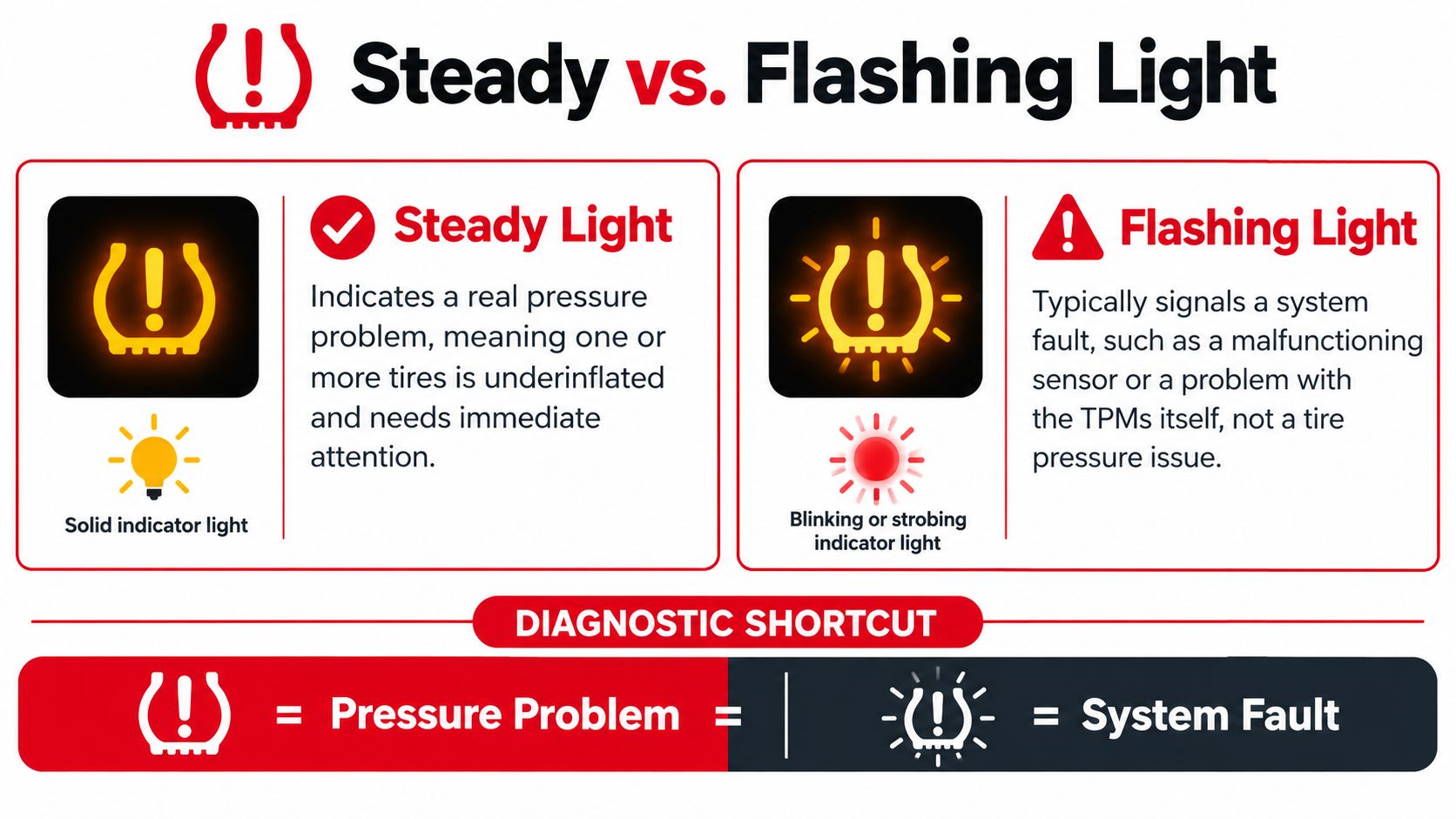
Match the light pattern to the next check
| What you see | Common possibility | What to do |
|---|---|---|
| Steady symbol | One or more tires are underinflated | Measure every tire cold and inflate to the placard |
| Symbol returns after inflation | Slow leak, valve seepage, wheel or bead issue | Recheck pressure and arrange a leak inspection |
| Symbol flashes or behaves abnormally | Sensor, communication, or TPMS fault | Follow the manual and seek a system diagnosis if it persists |
Direct TPMS uses sensors in the wheels to measure pressure. Indirect TPMS estimates pressure changes from wheel behavior, typically using wheel-speed information. Neither type makes a visual check unnecessary, and a fault in a sensor or the vehicle's system can leave you with a warning even when the tire pressures are correct.
Diagnostic shortcut: A steady symbol is a reason to measure tire pressure. A flashing symbol is a reason to check the TPMS system, while still confirming the tires are properly inflated.
Measuring Tires and Inflating Them the Right Way
Use a reliable tire-pressure gauge before adding air. A digital gauge or a well-kept pencil gauge can give you a useful reading, but the measurement is only meaningful if you compare it with the vehicle's cold-pressure recommendation. Park on level ground and check before a drive, or after the car has been parked long enough for the tires to cool.
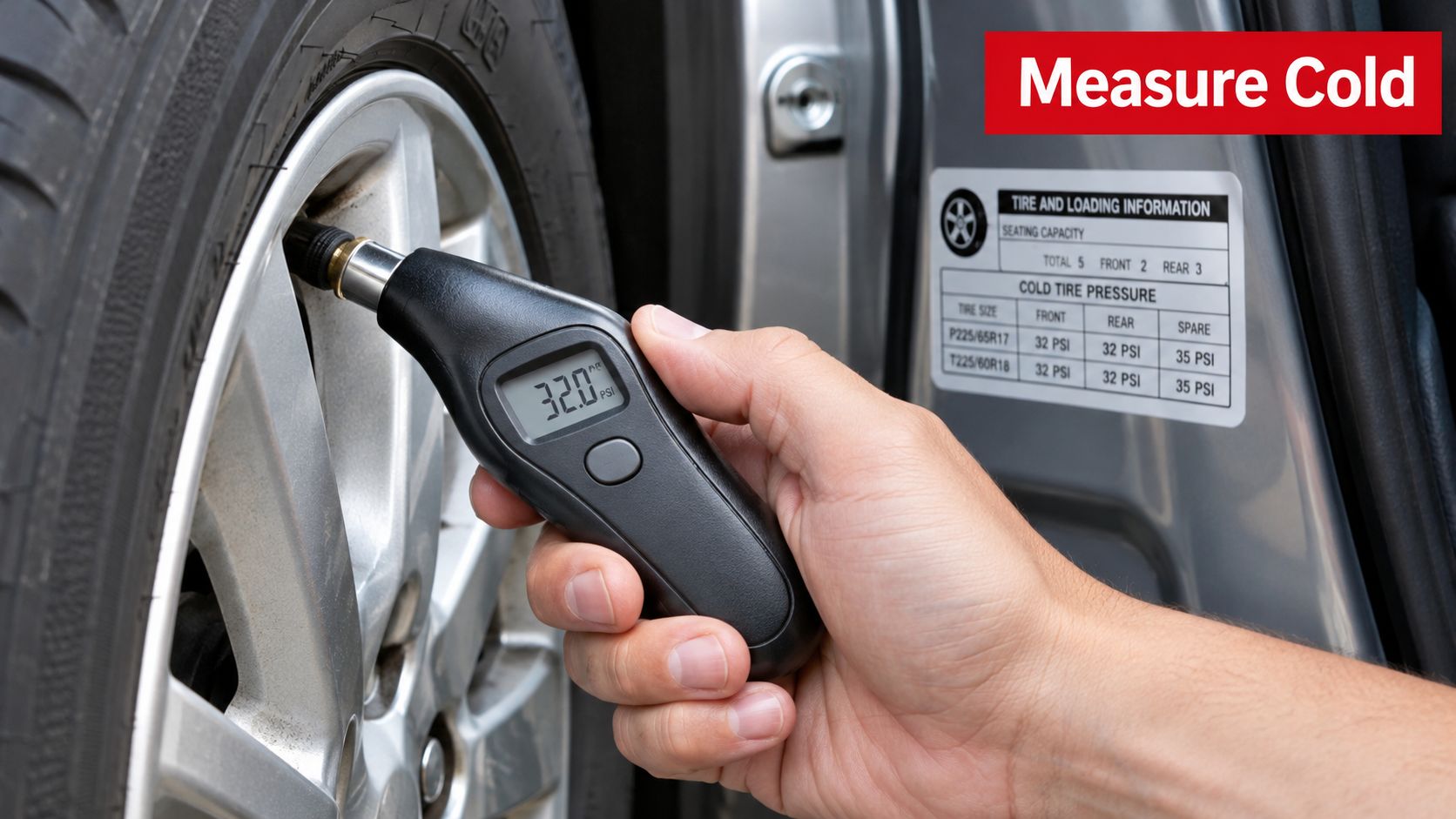
Find the placard on the driver-side door jamb and note the recommended pressure for your vehicle. Remove the valve cap, press the gauge squarely onto the valve stem, and read the result. Check all four tires, not just the one that looks low. If your vehicle monitors a spare tire, include it according to the owner's manual.
Add air in small increments, then measure again. If a tire is above the placard setting while cold, release a little air and recheck. Replace the valve cap when you're done, and pay attention to a hiss or persistent loss of air around the valve. Don't set pressure by feel or by the sidewall's maximum number.
Choose an inflation method that suits the job
A home compressor is convenient for routine checks. A gas-station inflator can handle a top-up, though you'll still want your own gauge to confirm the result. If the valve is difficult to reach, the tire is losing air quickly, or you're dealing with a commercial tire, a shop is a safer and more practical option. Chock the wheels if the car could move, and keep your hands and clothing clear of moving parts.
Once the tires are correctly inflated, the light may go out after the system detects the corrected pressure. Some vehicles need to be driven before updating their warning. If it stays on, consult the manual for the vehicle-specific procedure rather than pressing an unfamiliar reset button.
Proper inflation is also relevant to fuel use. NHTSA estimated that the TPMS rule saved approximately $511 million in fuel consumption during 2011 because tires were more often properly inflated, and reported that proper inflation can save as much as 11 cents per gallon of fuel, according to its TPMS research and fuel-consumption estimates.
A short visual walkthrough can help you follow the gauge and inflation routine:
Why Cold Mornings Make the Symbol Look Moody
A cold morning can trigger the low tire pressure symbol even when no new puncture has occurred. As tire air cools, pressure falls. NHTSA materials give a practical rule of thumb: tire pressure changes by about 1 psi for every 10°F change in ambient temperature, with pressure dropping as temperatures fall, as outlined in NHTSA guidance on tire-pressure changes.
If a tire was already close to the system's warning threshold, a cold snap may push it low enough to set off the alert. After driving, the tires warm and pressure can rise, which may make the symbol disappear. That temporary change doesn't put the tire back at the correct cold pressure.
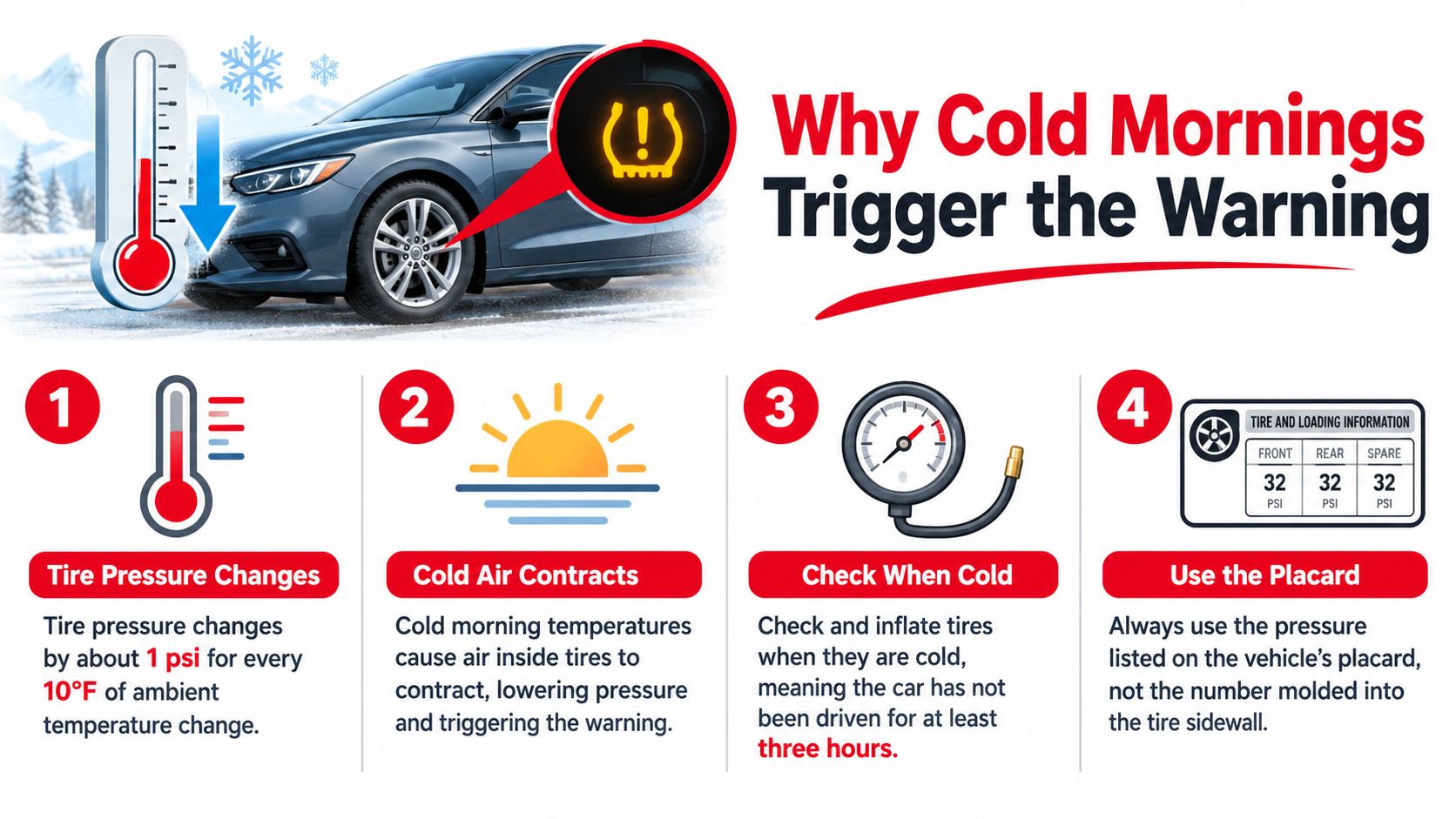
Treat a disappearing warning as a clue
Measure the tires cold and inflate them to the placard value. Don't bleed air from a warm tire just because its reading is higher than the cold placard specification; a warm reading isn't directly comparable with the cold target. The goal is correct pressure when cold, not a number that happens to match after a drive.
If the warning comes back on successive cold mornings, look beyond the weather. A slow puncture, leaking valve, damaged wheel, or poor bead seal can make one tire lose pressure faster than the others. A sensor or relearn issue can also cause persistent warnings, especially after wheel or tire service. A pressure gauge gives you a way to distinguish an actual pressure change from a dashboard-system problem.
A warning that turns off as the tires warm may have crossed back above the system's trigger. It hasn't confirmed that the tire is correctly inflated or that there's no leak.
Resetting and Relearning the TPMS After Service
A reset and a relearn aren't always the same job. A reset may clear a warning or ask the vehicle to recheck pressure. A relearn updates how the vehicle recognizes sensor signals or associates sensors with wheel positions. Which procedure you need depends on the TPMS design and the vehicle.
After inflation or tire service, first confirm that every tire is at the placard pressure. Then consult the owner's manual for the correct procedure. Some vehicles have a dashboard menu or reset button; others update after a drive. If a wheel has a replacement sensor, the vehicle may need a relearn procedure or a scan tool capable of communicating with the TPMS.
Follow the vehicle's procedure, not a generic reset
Direct systems rely on wheel-mounted sensors, so a new sensor may need to be programmed or learned by the vehicle. Indirect systems infer pressure changes from wheel behavior and may require a reset after pressure correction or tire service. The steps aren't interchangeable. A reset that worked on another vehicle may not work on yours.
If the warning appears after a rotation, wheel swap, or sensor replacement, tell the shop exactly what work was done. That helps distinguish a pressure issue from an incorrect relearn, incompatible sensor, or damaged component. The TPMS installation guide provides further information about sensor installation and relearn steps.
| What happened | Sensible next step |
|---|---|
| Pressure was corrected, but the light remains | Drive only if the manual says the system needs motion to update, then recheck |
| Wheels were rotated or replaced | Follow the model-specific relearn procedure |
| A sensor was replaced | Confirm it's compatible and programmed for the vehicle |
| The warning flashes or returns despite correct pressure | Arrange TPMS diagnostics instead of repeating a reset |
TPMS sensors must operate through changing temperatures and conditions. A study of tested MEMS TPMS sensor structures reported operation across approximately −20 °C to 100 °C, with measurement error of about ±0.91 °C; it also describes typical passenger-car tire pressures around 220–250 kPa, approximately 32–36 psi, in the sensor research paper. That technical context doesn't replace the vehicle's service procedure: if the light won't clear, a shop with the right scan tool can check what the system is reporting.
Sensors, Tools, and When to Call a Shop
A small, dependable toolkit solves many routine tire-pressure checks: a calibrated gauge and an inflator that fits your valve stems. A valve-core tool can help with certain valve-service tasks, but use it only if you know how to handle the valve safely. A plug kit isn't a substitute for proper inspection or repair, especially when the puncture location or tire damage makes a repair unsafe.
Direct TPMS sensors measure pressure inside the wheel. Indirect systems infer pressure changes from wheel behavior, so their diagnosis and reset procedures differ. That's one reason a generic reset trick can waste time. If you're buying a replacement sensor or other vehicle part, confirm compatibility with the exact vehicle rather than assuming that a similar-looking component will work.
Make the shop call when diagnosis matters
Get professional help if the warning stays on after you've checked and corrected pressure, if the light flashes, or if you find a puncture, leaking valve, damaged wheel, or impact damage. The same goes for a vehicle that needs a scan tool or a model-specific relearn you can't perform with the available equipment. Don't keep driving on a tire that is visibly damaged or losing air quickly.
A technician can read TPMS faults and check whether the system is receiving sensor signals. The vehicle diagnostic test guide explains how diagnostic testing can help identify a system problem. T1A Auto also offers a TPMS installation guide, which can help DIY owners understand sensor installation and relearn considerations before deciding whether a job belongs at home or in a shop.
The goal isn't to buy every tool or replace a sensor at the first warning. It's to measure pressure accurately, use the right procedure for your vehicle, and get help when the warning points to a fault you can't safely confirm yourself.
Key Takeaways Before You Reset the Light
The low tire pressure symbol is a warning threshold, not a precision gauge. It may not identify the affected tire, and a warning that disappears after driving doesn't prove the pressure is right. Use the driver-door placard as your target and a gauge as your measuring tool.
Keep this sequence in mind:
- Inspect first: Look for visible damage, then measure every tire.
- Check cold: Compare readings with the vehicle's placard, not the tire sidewall.
- Inflate accurately: Add or release air in small steps and recheck.
- Let the system update: Follow the owner's manual if the vehicle needs a drive or reset procedure.
- Investigate repeat warnings: A recurring alert can point to a leak, sensor fault, or relearn problem.
For shops and fleet owners, a consistent inspection routine helps keep tire checks from becoming a response only to dashboard alerts. T1A Auto's fleet vehicle maintenance checklist offers another starting point for organizing vehicle maintenance.
A working TPMS is part of your vehicle's safety system, not a substitute for hands-on checks. Measure the tires, correct the pressure, and arrange an inspection if the light returns or the system keeps reporting a fault.
T1A Auto offers vehicle-specific aftermarket parts and installation guidance for DIY owners and repair professionals. If you're working through a TPMS-related repair or another vehicle maintenance job, visit T1A Auto to search for parts by vehicle.
