


Let's be honest, that plastic door handle on your car or truck is one of the first things to go. It’s a part you use every single day, and after a few years of sun, rain, and constant pulling, it’s no wonder they get brittle and break. Swapping it out for a metal handle for door isn't just about looks—it's a serious upgrade for your vehicle's durability, security, and even how it feels to get in and out.
Why Your Vehicle Needs a Metal Door Handle Upgrade
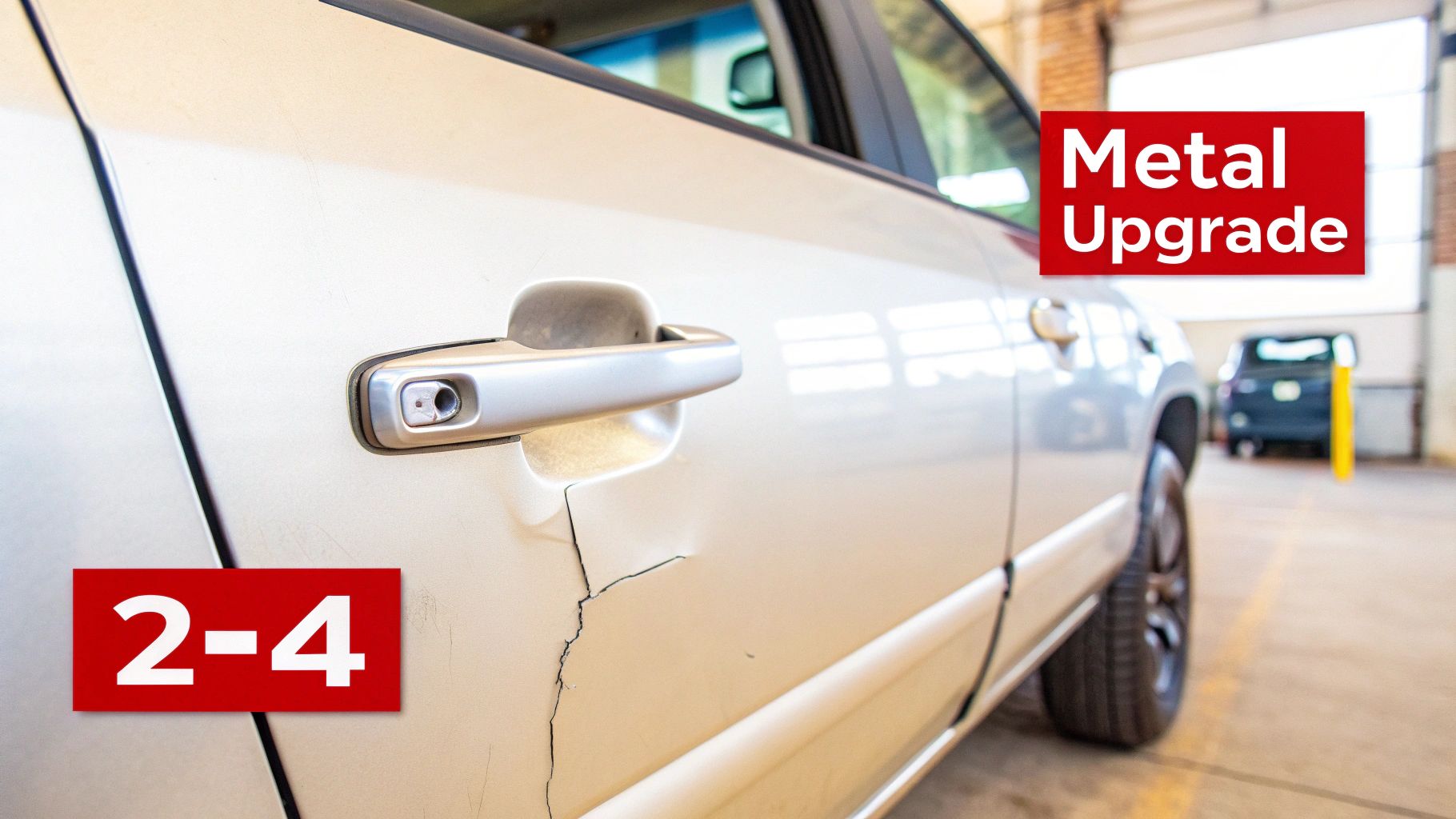
Just think about how many times you yank on that handle. Most factory-installed plastic handles just aren't designed to last forever. They get cooked by UV rays, crack in the cold, and eventually, the stress of daily use just causes them to snap.
A metal replacement solves all of these problems right at the source.
The Durability Factor
The number one reason to switch is simple: strength. When you move from plastic to materials like aluminum, zinc alloy, or steel, you're getting a huge leap in resilience. It's not just a feeling of sturdiness in your hand; it's a real, measurable difference.
- Weather Resistance: Metal won’t get brittle in a deep freeze or warp during a summer heatwave like plastic does.
- Daily Wear and Tear: It’s built to handle the constant yanking and pulling of everyday life without getting weak over time.
- Impact Resistance: A stray shopping cart or an accidental bump in the garage is far less likely to crack a solid metal handle.
This kind of toughness means you can count on it. No more worrying about being stuck with a broken handle when you're in a hurry.
Enhanced Security and Peace of Mind
A flimsy plastic handle can look like an easy target for a potential thief. It's a known weak point that can be pried or snapped to get inside. Bolting on a solid metal handle creates a much tougher barrier.
Upgrading to a metal handle can significantly enhance your vehicle's durability and security, an important factor also explored in broader discussions on campervan security and safety. It’s a simple change that makes a real difference in protecting your vehicle.
It’s not just about stopping a break-in. It's about feeling confident that your vehicle's entry points are genuinely secure.
A Tangible Improvement in Feel
Beyond all the practical stuff, there's the simple satisfaction of how it feels. A solid metal handle gives you a confident, high-quality feel every time you open the door. It gets rid of that hollow, cheap plastic sensation and replaces it with a firm, responsive click that speaks to quality.
This one small touch really elevates the whole experience of using your vehicle. For any car or truck owner, it’s a straightforward upgrade that delivers a surprising amount of long-term value.
Picking the Right Metal and Finish for Your Ride
When you're ready to upgrade your vehicle's door handles, the decision goes way beyond just finding a part that fits. You’re really choosing the material that will stand up to your daily grind and a finish that complements your vehicle's style. The metal itself dictates how strong and rust-resistant the handle will be, while the finish is all about looks and protection against scratches and UV fading.
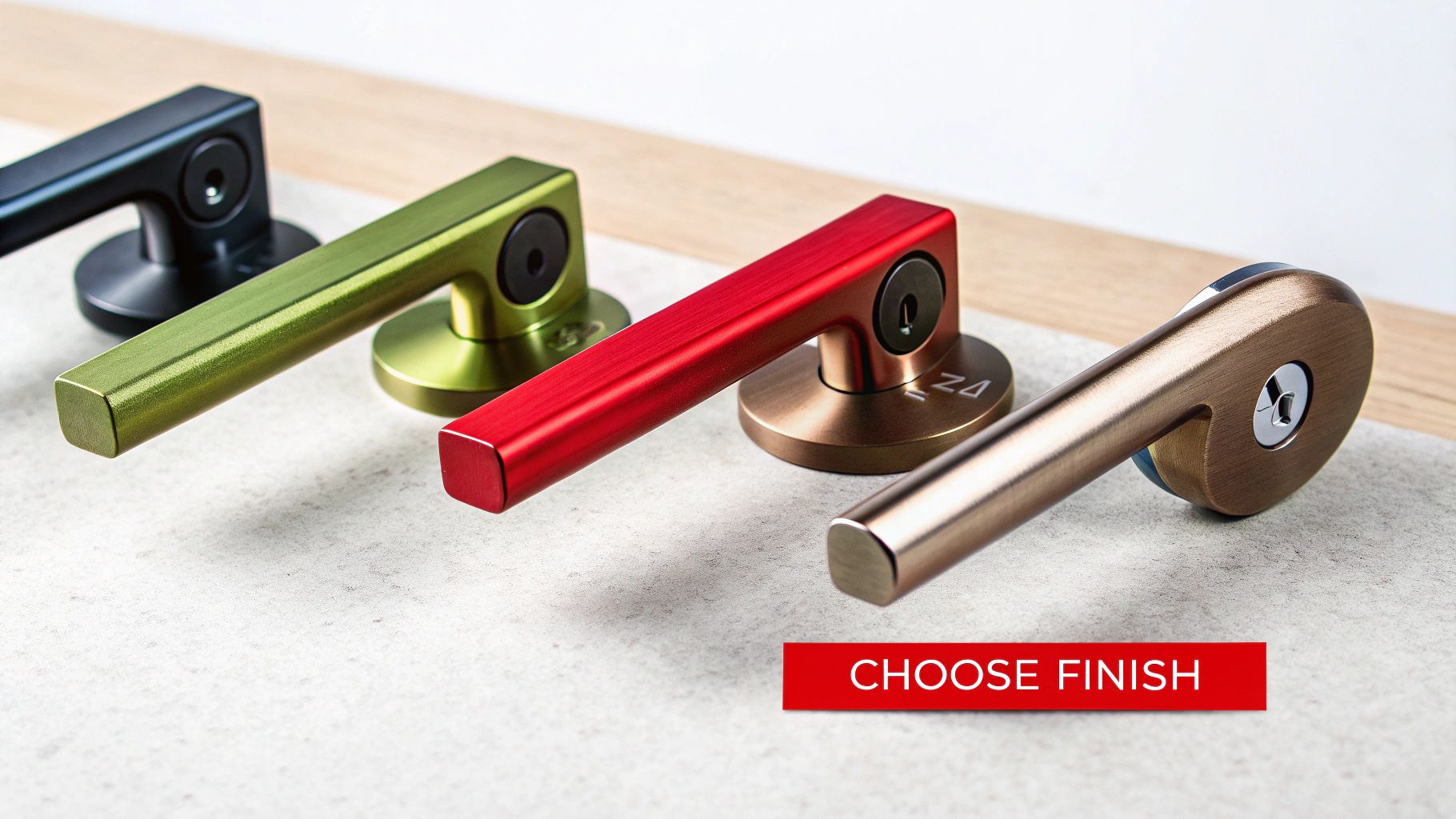
It’s easy to think all metals are basically the same, but that’s far from the truth. Each option you'll find for automotive handles has its own set of pros and cons, making one a better fit than another depending on where you live and how you use your car or truck. Let's break down the most common choices.
Comparing Common Metal Door Handle Materials
To help you decide, here’s a quick rundown of the most popular metals used for automotive door handles. Think about your local climate and how much abuse your vehicle takes when making your pick.
| Material | Key Benefit | Best For | Consideration |
|---|---|---|---|
| Stainless Steel | Ultimate strength and rust resistance | Vehicles in coastal areas, snowy climates with road salt, or heavy-duty work trucks. | It's the heaviest and often most expensive option, but the durability is unmatched. |
| Aluminum | Lightweight and naturally rust-proof | Modern cars, performance vehicles, or anyone looking to reduce weight without sacrificing a premium feel. | Lighter means it can be more susceptible to dents and dings than steel. |
| Zinc Alloy | Versatile and cost-effective | Everyday commuter cars and trucks in moderate climates; a great all-around performer. | Offers a fantastic balance of strength and price, making it a very common OEM and aftermarket choice. |
Ultimately, the best metal for you comes down to practical needs. If you’re outfitting a work truck that sees harsh weather and tough job sites, the brute strength of stainless steel is probably your best bet. But for a daily driver in a dry, mild climate, a zinc alloy handle offers the perfect blend of performance and value.
A handle’s material directly impacts its longevity. While many stock handles are hollow or made from thin stamped metal, a quality aftermarket upgrade is often solid, providing a heft and durability you can feel immediately.
Why the Finish Matters Just as Much
The finish isn't just for show—it’s the handle’s first line of defense against the elements. This is your chance to match the handle to your vehicle’s aesthetic while also choosing a protective layer that suits your lifestyle.
Picture a rugged off-road truck. A polished chrome handle might look sharp at the dealership, but it's going to show every single scratch after a few trips down a trail with low-hanging branches. A matte black powder coat, on the other hand, is specifically designed to resist abrasion and chipping, making it a far more practical choice for that kind of use. We dive deeper into the benefits of each in our full guide on choosing a metal door handle.
This focus on both form and function is driving serious innovation. The market for automotive door handles was valued at around USD 4.79 billion in 2025 and is projected to climb to USD 7.24 billion by 2034. A big part of that growth comes from advancements in handle materials and smart designs for EVs and luxury cars.
By carefully matching the metal to your climate and the finish to how you use your vehicle, you can be confident that your new handles won't just look great on day one, but for years to come.
Getting a Perfect, Secure Fit Every Time
There’s nothing worse than getting halfway through a car repair, only to find out the brand-new part you ordered doesn’t fit. It completely kills your momentum. When it comes to a metal handle for door, a perfect fit isn’t just about looks—it’s about security and making sure your door actually works.
Thankfully, avoiding that frustration is pretty simple if you do a little homework upfront.
First things first: get your vehicle's exact specs. Don't just guess the year. Open the driver's side door and find the manufacturing sticker on the door jamb. It will tell you the exact month and year your car rolled off the assembly line. This little detail is a game-changer because car manufacturers are notorious for making mid-year design tweaks that can affect something as simple as a door handle.
Direct-Fit vs. Universal: A No-Brainer
As you start shopping, you’ll see two main categories: direct-fit and universal handles. A direct-fit handle (sometimes called OEM-style) is designed to be a carbon copy of the one you're replacing. All the mounting holes, clips, and connections will line up perfectly. This is, hands down, the easiest and most reliable way to go.
Then there's the universal-fit handle. These are meant to fit a bunch of different models, which usually means you'll need to modify something—like drilling new holes or jerry-rigging the linkage rods. They might be a few bucks cheaper, but the headache and potential for a wobbly, insecure handle just aren't worth it for most people.
My Advice: Always go for a direct-fit replacement if you can. The time you'll save and the peace of mind from a solid, secure fit are worth a few extra dollars. A loose handle isn't just annoying; it can fail when you need it most or even make your door easier to break into.
The Pre-Purchase Checklist: Beyond Year, Make, and Model
You've got your car's basic info, but don't hit that "buy" button just yet. Run through these crucial details to make sure you’re ordering the right part the first time.
- Door Count: Is this for a two-door coupe or a four-door sedan? Front and back door handles are almost never interchangeable.
- Keyless Entry: Look at your current handle. Does it have a little black button or a sensor for keyless entry? If so, your replacement needs to have that feature, or you'll lose the convenience.
- Keyhole or Not: Are you working on the driver's side, which needs a keyhole, or the passenger's side, which usually doesn't? It’s a common mistake to order the wrong one.
- The Guts Inside: You won't see this until you pop the door panel off, but the handle connects to the latch mechanism with a series of rods and cables. It’s a good idea to know how these disconnect beforehand. We actually walk you through this in our guide on how to remove a car door panel.
The move toward better, more reliable parts is a huge trend. The global market for door handles was recently valued at USD 8.14 billion. And what are people buying? Metal. Metal handles make up over 53% of that market because they just last longer than plastic. You can dig into the numbers yourself in this in-depth industry analysis from Grand View Research.
By taking a few extra minutes to check these details, you’re making sure your new handle will be a solid, lasting fix.
Your Practical Metal Door Handle Installation Guide
Ready to get your hands dirty? Swapping out a flimsy plastic handle for a tough metal one is one of those incredibly satisfying DIY projects you can knock out in an afternoon. This isn't a dense, confusing technical manual. I'm here to walk you through it, from prepping your workspace to that final, solid click of your new hardware.
The real key to a smooth installation is all in the prep work. Before you even touch a tool to the door, clear a good space in your garage or driveway. I always lay out an old blanket or a big piece of cardboard—it protects the door panel when you take it off and stops those tiny, crucial screws from rolling away into another dimension.
Assembling Your Tool Kit
You don't need a pro-level toolbox for this job, but having the right tools makes a world of difference. Trust me, trying to improvise with the wrong thing is a fast track to a broken plastic clip or a nasty scratch in your paint.
Here’s a quick rundown of what you’ll likely need:
- A Trim Removal Kit: These plastic pry tools are your best friend for popping off the interior door panel without leaving a mark. A flathead screwdriver will absolutely chew up the plastic.
- Socket Set with an Extension: You'll need this for the bolts holding the handle assembly. That extension is vital for reaching the bolts tucked away deep inside the door.
- Needle-Nose Pliers: They're perfect for finessing the small clips that hold the lock and latch rods.
- Your Smartphone: Seriously, don't skip this. Before you unhook a single thing, snap a few clear photos of how all the rods and cables are connected. Your future self will thank you during reassembly.
Once you've got your gear laid out, you're ready to dive in.
Removing the Interior Door Panel
This is the part that often seems the most intimidating, but it’s really just a matter of patience. Start by hunting down all the screws holding the panel on. They're usually hiding behind little plastic covers in the armrest, near the interior handle, and sometimes along the bottom edge.
With the screws out, grab your trim removal tool and gently start prying the panel away from the door frame. You’ll hear a series of pops as the clips let go—that’s totally normal. Just work your way around the whole perimeter.
Before you yank the panel completely free, hold on! It's still tethered by the wiring for your power windows, locks, and speakers. Carefully disconnect these connectors. Getting this right starts with having a plan, which really begins with making sure you bought the right part in the first place.
This visual breaks down the simple logic of matching the right part to your vehicle—the foundation for any successful installation.
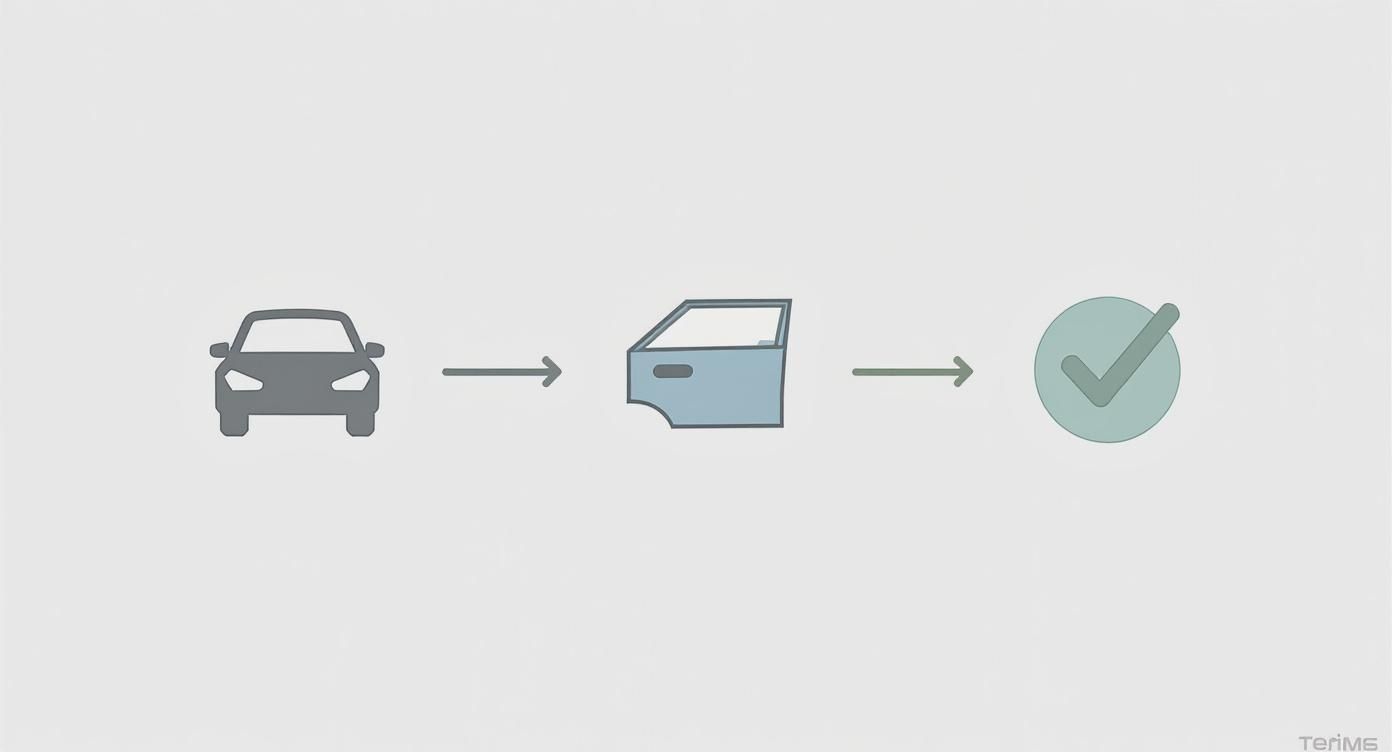
As you can see, confirming your vehicle's details is the non-negotiable first step to guaranteeing a perfect match.
Detaching the Old Handle and Installing the New One
With the panel off, you've got a clear view of the door's inner workings. Find the old handle, and you'll see it’s connected to the latch mechanism by one or two thin metal rods. These rods are held on by small plastic swivel clips. Use your needle-nose pliers or even a small flathead screwdriver to carefully pop those clips open and free the rods.
Next, grab your socket set and unbolt the handle from the door frame. Once the old one is out, your new metal handle for door should slide right into its place. If you want a more in-depth look at this particular stage, our complete guide on how to replace a car door handle has you covered.
Bolt the new handle down securely, but be careful not to overtighten and strip the threads. Now, reconnect the lock and latch rods to the new handle, making sure you snap the plastic clips firmly shut.
Here's the crucial final check: before you put the door panel back on, test everything. Manually work the rods to lock and unlock the door. Operate the new handle and listen to make sure it's opening the latch smoothly.
Once you’re confident it all works perfectly, reconnect the electronics, clip the door panel back into place, put the screws back in, and give yourself a pat on the back. Enjoy that solid, reliable feel of your new metal handle.
Keeping Your New Metal Handles in Top Shape
You've got the new handle installed, and it feels fantastic—solid, responsive, and a huge step up from the old one. So, how do you keep it looking and feeling that good for the long haul? Thankfully, it's not rocket science. A little bit of routine care will go a long way in protecting your investment.
The right approach really comes down to the finish on your handle. You can't just grab any old cleaner; treating a powder-coated handle like polished chrome is a recipe for a bad time.
Cleaning: Match the Method to the Metal
- Chrome Finishes: That mirror-like shine is what you're trying to protect. Use a gentle, non-abrasive cleaner (your regular car soap, diluted, works perfectly) with a soft microfiber cloth. This simple step prevents the pitting and water spots that can permanently dull that brilliant finish.
- Matte or Powder-Coated Finishes: The goal here is to maintain that non-reflective, textured look. Waxes and polishes are your enemy—they'll create unwanted shiny patches. For these, a quick wipe with a damp cloth is almost always enough to get rid of daily grime.
Think of this as your first line of defense against dirt, road salt, and whatever else the weather throws at your vehicle.
Don't Forget What's on the Inside
The part of the handle you see is only half the equation. The real workhorse is the internal latching mechanism, and it needs a little TLC, especially if you deal with tough climates. Frigid winters can make the mechanism stiff, while summer humidity can invite corrosion.
Here's a pro tip: a quick blast of high-quality silicone spray into the moving parts of the latch mechanism once a year works wonders. It lubricates everything, pushes out moisture, and keeps the action smooth and effortless.
This one simple act can head off nearly all sticking or squeaking problems before they even have a chance to start. The growing preference for durable hardware like this is clear; the global metal handle for door market is already valued at around USD 4.33 billion. This isn't just a niche product; it's a reflection of drivers wanting parts that last. You can dig into the data, including its projected 5% annual growth, in this detailed market analysis.
Ultimately, just think of your new handles as part of your car's regular wash and maintenance routine. Folding their care into your existing habits is the easiest way to ensure they stay in prime condition. For a broader look at vehicle upkeep, this comprehensive car maintenance checklist is a great resource to have on hand.
Got Questions About Metal Door Handles? We’ve Got Answers.
Thinking about making the switch to a metal door handle for your car or truck? Smart move. But it's totally normal to have a few questions before you dive in. Let's clear things up so you can get started on the right foot.
Can I Actually Install a New Door Handle Myself?
Absolutely. For most people with a decent set of basic tools and a little patience, this is a very doable weekend project. I'd call it an intermediate-level job.
The trickiest part is usually just getting the interior door panel off without breaking any clips. Once you're inside, you’ll be working with the small rods and clips that connect the handle to the latch mechanism. If you can follow a YouTube tutorial, you can handle this. Plan for an afternoon, take your time, and you'll be fine.
Of course, if pulling apart your door panel sounds like a nightmare, there's no shame in calling a pro. A good mechanic can usually knock this out in about an hour.
Is an OEM Handle Really Better Than Aftermarket?
Not always. While an OEM (Original Equipment Manufacturer) handle is a surefire way to get a perfect fit, you’ll definitely pay a premium for that logo on the box. On the other hand, a well-made aftermarket handle can be just as good, if not better.
The biggest win with aftermarket parts is often the material. Many of us have seen the original plastic handles crack and fail. Reputable aftermarket brands often build their handles from solid metal, which is a huge upgrade in durability and longevity.
The key is to stick with a trusted brand known for its quality and precise fitment. That way, you get the strength of metal without giving up the easy installation and smooth feel of the original part.
Why Does My New Handle Feel So Stiff?
If your brand-new metal handle feels stiff or sticky, the problem is almost always inside the door. It's a classic sign that one of the linkage rods or cables is pinched or out of alignment.
These thin metal rods have to move freely, without anything binding them up. Before you even think about putting the door panel back on, test the handle multiple times. Make sure every single rod is snapped securely into its plastic clip and that there's no tension when you pull the handle.
A little dab of white lithium grease on the moving parts of the handle itself can also work wonders for a buttery-smooth feel.
At T1A Auto, we live and breathe premium aftermarket parts—engineered to last and guaranteed to fit. Upgrade your vehicle with our tough-as-nails metal door handles by checking out our selection at https://t1aauto.com today.
