


You're easing into a crowded parking space, watching the camera while a curb, narrow post, or neighboring bumper sits awkwardly outside your view. Then the parking warning stays silent, sounds continuously, or alerts long before anything seems close. Before buying another sensor, you need to know whether the problem is the sensor itself, its mounting position, or the system behind it.
The best backup sensors are the ones that match your vehicle and restore predictable warnings. Connector compatibility, bumper position, wiring condition, and integration with existing parking assistance matter more than a broad promise of better detection. Understanding how drivers avoid crashes with blind spot tech also helps put these parts in context: proximity alerts supplement observation, they don't replace it.
These choices serve different repair jobs, from an isolated passenger-vehicle fault to a broader work-van or pickup bumper repair. Treat them as vehicle-specific replacement options, not automatically as complete parking-assist retrofits. A product labeled “kit” doesn't establish that it includes the controller, wiring, display, or warning hardware needed to equip a vehicle that never had sensors.
Table of Contents
- 1. Car Parking Sensors - Compatible with 2018-2019 Ford Edge, 19-21 Ford Explorer; 20-21 Lincoln Nautilus - Front/Rear Backup Reverse Parking Assist Kit - OEM HU5Z15K859AAT
- 2. Car Parking Sensors - Compatible with 2019-2022 Ford Transit - Front or Rear Bumper Parking Aid Sensor, Backup Reverse Parking Assist Kit - OEM JU5Z15K859B
- 3. T1A Car Parking Sensors - Compatible with 2015-2020 Ford F-150 Super Duty - Front or Rear Bumper Parking Aid Sensor, Backup Reverse Parking Assist Kit - OEM FL3-Z15K859-AAPTM, HC3Z15K859A
- 4. T1A Car Parking Sensors - 4 Pieces - Compatible with 2019-2022 Ford Transit - Front or Rear Bumper Parking Aid Sensor, Backup Reverse Parking Assist Kit - OEM JU5Z15K859B
- 5. T1A Car Parking Sensors, 4 Pieces - Compatible with 2015-2020 Ford F-150 Super Duty - Front or Rear Bumper Parking Aid Sensor, Backup Reverse Parking Assist Kit - OEM FL3-Z15K859-AAPTM, HC3Z15K859A
- Top 5 Backup Sensors Comparison Table
- Match the Sensor to the Vehicle and the Job
1. Car Parking Sensors - Compatible with 2018-2019 Ford Edge, 19-21 Ford Explorer; 20-21 Lincoln Nautilus - Front/Rear Backup Reverse Parking Assist Kit - OEM HU5Z15K859AAT
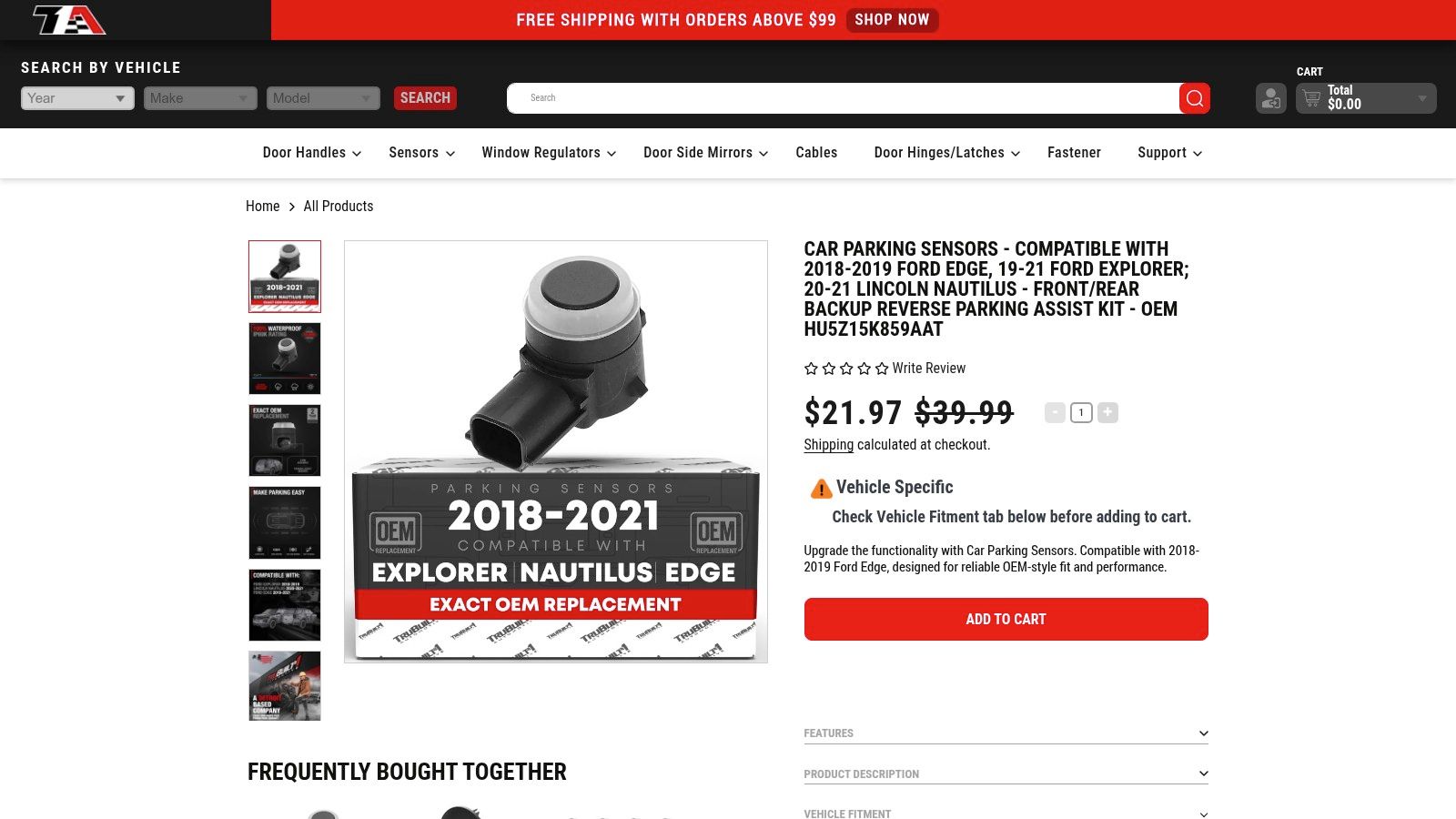
Best for an existing parking-assist system with a confirmed HU5Z15K859AAT sensor requirement. Choose this option for a targeted passenger-vehicle repair, not as a substitute for diagnosing an entire malfunctioning system. Its useful distinction is the listed OEM reference and front/rear replacement application, rather than an independently verified advantage in detection range.
There's an important purchasing issue: the product title and supplied description disagree about Edge and Explorer model years. Don't order from the title alone. Match the vehicle identification details, original sensor reference, connector, and bumper position with the seller before purchasing.
Resolve fitment before planning installation
An OEM-compatible reference is a starting point, not permission to ignore the original part. Compare the replacement application with the sensor removed from your vehicle, and confirm whether its intended position is front or rear. Don't force a connector or modify a bracket to make an uncertain match work.
Use these purchasing checks to keep the repair focused:
- Existing equipment: Confirm that the vehicle already has the parking-assist hardware this replacement is intended to serve.
- Part identity: Verify HU5Z15K859AAT against the original component or a vehicle-specific parts lookup.
- Package contents: Establish what the seller supplies rather than assuming “kit” means a complete retrofit.
- Mounting condition: Inspect the retaining position before installing a replacement into a damaged bumper.
The distinction between a sensor and a camera matters, too. This is a parking-aid sensor listing, not evidence that a camera, display, or automatic-braking capability comes with the purchase.
Preserve the assistance the vehicle already has
In an IIHS analysis of backing-crash prevention, vehicles with rear cameras and parking sensors had a 42% lower backing-crash involvement rate, while vehicles combining those technologies with rear automatic braking had a 78% lower rate, compared with vehicles without those systems. Those are system-level findings, not performance ratings for this replacement part.
Practical rule: Buy the part that restores the original system's operation, not the part with the most ambitious product description.
For installation planning, consult T1A Auto's guide to installing parking sensors, then follow the vehicle's service procedure. Protect the bumper finish, inspect the connector and mounting hardware, and verify warnings with controlled stationary targets after reassembly.
The trade-off: This is a fitment-focused replacement choice. It doesn't establish a path to adding parking assistance to an unequipped vehicle, and the conflicting application years require clarification before checkout.
2. Car Parking Sensors - Compatible with 2019-2022 Ford Transit - Front or Rear Bumper Parking Aid Sensor, Backup Reverse Parking Assist Kit - OEM JU5Z15K859B
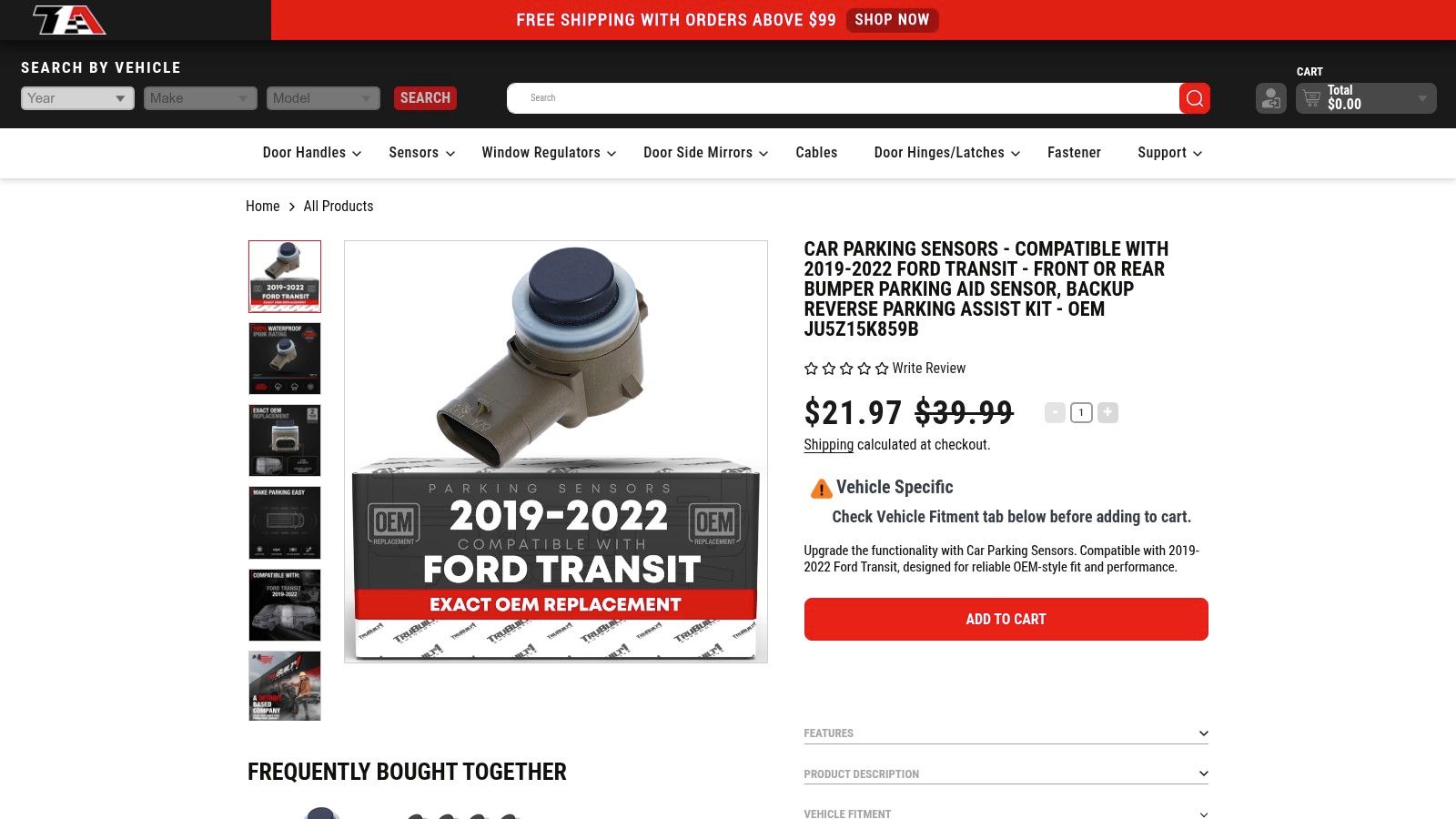
A Transit with an isolated sensor fault doesn't automatically need every bumper sensor replaced. Choose this option for a localized repair after confirming JU5Z15K859B fitment. It's the more focused purchasing route when diagnosis identifies a particular failed component and the surrounding system remains serviceable.
For fleet managers, the decision should begin with the repair record. Record the vehicle, affected bumper position, fault symptoms, and original part reference before ordering. That gives the technician a defined job rather than a bag of parts and an instruction to stop the warning.
Diagnose the fault before replacing the part
Start with T1A Auto's parking-sensor troubleshooting guide and the vehicle's service information. Clean the sensor faces, inspect the bumper, and check whether the symptom affects a specific zone or the system more broadly.
A practical diagnostic sequence is:
- Contamination: Remove surface dirt and inspect for obstruction before condemning a component.
- Physical damage: Look for loose mounting positions, bumper distortion, or evidence of impact.
- Electrical condition: Inspect accessible connectors and harness sections using the prescribed service procedure.
- Diagnostic evidence: Read supported fault codes and establish whether the repair calls for a sensor, wiring work, or further system diagnosis.
Bumper-damage repair guidance identifies damage, misalignment, repainting, and mounting problems as concerns for parking-sensor operation. A new sensor won't correct a distorted mounting position, and a sensor that still makes the system beep isn't necessarily positioned accurately.
Replace the failed component only after confirming that the bumper and wiring can support a reliable repair.
Make the installation fleet-ready
If bumper access reveals damaged trim retainers, the Body Fastener Kit - Compatible with 2015-2023 Ford Transit - Suitable for Bumper, Grille, Fender, Door Trim, Wheel Opening, More - Plastic and Metal is a separate catalog option for related fastening work. Confirm the required retainer application rather than treating a general body-fastener assortment as sensor mounting hardware.
Before returning the van to service, verify the repaired zone with stationary targets and check the camera at the same time. Keep people out of the vehicle's path, and don't test by deliberately approaching an obstacle until contact becomes possible.
The trade-off: A targeted replacement keeps the purchase aligned with an isolated fault, but it won't resolve broader harness, module, or collision damage. If diagnosis identifies several damaged sensors, compare the multi-sensor Transit option instead of repeatedly treating a bumper-wide problem as an isolated failure.
3. T1A Car Parking Sensors - Compatible with 2015-2020 Ford F-150 Super Duty - Front or Rear Bumper Parking Aid Sensor, Backup Reverse Parking Assist Kit - OEM FL3-Z15K859-AAPTM, HC3Z15K859A
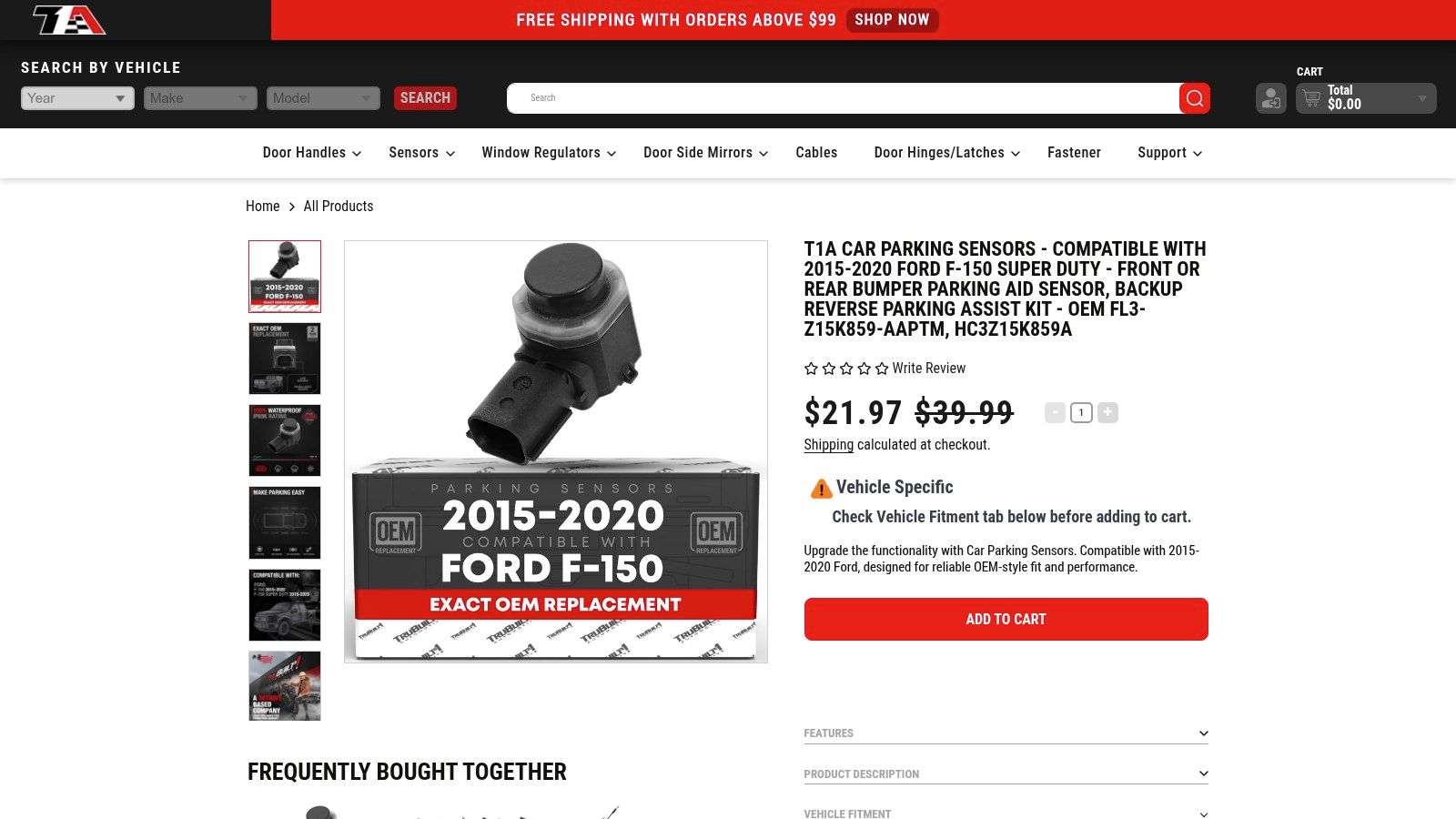
For a pickup with a confirmed isolated sensor failure, prioritize the original part reference over the broad vehicle label. This listing names Ford pickup applications and OEM references, but its combined “F-150 Super Duty” wording shouldn't replace an exact vehicle lookup. Verify the actual truck model, bumper position, and original component before ordering.
That makes this a useful candidate for a repair shop replacing a diagnosed sensor while retaining the truck's existing parking-assist architecture. It isn't a recommendation to interchange sensors across Ford trucks because their bumpers or connectors look similar.
Separate replacement from retrofit
A replacement sensor serves an existing system. A retrofit project needs a defined plan for sensor mounting, wiring, control hardware, and driver warnings. Don't assume a replacement component can add those functions by itself.
T1A Auto's aftermarket parking-sensor guide provides a starting point for comparing those purchasing paths. Before committing to either route, decide whether you're restoring factory-equipped assistance or adding a separate parking aid.
For this option, make the buying decision around these points:
- Confirmed reference: Match the listed OEM application to the original sensor rather than relying on the truck name alone.
- Correct position: Verify the intended front or rear location and its mounting requirements.
- Accessory condition: Note hitches, bumper accessories, and other nearby equipment when investigating false warnings.
- System scope: Confirm whether the problem is confined to the sensor or involves the surrounding installation.
The earlier mounting concerns are especially relevant after pickup bumper work. Don't replace a sensor and leave an uncertain bracket angle, loose retainer, or damaged surrounding surface unaddressed.
Don't confuse a functioning tone with a finished repair
After installation, verify that the system responds consistently to controlled targets in the repaired zone. Check adjacent zones as well, and keep the camera active during the evaluation. Use the manufacturer's diagnostic and calibration procedure wherever required.
The IIHS overview of rear-crash prevention systems reported that rear parking sensors were standard on 33% and optional on 59% of passenger vehicles for the 2018 model year. That variation reinforces a practical buying rule: identify the equipment on the actual vehicle, not just the equipment available somewhere in its model range.
The trade-off: This is the targeted pickup-repair choice, not the broad bumper-rebuild choice. Buy it when the diagnosis and part match are clear; choose a larger package only when the repair requires additional sensors.
4. T1A Car Parking Sensors - 4 Pieces - Compatible with 2019-2022 Ford Transit - Front or Rear Bumper Parking Aid Sensor, Backup Reverse Parking Assist Kit - OEM JU5Z15K859B
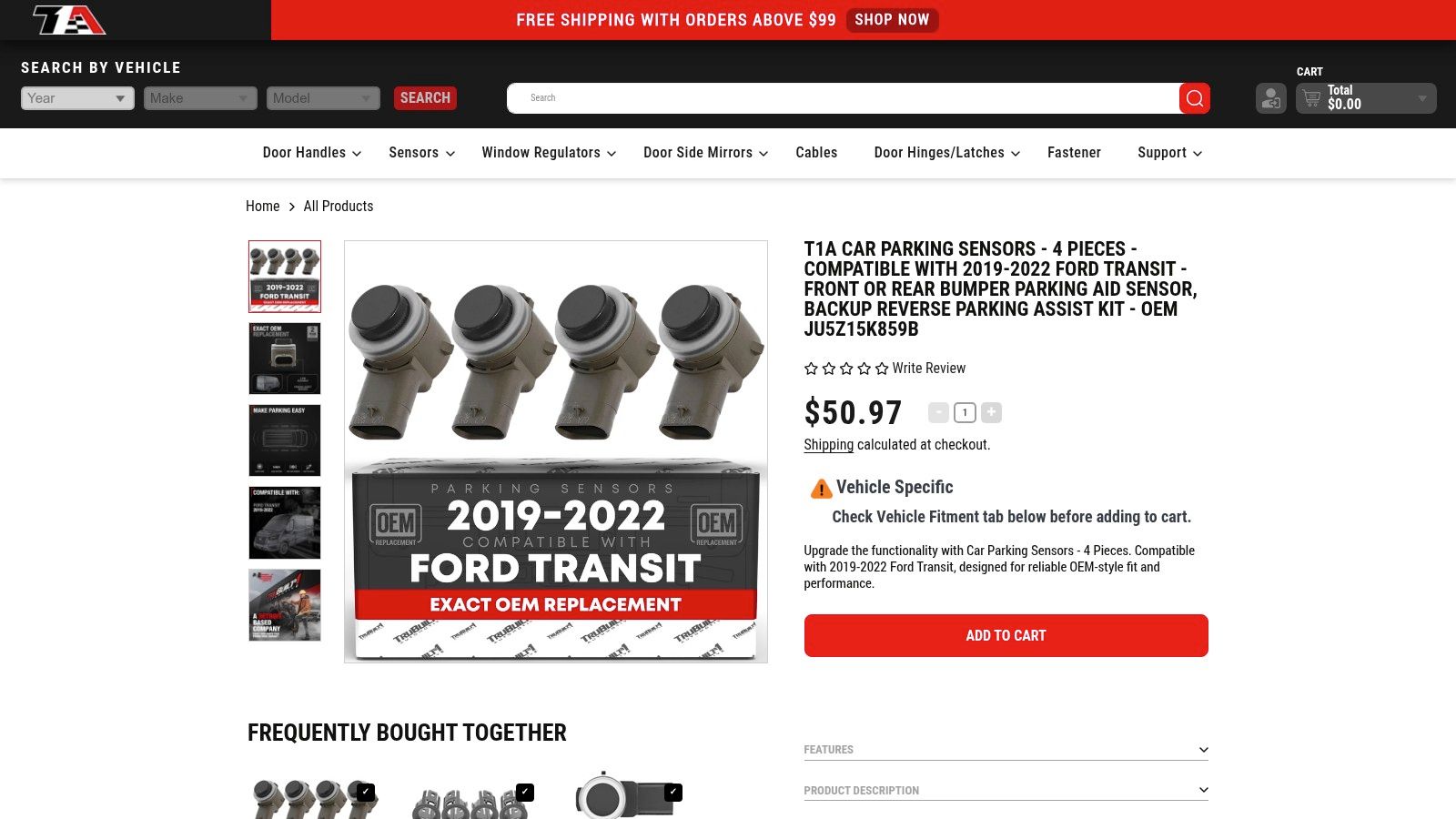
Choose this Transit package for a repair that requires multiple compatible sensors. Its practical distinction from the localized replacement option is package quantity, not a documented improvement in detection performance. Don't replace healthy components merely to use everything in the box.
A body shop should establish the damaged positions before ordering. A fleet manager considering repair stock should verify that the vehicles being supported share the required application. Neither a familiar van name nor a common-looking sensor face is enough to establish interchangeability.
A sensor package isn't a complete parking-assist system
The listing identifies replacement parking sensors and an OEM reference. It doesn't establish that the package includes a controller, warning speaker, dashboard display, camera, or retrofit wiring. For an unequipped Transit, obtain an explicit system-level parts and installation plan before buying.
Buying distinction: More replacement sensors don't add the missing electronics needed to create a parking-assist system.
For collision work, separate the repair into sensor replacement, mounting restoration, electrical inspection, and operational validation. This prevents the new parts from becoming a substitute for correcting damage elsewhere.
The handover record should identify:
- Replaced positions: Record where each replacement was installed.
- Mounting work: Document repaired or replaced brackets and related bumper work.
- Electrical checks: Confirm connector engagement and weather-sealing condition.
- Final verification: Record diagnostic results and the warnings observed during controlled testing.
Test whether drivers can use the warnings
A technically operating system still needs understandable alerts. Before returning a shared van to service, ask the regular driver to confirm that the available sound and display warnings are perceptible under normal cabin conditions.
A UK government study of older drivers' experiences with driver-assistance systems found that older participants more often considered parking sensors difficult to hear than younger participants, alongside difficulties with displays and system complexity. That supports checking alert accessibility, rather than assuming that replacing sensors alone resolves every practical problem.
Don't infer that this package changes alert volume, adds visual warnings, or offers voice prompts. Those functions depend on the vehicle's existing equipment or a separately specified system.
The trade-off: This package suits a verified multi-sensor repair or carefully matched fleet inventory. It's unnecessary for an isolated fault and incomplete as evidence of a stand-alone retrofit solution.
5. T1A Car Parking Sensors, 4 Pieces - Compatible with 2015-2020 Ford F-150 Super Duty - Front or Rear Bumper Parking Aid Sensor, Backup Reverse Parking Assist Kit - OEM FL3-Z15K859-AAPTM, HC3Z15K859A
A pickup bumper repair can involve more than a visibly broken sensor. Choose this package when inspection confirms that multiple sensors need replacement and the exact application matches the truck. It's the broader repair option, not an automatic upgrade over replacing an isolated failed component.
The supplied application wording needs particular care. The title includes broader pickup references, while the description specifically identifies an F-150 application and a particular OEM reference. Resolve that difference with the seller using the vehicle details and original parts before ordering.
Plan the purchase around the bumper repair
For a collision shop, the right order is inspection, parts identification, bumper restoration, installation, and validation. Don't buy a sensor package first and then assume every included component belongs in the damaged bumper.
An estimate should distinguish the work clearly:
- Sensor replacement: Identify components that diagnosis or physical inspection has established need replacement.
- Mounting restoration: Address damaged retainers and incorrect seating before fitting new parts.
- Harness repair: Treat connector and wiring damage as separate repair requirements.
- Finish and verification: Follow applicable refinishing instructions and check operation after reassembly.
As noted earlier, physical placement and surface condition matter. A replacement package doesn't compensate for an incorrectly repaired bumper, and replacing every sensor doesn't prove the system is accurate.
Make verification part of delivery
Test with the truck in its normal operating configuration. Note installed accessories and use controlled stationary targets at different positions and distances, following the vehicle's service instructions. Never use a person standing behind the truck as a test target.
Pay attention to repeatability rather than confirming that an alert sounds. If the warning behaves inconsistently, investigate the mounting, wiring, and diagnostic information before returning the truck to the owner.
A completed bumper repair includes verified parking assistance, not just an unbroken bumper and a cleared warning message.
Drivers must still inspect the area and use the camera and mirrors. Thin, low, angled, or sound-absorbing objects can be difficult detection targets, so don't interpret silence as proof that the path is clear.
The trade-off: This package fits a documented multi-position repair. It doesn't establish improved range, universal Super Duty compatibility, added automatic braking, or complete retrofit capability, and none of those benefits should be assumed from the package size.
Top 5 Backup Sensors Comparison Table
| Product and Fitment | Installation Complexity and Requirements | Expected Outcome | Ideal Use Case | Key Advantage |
|---|---|---|---|---|
| Parking sensor kit for 2018–2019 Ford Edge, 2019–2021 Ford Explorer, and 2020–2021 Lincoln Nautilus; OEM HU5Z15K859AAT | Described as straightforward DIY; confirm vehicle and OEM part compatibility | Parking assistance for a front or rear bumper | Replacing or adding a compatible sensor to a listed vehicle | Fits several Ford and Lincoln models |
| Parking sensor kit for 2019–2022 Ford Transit; OEM JU5Z15K859B | Described as straightforward DIY; confirm vehicle and OEM part compatibility | Parking assistance for a front or rear bumper | Transit owners seeking a compatible replacement or parking aid | Specified Transit fitment |
| Parking sensor kit for 2015–2020 Ford F-150 / F-150 Super Duty; OEM FL3-Z15K859-AAPTM, HC3Z15K859A | Described as straightforward DIY; confirm vehicle and OEM part compatibility | Parking assistance for a front or rear bumper | Compatible F-150 owners replacing or adding a parking sensor | Lists multiple compatible OEM references |
| Four-piece sensor kit for 2019–2022 Ford Transit; OEM JU5Z15K859B | Described as straightforward DIY; confirm vehicle and OEM part compatibility | Four sensors for front or rear bumper parking assistance | Transit owners needing a four-piece sensor set | Four-piece configuration |
| Four-piece sensor kit for 2015–2020 Ford F-150 / F-150 Super Duty; OEM FL3-Z15K859-AAPTM, HC3Z15K859A | Described as straightforward DIY; confirm vehicle and OEM part compatibility | Four sensors for front or rear bumper parking assistance | Compatible F-150 owners needing a four-piece sensor set | Four-piece configuration with listed OEM references |
Match the Sensor to the Vehicle and the Job
The best backup sensors match the vehicle, connector, bumper position, and parking-assist architecture. Choose the targeted replacement route for a diagnosed isolated fault. Choose a multi-sensor package when inspection establishes a broader repair need, not because more parts sound safer.
For the passenger-vehicle option, resolve the conflicting application years before purchase. For Transit repairs, distinguish a localized failure from bumper-wide damage. For the pickup options, verify the exact truck application and original reference instead of relying on broad F-Series wording.
Confirm the repair, not just the purchase
Before checkout, confirm the model year, intended position, OEM reference, connector style, and supplied contents. If the vehicle never had parking sensors, stop treating replacement components as a complete installation plan. Specify the controller, harness, warning interface, and mounting requirements for the intended retrofit.
DIY installers should protect the painted bumper and follow the vehicle-specific electrical isolation procedure, including battery disconnection where instructed. Don't pull on harness wiring, force connectors, or improvise mounting angles. If the service procedure calls for diagnostic equipment or calibration you don't have, arrange that work before starting.
- DIY owners: Photograph the original installation and verify each repaired zone after reassembly.
- Fleet managers: Keep fitment and repair records tied to individual vehicles, then include sensor inspection in routine maintenance.
- Body shops: Verify mounting geometry, connector compatibility, weather sealing, diagnostic status, and post-repair operation.
A final test should confirm that the driver receives understandable warnings with the camera operating, not merely that the dashboard no longer displays a fault. Use controlled targets and the manufacturer's procedure, and keep everyone clear of the reversing path.
Buy for compatibility, repair the cause, and verify the result. T1A Auto's vehicle-specific options suit that fitment-first approach, provided the selected application and package contents are confirmed before installation.
T1A Auto offers vehicle-specific parking sensors and related replacement parts for targeted repairs and broader bumper restoration. Visit T1A Auto to compare the listed applications, match your original part reference, and confirm the right package for your vehicle before ordering.
