


We’ve all been there—you hit the window switch, and nothing happens. It's one of those uniquely frustrating moments, but don't start tearing the door panel off just yet. A few simple checks can tell you almost everything you need to know.
The very first clue is sound. When you press that switch, listen closely. A humming or clicking sound usually means the motor is getting power, which points to a mechanical problem. Dead silence? That’s almost always an electrical issue, like a blown fuse or a bad switch.
First Steps for a Stuck Car Window
When a window gets stuck, your mind might jump straight to the worst-case scenario: a fried motor and an expensive repair bill. More often than not, the real problem is something much simpler. The trick is to start with a quick, logical diagnosis that doesn't require a single tool. This initial triage will help you figure out if you're chasing an electrical gremlin, a mechanical jam, or a component that's just given up the ghost.
Listen for Clues
Your ears are your best diagnostic tool here. Press the window switch and pay close attention to the sounds coming from inside the door. What you hear—or what you don't—tells a story.
- Complete Silence: If you get absolutely no sound, the issue is almost certainly electrical. Power isn't even making it to the window motor.
- A Faint Click: A little click from inside the door when you hit the switch is actually a good sign. It means the switch is sending the signal, but the motor itself might be seized or the regulator is jammed up.
- A Humming or Grinding Noise: This is the sound of a motor that's getting power and trying its best to move. The problem is mechanical. You're likely looking at a broken regulator, or the glass has popped out of its track.
The Switch Test
Before you condemn the motor, make sure the switch isn't the real culprit. A faulty master switch on the driver's side can cause another window to stop working. Try the stuck window's switch on its own door, then try it from the driver's master control panel. If it works with one but not the other, you've found your problem—a bad switch.
And don't forget the obvious! Check that the child safety lock isn't engaged. It’s a surprisingly common oversight that leaves people thinking their rear windows are broken.
This quick checklist can help you narrow down the possibilities based on what you're seeing and hearing.
Quick Diagnostic Checklist for a Stuck Window
| Symptom | Likely Cause | What to Try Next |
|---|---|---|
| No sound from any switch | Blown fuse or faulty wiring | Check the fuse box and test the switch. |
| Clicking sound from the door | Sticking motor or jammed regulator | Try the "thump test" or check the window track. |
| Grinding/humming noise | Worn motor or broken regulator | The motor/regulator assembly likely needs replacement. |
| Window works from one switch, not the other | Faulty window switch | Replace the non-working switch. |
This simple process helps you quickly move from symptom to solution without wasting time on the wrong parts.
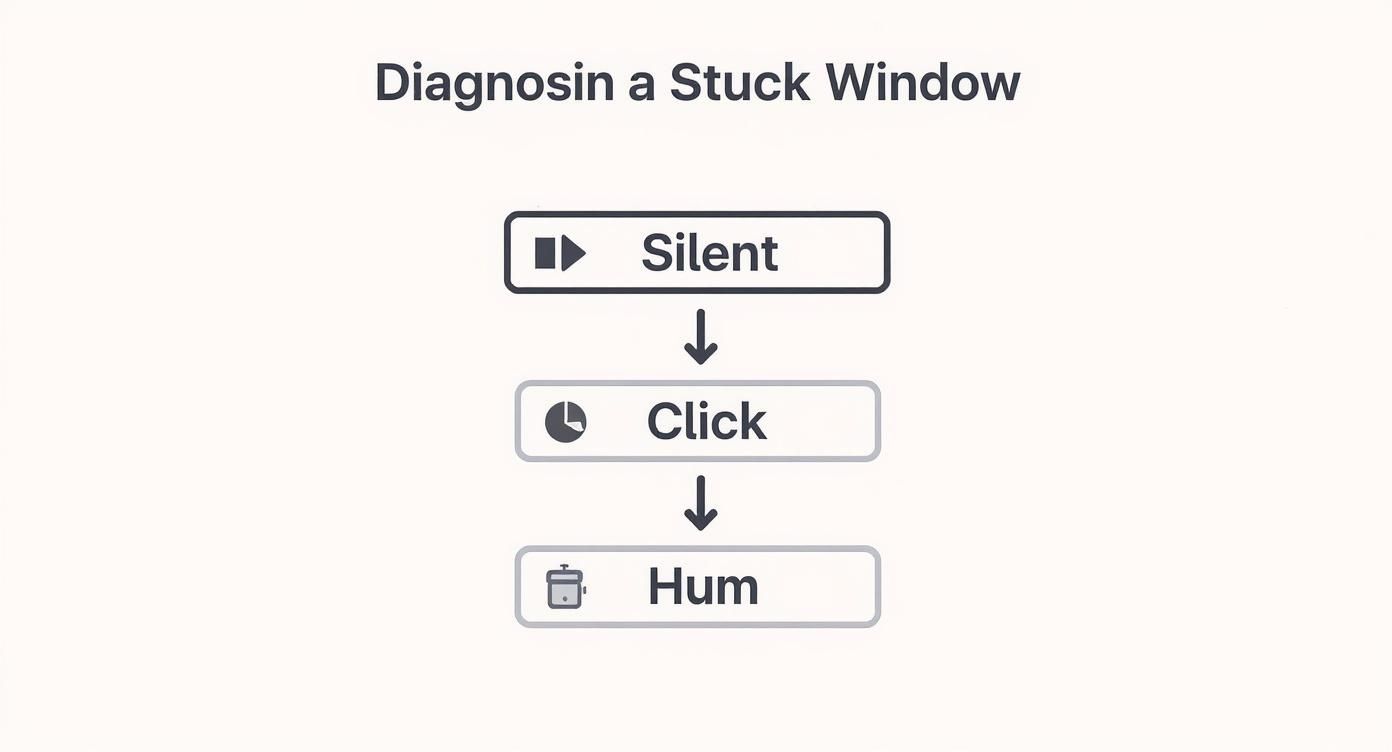
As you can see, silence usually points you toward an electrical fault, while any kind of noise suggests the problem lies with the motor or the regulator assembly inside the door.
The Thump Test
If you heard a click but the window is still frozen, the motor might just need a little persuasion. Sometimes, a good, firm thump on the door panel is all it takes to get it moving again.
Pro Tip: Have a friend hold the window switch in the "down" position. While they're doing that, use the heel of your hand to give the door panel a solid rap right around the middle, where the motor is usually located. If the window budges, that’s a tell-tale sign the motor is on its last legs and needs replacing soon. But hey, it can get your window closed in a pinch
Common Reasons Your Car Window Is Jammed
When a power window gets stuck, it's almost always one of two things: an electrical problem or a mechanical one. Figuring out which it is comes down to a process of elimination, starting with the easy stuff first.
Your first and best clue is sound. Push the button and listen closely. Dead silence? You're probably looking at an electrical issue. If you hear a humming, grinding, or clicking sound, the motor is getting power, which points to a mechanical failure inside the door.
Simple Electrical Faults
The electrical side of things is usually the easiest and cheapest to fix, so it's the best place to start your diagnosis.
The first stop is always the fuse box. A blown fuse is a classic culprit. It's a tiny, cheap part designed to fail, protecting your more expensive window motor from electrical surges. If the fuse pops, the circuit is dead, and the window won't do a thing.
Next up is the window switch. Think about how many times that little button gets pressed over the years. It's no surprise they eventually wear out. Spilled drinks, dirt, and general grime can also work their way inside, causing the contacts to fail. A dead giveaway is when a window works from the driver's master control but not its own switch (or the other way around).
The Window Motor and Regulator
If the fuse and switch check out, it's time to look deeper inside the door panel. This is where you'll find the heavy lifters of the system: the window motor and the window regulator.
A dead motor is a common electrical problem that mimics other failures. Over time, the internal windings just burn out. You might get some warning signs, like the window moving really slowly or working off and on, before it finally quits for good.
The window regulator, on the other hand, is the mechanical assembly that actually moves the glass. It's a collection of arms, gears, and cables that the motor drives. This is where most mechanical problems live.
The window regulator is probably the single most common point of failure in any power window system. A lot of manufacturers use plastic clips and guides that get brittle with age and snap, causing the whole assembly to bind up or fail.
It makes sense when you think about the constant stress these parts are under. It's no surprise that regulator malfunctions are a huge reason for repair shop visits. With over 1.4 billion vehicles on the road worldwide, and many of them getting older, regulator failures now account for nearly 25-30% of all window repair jobs. You can dive deeper into these component failures in our detailed breakdown on how to fix power window issues.
Physical Obstructions and Binding
Sometimes, the problem isn't a broken part at all. The window could just be physically stuck. This is especially common in older cars or ones that live outside.
- Debris in the Tracks: You'd be surprised what can get stuck in the window channels. Leaves, dirt, and pine needles build up over time, creating friction that can stop the glass in its tracks.
- Sticky or Worn Seals: Over time, the rubber weather seals around the window can get dry and gummy. In hot weather, the glass can literally stick to the rubber, making it incredibly difficult for the motor to move.
- Ice Buildup: If you live in a cold climate, this one's a given. A thin layer of ice can freeze the glass solid to the seals. Trying to force it down in this state is a great way to break the regulator or burn out the motor.
Pinpointing the root cause is everything. A good diagnosis saves you time and keeps you from buying parts you don't need. Whether it's a simple fuse or a full regulator replacement, knowing what you're up against is half the battle won.
Gathering Your Tools and Replacement Parts
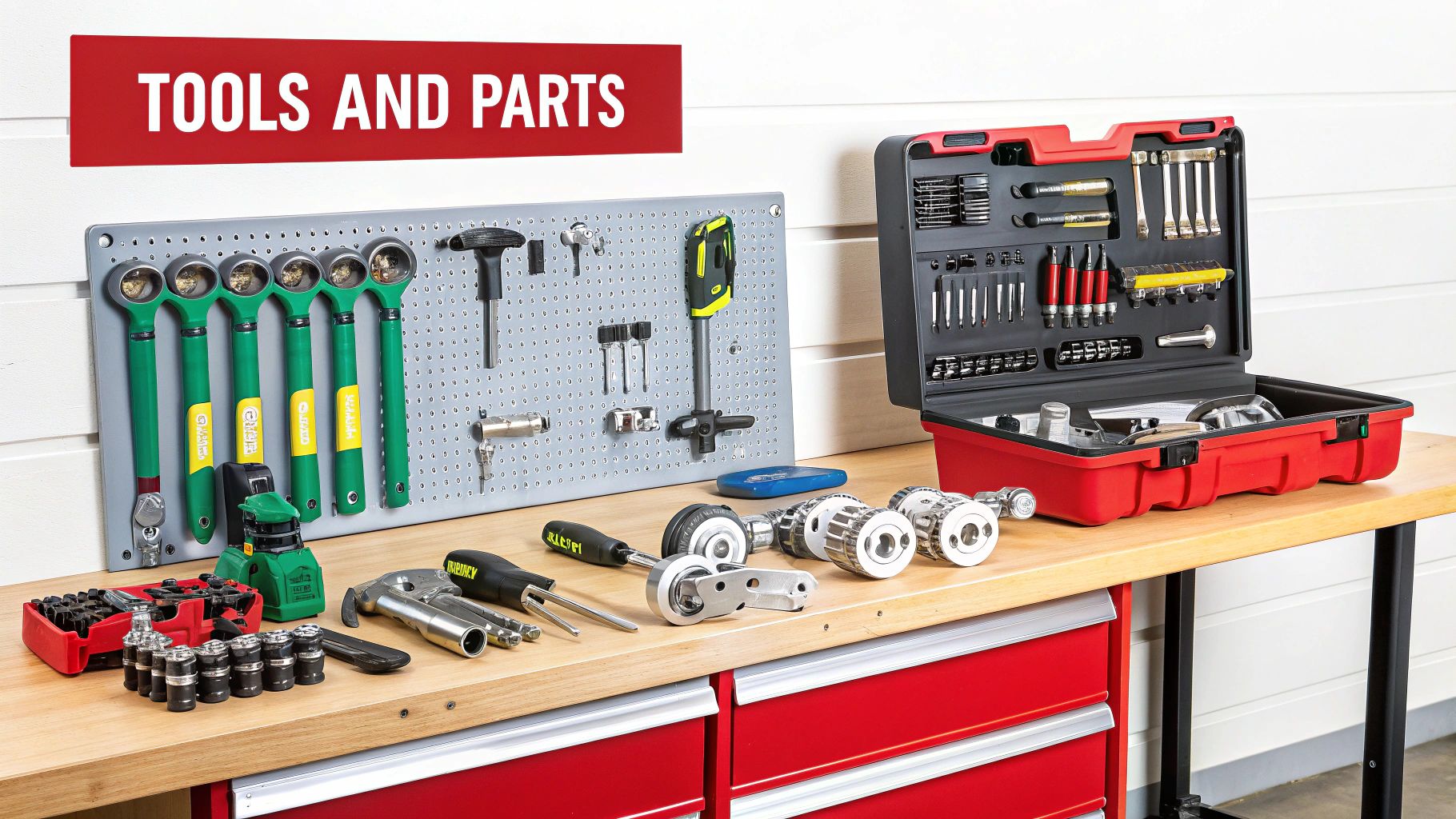
There’s nothing worse than getting halfway through a car repair only to realize you don’t have the right tool. Trust me, it turns a simple fix into a day-long frustration. Before you even think about popping off that door panel, let’s get your gear in order. The good news? You probably don’t need to buy out the entire tool aisle.
For most window issues, a standard mechanic's toolset will do the trick. You’ll definitely need a good screwdriver set and a basic socket set. But there’s one piece of equipment that separates a clean, professional-looking job from a door panel full of scratches and broken clips.
Your Go-To Repair Toolkit
A non-marring trim removal kit is the unsung hero of interior car work. These are just simple plastic pry tools, but they’re designed specifically to pop clips and separate panels without gouging the plastic or tearing the upholstery. Using a flathead screwdriver instead is a rookie mistake that almost always leaves its mark.
Before you start, it's a good idea to lay everything out so it's within arm's reach.
Having the right tools isn’t just about making the job easier—it's about preventing further damage. A $15 trim removal kit can save you from a $300 mistake of cracking a vintage door panel.
Here's a quick checklist of what you'll want to have on hand for most window repairs.
Essential Toolkit for Car Window Repair
| Tool or Supply | Why You Need It | Repair Type |
|---|---|---|
| Screwdriver Set | For removing screws in the door panel, handle, and switch housing. | All Repairs |
| Socket/Ratchet Set | To unbolt the regulator, motor, and other larger components. | Motor/Regulator |
| Trim Removal Tools | Safely prying off door panels without breaking delicate plastic clips. | All Repairs |
| Needle-Nose Pliers | Essential for disconnecting stubborn electrical connectors and clips. | All Repairs |
| Shop Light/Headlamp | It's dark inside a door panel; good lighting prevents mistakes. | All Repairs |
| Painter's Tape | Temporarily secures the window glass in the up position. | Motor/Regulator |
| Multimeter | To test for power at the switch and motor for electrical diagnosis. | Electrical |
| Suction Cups | Provides a secure grip for safely handling and removing the glass. | Glass Replacement |
For more advanced jobs, like a full regulator replacement, that painter's tape or a suction cup can be a real lifesaver when you need to hold the heavy glass in place.
Finding the Right Replacement Parts
Now that your tools are ready, let's talk parts. Ordering a window regulator that doesn't fit your exact vehicle is a common and completely avoidable headache. Precision here is everything.
You’ll need your car’s Year, Make, and Model to get started. For some vehicles, the details matter—you might even need the trim level (like LX, EX, or Limited) or the specific production date, as manufacturers sometimes switch parts mid-year. You can usually find all this info on a sticker inside the driver's side door jamb.
When you're searching, always buy from a supplier that guarantees fitment. A quality aftermarket part from a trusted source will be built to the original factory specs, ensuring it bolts right in without any modifications.
If you find yourself needing to do a full swap, our guide on how to install a window regulator provides a detailed, step-by-step walkthrough of the entire process. This way, you’re not just getting the right part, but also the confidence to install it correctly.
A Practical Guide To DIY Window Repair
Getting a stuck window moving again often seems tougher than it really is. Let’s tackle the easiest fixes first—those quick maintenance steps that tend to solve most problems without even removing the door panel.
Start With Simple Lubrication And Cleaning
Dirty, grit-filled tracks make any window motor fight for every inch of travel. A shot of silicone spray lubricant usually does the trick without harming rubber seals or attracting more grime.
Here’s a quick routine:
- Lower the glass fully (or work at the exposed top if it’s locked in place).
- Wipe down each vertical track with a cloth or small brush to clear out loose debris.
- Spray a light, even coat of silicone into the rubber channels—use the straw nozzle for precision.
- Remove excess lubricant from glass and paint with a microfiber towel.
After that, press the switch. You may need to gently guide the window by hand once to spread the lubricant, but in many cases it will slide right back into smooth operation.
Expert Tip: Dirt also piles up on the bottom “dew wipe.” A quick brush and a light silicone mist here can stop the glass from binding as it rises.
Surprisingly, about 50% of car owners will try a DIY fix before phoning a shop. And keeping tracks lubricated can prevent 60–70% of stuck‐window scenarios from escalating into parts replacements. For more market insights, see the industry research on windshield and glass repair.
Checking Fuses And Testing The Window Switch
If the window is completely silent at the switch, you’re looking at a possible electrical hiccup. Your owner’s manual will point out the fuse box location(s) and which fuse covers the power windows. Pull the correct fuse with the plastic tool provided, hold it up to light, and check the filament. A broken wire means you need a new fuse—an easy swap that costs under $1.
Still no luck? The switch itself might be toast after thousands of presses. Grab a multimeter, pop the switch out of the panel, and test for continuity as you click it. No continuity means a new switch is in order.
Tackling The Motor And Regulator Replacement
When lubrication and electrical checks fail, you’ll have to drop the door panel to reach the window motor and regulator. Doing this without snapping those plastic clips is crucial. Our guide on how to remove a car door panel shows you where hidden screws lurk and how to lift off trim pieces safely.
Once you’re inside, follow these key moves:
- Secure the Glass: Use painter’s tape or suction cups to hold the window in its up position—skip this and the glass can crash down.
- Unplug the Motor Connector: Gently depress the locking tab to avoid breaking it.
- Unbolt the Assembly: There are usually four to six bolts; support the regulator/motor unit as you remove them.
- Extract the Old Unit: Maneuver it out through the service hole—think of it as a little door‐frame puzzle.
Installing a T1A Auto replacement is simply reversing these steps. Our components drop into the factory mounting holes without fuss. Before snapping the panel back on, test the new motor. This quick check keeps you from having to do it all over again.
Handling Weather Related Window Issues
Extreme temperatures are the sworn enemy of your power windows. Whether it's a sub-zero morning or a blistering summer afternoon, the weather can make your window bind, stick, or freeze shut, turning a simple errand into a real headache.
When your car is coated in a thick layer of ice, the first impulse is often to just mash the down button until something gives. Trust me, that's a fast track to breaking something expensive. The plastic clips inside the door are fragile and were never designed to fight a window frozen solid to its rubber seal. In the summer, the opposite happens: intense heat can make those same seals soft and gummy, causing the glass to drag and bind.
Safely De-icing A Frozen Window
Whatever you do, don't pour hot water on a frozen window. I've seen it happen, and it’s not pretty. The rapid temperature change can easily crack the glass, turning a minor annoyance into a costly replacement. A little patience and the right approach will get that window down without any damage.
Here’s what actually works:
- Use a commercial de-icing spray. This is your best bet. These sprays are made to melt ice fast without damaging your car's paint or rubber seals.
- Try a little vibration. If you're in a pinch without any spray, gently tap around the window frame with the heel of your hand. Sometimes, that little bit of vibration is all it takes to break the ice's grip on the glass.
A Pro Tip: Never, ever use a metal scraper or any sharp tool to chip ice away from the rubber window seals. You'll almost certainly tear the delicate rubber, which will cause water leaks and annoying wind noise down the road.
Managing Heat-Related Stickiness
Scorching summer heat brings its own set of problems. When the rubber seals get tacky, they create so much friction that the window motor just can't overcome it. You might see the glass move in slow motion, stop halfway down, or not move at all.
The fix here is all about prevention. A good silicone spray lubricant is your best friend. A quick spray along the window tracks and seals every few months will keep everything slick and moving freely. It stops the rubber from getting sticky in the first place and gives the glass a smooth path to glide on.
Dealing with windows stuck from ice is a classic winter problem. In fact, adding a window check to your essential winter car prep strategies is a smart move. Stuck windows aren't just an occasional nuisance; one survey found that 28% of drivers in Europe have dealt with it at least once. In colder regions, the number of incidents jumps by an estimated 35-40% during the winter. You can read more about the automotive glass market on futuremarketinsights.com to see just how common these components are.
Knowing When to Call a Professional
There's a real satisfaction in fixing your own car, but sometimes a stuck window repair can go from a manageable weekend project to a real headache. Knowing your limits is just as important as knowing which tool to grab next. If you've run through all the common fixes and that window still won't budge, it might be time to take a step back.
Pushing through a complex repair without the right experience can quickly get expensive. One wrong move, and a simple motor swap could turn into a shattered window or a cracked interior door panel.
When the Problem Is Deeper Than It Looks
Some symptoms are clear red flags that you’re dealing with something more than a simple part failure. These are the moments when a professional technician's diagnostic tools and experience are worth their weight in gold. If you see any of these signs, it's a good idea to put down the tools and get a quote from a shop you trust.
- Complex Electrical Gremlins: When multiple windows die at once, or the window problem comes with other electrical weirdness like flickering dash lights or wonky door locks, you're likely looking at a deeper issue. This could point to a faulty wiring harness or even the car's main computer—the Body Control Module (BCM). Tracing these problems requires specialized scan tools and the ability to read complex vehicle schematics.
- Shattered or Detached Glass: If the glass has completely fallen off its track and is now just rattling inside the door, or if it's shattered, this is a job best left to the pros. Automotive glass is heavy and awkward to handle, and installing it incorrectly can lead to nasty water leaks, wind noise, or just another broken window down the road.
- No Progress After Basic Repairs: You’ve already replaced the switch, you know the fuse is good, and you even swapped in a new motor... but nothing. At this point, you're just throwing parts at the problem. A pro can trace the electrical circuit and find the exact point of failure, saving you the frustration and cost of buying more parts you don't need.
Deciding to call a professional isn’t giving up. It's making a smart call to protect your vehicle and your bank account by recognizing when a job requires a specialist's touch.
While you can tackle plenty of car window problems on your own, it's crucial to understand your limits. For more perspective on this, check out this guide on knowing when to call a professional for window services. A good mechanic will always give you a clear estimate for parts and labor, letting you make an informed decision without any pressure.
Frequently Asked Questions
Even the best guides can't cover every single question that might pop up when you're elbows-deep in a door panel. Let's tackle some of the most common things people ask when they're trying to fix a stubborn car window.
What's This Going to Cost Me?
That's the million-dollar question, isn't it? The final bill really depends on what's actually broken. Sometimes, you get lucky. A blown fuse is a couple of bucks, and a can of silicone spray to lube up a sticky track is usually less than $20.
Things get more expensive when major parts have failed. A new window motor or a complete regulator assembly can run anywhere from $50 to over $200, depending on your vehicle. If you take it to a shop, you're also paying for their time, so expect a bill in the $250 to $500 range for that kind of job.
Can I Get the Window Up Manually for Now?
Absolutely. You can almost always force a stuck power window closed to keep the rain out or secure your car. This is a lifesaver when you're waiting for parts to be delivered.
Once you have the door panel off, you can usually just grab the top edge of the glass and slide it up into the frame with both hands. It might take a little muscle, but it should move. Then, to keep it from sliding back down, you can either wedge a small rubber doorstop in the track or run a few strips of strong painter's tape over the top of the door frame and onto the glass.
I Hear a Grinding Noise, but the Window Isn't Moving. What's Wrong?
That grinding or clicking sound is the tell-tale sign of a busted window regulator. It’s actually good news in a weird way, because it means your motor and switch are working—they're getting power and trying to do their job.
The noise you're hearing is the sound of failure. It's either the plastic gears inside the regulator being chewed to bits or a snapped cable getting tangled up in the motor's pulley. The motor itself might be perfectly fine, but the only real fix is to replace the entire window regulator assembly.
Whether your fix is as simple as a new switch or requires a full regulator replacement, T1A Auto has the quality aftermarket parts you're looking for. Our components are built to last and designed for a perfect fit, helping your DIY repair go smoothly. Find the right part for your car at T1A Auto and get that window working again.
