


That high-pitched screech every time you open your car door isn't just annoying—it's a cry for help. Your door hinges are telling you they need attention, and a little bit of maintenance now can save you a world of hurt later.
The fix is surprisingly simple: clean the hinge mechanism thoroughly with a good degreaser, then apply a dedicated lubricant like white lithium grease or a quality silicone spray right onto the pins and moving parts.
Why Bother With Your Door Hinges?
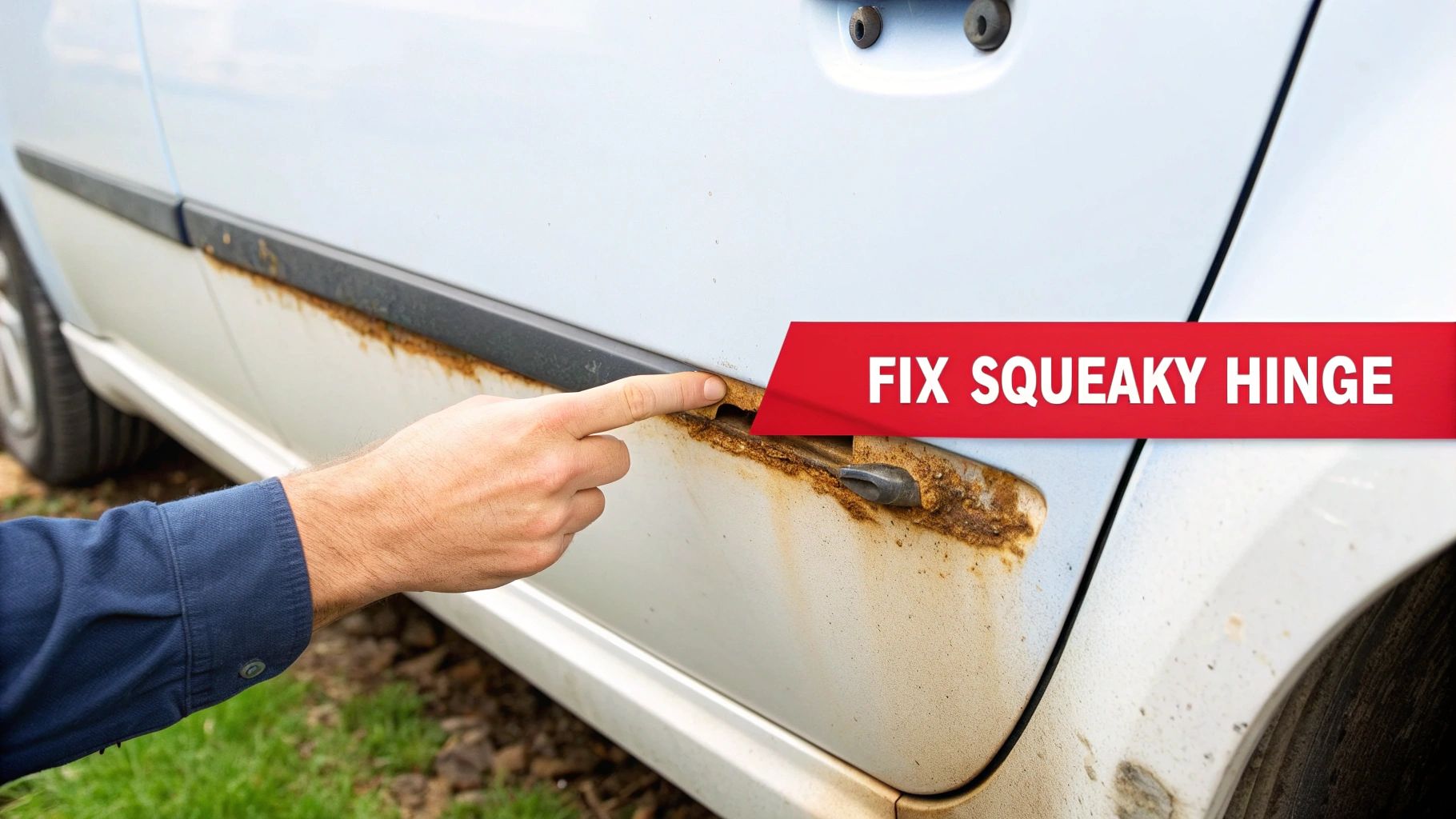
It’s easy to write off a squeaky hinge as a minor nuisance, but it’s often the first symptom of a bigger problem brewing. Think about what a door hinge actually does. It's a small but mighty component engineered to support the entire weight of your car door—which can easily top 50 pounds—while ensuring it swings open and closed with perfect alignment.
When lubrication is gone, you get constant metal-on-metal friction. This doesn't just make noise; it starts a chain reaction of wear and tear that's much harder and more expensive to fix than a simple squeak.
The True Cost of a Dry Hinge
Letting your hinges go unattended can lead to a whole host of issues you'd rather avoid:
- Serious Wear and Tear: Dry hinges grind away at the pins and bushings that allow the door to move smoothly. Once they're worn, the damage is done.
- Rust and Corrosion: Lubricant acts as a protective barrier. Without it, moisture gets in and rust takes hold, which can spread from the hinge to the door and even the car's frame.
- Sagging and Misalignment: As the hinge parts wear down, the heavy door will start to sag. This makes it a pain to close and can eventually wreck the latch mechanism.
- Costly Bodywork: A misaligned door can start chipping the paint on your door sill every time it closes. That leads to more rust and a trip to the body shop.
Your door hinges are fundamental to your car's structural health. Don't think of lubrication as a chore—it's essential preventative maintenance that keeps your car solid and saves you from expensive repairs.
These aren't throwaway parts. The global automotive door hinges market was valued at a whopping USD 8.2 billion in 2024, which tells you just how critical these components are. You can read more about the automotive hinge market to see why you want to make yours last as long as possible.
By learning to lubricate them yourself, you're spending a few minutes now to potentially save hundreds or even thousands down the road.
Choosing the Right Lubricant for Your Hinges
Walking into an auto parts store and staring at that wall of sprays and greases can be a little intimidating. They all seem to promise the same thing, but for a job like lubricating car door hinges, picking the right product is half the battle. Grab the wrong can, and you could end up with a greasy mess that actually attracts more dirt, making the problem worse in a few months.
First things first, let's get your gear together. Having the right tools on hand makes this a quick 10-minute job instead of a frustrating afternoon.
Your Hinge Maintenance Toolkit
You don’t need much, but you do need the right stuff.
- A Quality Degreaser: You can't put new lubricant on top of old, grimy gunk. A good automotive degreaser is essential for cutting through that built-up road grime and dried-out factory grease.
- Microfiber Cloths: Keep a few clean ones handy. You'll need them for wiping everything down after cleaning and for catching any overspray or excess lubricant.
- A Brass Wire Brush: This is the pro-level touch. Why brass? It's tough enough to scrub away light surface rust and stubborn gunk, but it's softer than steel, so it won’t scratch your paint if you slip.
Once your supplies are lined up, it's time to pick your lubricant.
Why You Shouldn't Use WD-40 for This Job
Let's clear the air on this one right away. Everyone has a can of WD-40 in their garage, and while it's a miracle worker for a thousand other things, it's not a true long-term lubricant. It excels at cleaning and displacing water—in fact, it's fantastic for breaking up a stuck, rusty hinge to get it moving again.
The problem is that WD-40 is a very light, solvent-based oil. It doesn't stick around for long and tends to attract dust and dirt, eventually creating a gritty, grinding paste. This can wear out your hinge pins faster than if you'd used nothing at all.
My advice? Use it as a cleaner to get the job started, wipe the hinge completely clean, and then follow up with a proper, dedicated lubricant.
The Best Lubricants for Car Door Hinges
The best choice really depends on your climate and the kind of hinges on your vehicle. Here are the top contenders that I've relied on for years to get smooth, long-lasting results.
- White Lithium Grease: This is the classic, heavy-duty choice. It’s thick, stays put, and provides incredible water resistance, which makes it a phenomenal rust-proofer. For any metal-on-metal hinge, especially in wet or snowy climates where road salt is a factor, white lithium grease is your best bet. It just plain lasts.
- Silicone Spray: This is a much cleaner, more versatile option. Silicone spray creates a slick, waterproof barrier that's safe on plastic, vinyl, and rubber. This makes it perfect for hinges that are close to door seals or other trim pieces. Because it dries to a less tacky film, it's ideal for dusty, dry environments since it won't attract and hold onto grit.
- Specialized Hinge Lubricant: Automotive brands have really dialed in their formulas. You can find products specifically designed for hinges that offer the best of both worlds—they spray on thin like a penetrating oil to get deep into the hinge's moving parts, then set up into a more durable, grease-like film.
Think about it this way: if you're driving a truck in a dry, dusty state like Arizona, a silicone spray that resists grit is going to serve you better. But if you're in coastal Florida dealing with salt air and daily downpours, the robust corrosion protection of white lithium grease is non-negotiable.
Comparing the Best Lubricants for Your Car Door Hinges
To make the choice even clearer, let's break down the pros and cons of each option. This table should help you match the right product to your specific needs, ensuring your fix isn't just a temporary patch-up.
| Lubricant Type | Best For | Pros | Cons |
|---|---|---|---|
| White Lithium Grease | Heavy-duty, metal-on-metal hinges, and wet or salty climates. | Excellent durability, superb water resistance, and long-lasting rust prevention. | Can be messy to apply and tends to attract dirt and dust over time. |
| Silicone Spray | All-purpose use, especially in dusty environments or near plastic/rubber parts. | Clean application, repels water well, and won't attract grime. Safe on non-metal surfaces. | Not as durable as grease; may require more frequent reapplication. |
| Specialized Hinge Lube | Modern vehicles and hinges that are difficult to access. | Penetrates deeply like an oil, but sets up like a durable grease. Often has a spray nozzle for precision. | Can be more expensive than general-purpose lubricants. |
Ultimately, choosing the right product is about understanding your car and your environment. A little thought now saves you from having to do this job all over again in six months.
The Right Way to Lubricate Your Hinges
Alright, you've got your tools and your lubricant of choice. Now it's time to get to work. Getting this right isn't about just blasting the hinge with a can of spray and calling it a day. A professional-level result, one that lasts, comes from being methodical.
Let's walk through it. We're going to turn that cringe-worthy squeak into a satisfying, whisper-quiet swing.
The whole job really boils down to three simple phases, but don't rush them—each one is critical.
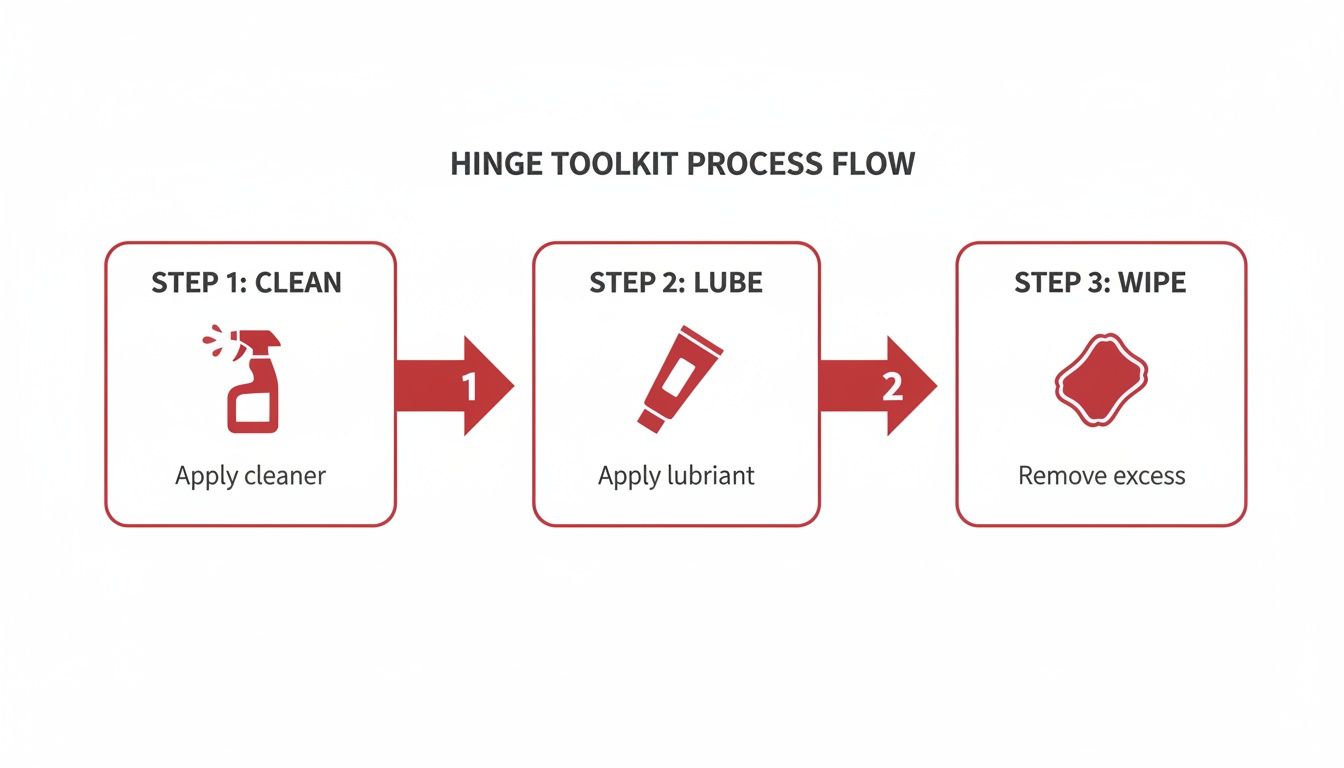
This Clean, Lube, Wipe workflow is the secret sauce. It guarantees your new lubricant isn't fighting against old gunk and can actually do its job.
First Things First: Prep the Hinge
You can't just spray new lubricant over years of caked-on grease, road salt, and dirt. Think about it—that old stuff has completely broken down. It's not a lubricant anymore; it's more like a gritty paste that's actively grinding away at the metal every time you open the door.
Swing the door open as far as it will go. This gives you the best access to both the upper and lower hinges. Now, grab your automotive degreaser and give the entire hinge mechanism a good soaking. Let it sit for about a minute. You need to give it time to work its magic and dissolve all that old grime.
Now, reach for that brass wire brush. Gently scrub the hinge pins, the rollers, and all those little crevices where gunk loves to hide. The brass bristles are tough on grime but won't scratch your car's paint, which is exactly what we want. An old toothbrush is also a fantastic tool for getting into really tight spots.
Once you’ve scrubbed everything, take a clean microfiber cloth and wipe it all down until the hinge is bone dry and free of any residue.
A clean surface is non-negotiable. Applying new grease over old, dirty grease is like putting a clean bandage on a dirty wound—you’re just trapping the problem underneath. Take the extra five minutes to do it right.
The Main Event: Applying the Lubricant
Time for the actual lubrication. The mantra here is "less is more." The goal isn't to slather the entire hinge in grease. You just need to get the lubricant precisely where the friction happens.
That little red straw that comes with your spray can? Use it. It's your best friend for getting this job done cleanly and accurately.
- Hit the Hinge Pins: The main pivot point is that vertical pin. Aim the straw right at the top of the pin and give it a short, controlled spray. Gravity will do the rest, helping it seep down into the joint.
- Don't Forget the Rollers and Checks: That black strap that stops your door from swinging too far is called the door check. It has rollers and a track that need love, too. A quick spray on its moving parts will stop those annoying clicking sounds.
- Work It In: This is the most important part of the application. As soon as you've sprayed, start swinging the door fully open and closed 10 to 15 times. This is what actually distributes the lubricant deep inside the mechanism, ensuring every moving surface gets coated.
As you work the door back and forth, you should hear the squeak fade away into silence. If you're tackling a really stubborn hinge and the noise seems to be coming from inside the door itself, you might need to dig a bit deeper. For those situations, you can learn more about how to remove a car door panel to get a better look.
The Final Polish for a Pro Finish
With the hinge now moving silently, you're on the home stretch. The last step is to clean up any extra lubricant. This isn't just for looks—excess oil and grease are magnets for dirt and dust, which will just bring that squeak back sooner.
Grab a fresh, clean microfiber cloth and carefully wipe away any overspray from the paint around the hinge. Check the doorjamb, the edge of the door, and the body of the hinge itself. You want to leave behind a clean job, not a greasy mess waiting to get on your clothes.
The result? A car door that opens with a smooth, silent, and deeply satisfying feel. By following these steps, you haven't just killed a squeak; you've actually protected a critical part of your car from future rust and wear.
Proactive Hinge Care for Long-Term Performance
Knowing how to lubricate a car door hinge is great, but turning that knowledge into a regular habit is the real game-changer. A squeak is your door's way of telling you it needed attention a while ago. The goal here is to be proactive, not reactive—to service the hinges before they ever make a sound.
So, what's the right schedule? A good starting point is to lubricate your hinges twice a year, maybe when you're getting your oil changed. But honestly, that's just a baseline. Where you live and drive matters a lot.
- Coastal Living: That salty sea air is brutal on metal and a fast track to rust. You'll want to check your hinges every three or four months.
- Dusty Roads: If you're on dirt roads or live in a dry, dusty area, that grit acts like sandpaper. A quarterly check is a smart move to keep things moving smoothly.
- Wet or Snowy Regions: Constant moisture and road salt are the ultimate enemies. More frequent lubrication is non-negotiable to keep a protective barrier on the metal.
Performing a Quick Hinge Health Check
You don't need to set aside a whole afternoon for this. Just make it part of your car wash routine. When you're drying the doorjambs, take an extra 30 seconds to really look at the hinges.
What you're searching for are the early warning signs. Look for fine, dark metal shavings around the hinge pin, which indicates metal-on-metal grinding. Or maybe you'll see the first faint orange-brown specks of surface rust starting in the corners. Catching it this early makes all the difference.
If you spot significant wear and the door feels loose or wobbly, a squirt of lubricant isn't going to fix the root problem. To figure out what's really going on, you can check out our guide on how to adjust car door alignment.
A proactive mindset is your best defense against wear and tear. Don't wait for the squeak. A quick visual inspection every few weeks can save you from dealing with sagging doors and costly body shop repairs down the line.
Thinking ahead is crucial when you realize how vital these parts are. Within the entire automotive hinges market, door hinges make up a whopping 65-70% share—they're on every single car, and they do a lot of work.
While taking care of your hinges is a simple but critical task, it's also just one piece of the puzzle. It fits into the bigger picture of broader car maintenance services that keep your vehicle running its best. Building these small habits is what ensures your car stays reliable, safe, and blessedly quiet for years to come.
Troubleshooting Common Door Hinge Problems
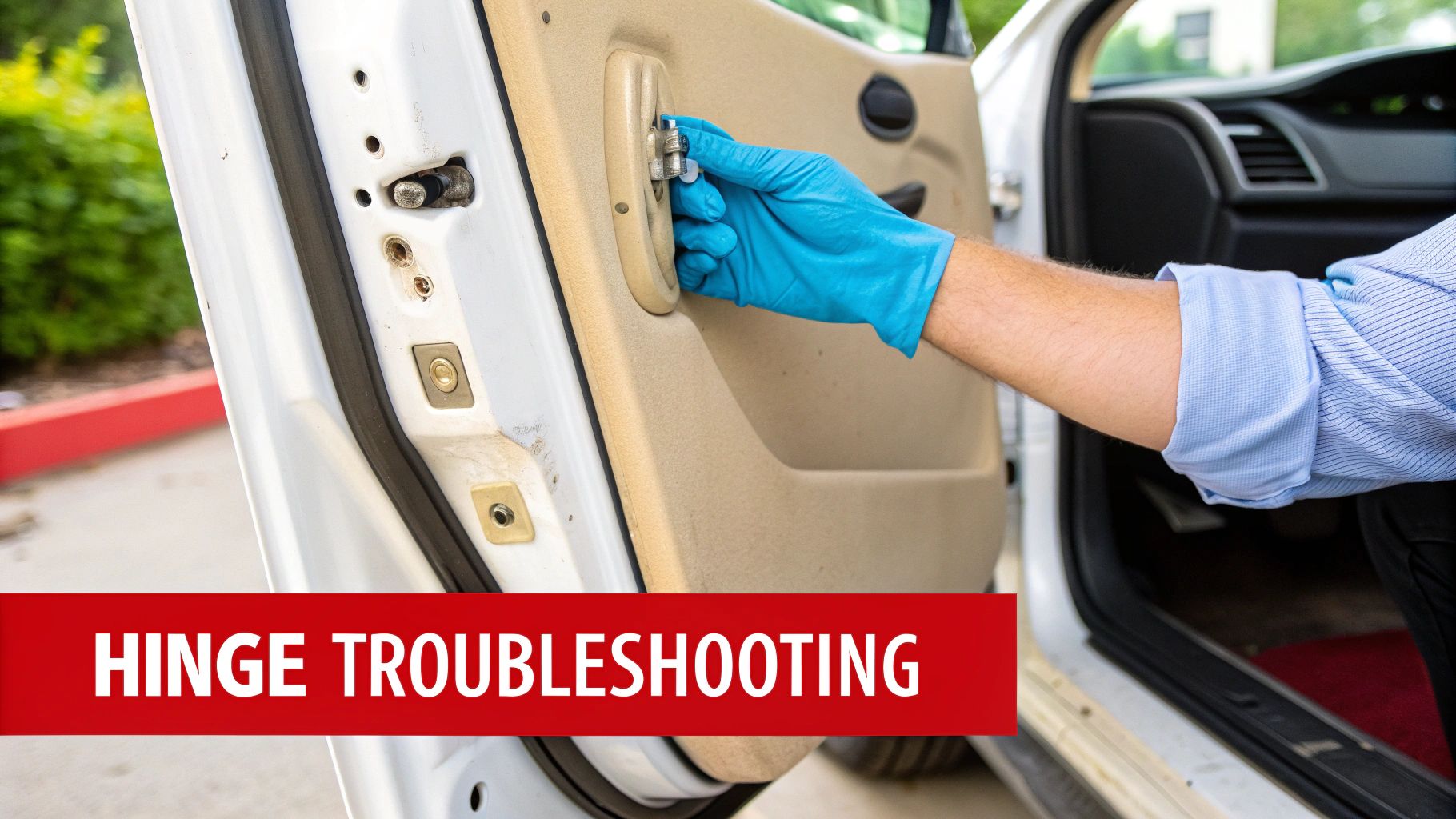
Sometimes, spraying a fresh shot of lubricant into a hinge just doesn’t cut it. That stubborn squeak or stiff door might be telling you there’s a deeper issue at play. If you've already greased things up and the problem persists, it's time to do a little detective work.
Often, a squeak that just won't quit is a telltale sign of worn-out bushings. These little inserts, usually made of nylon or bronze, are designed to let the hinge pin pivot without any fuss. But after thousands of open-and-close cycles, they wear thin, leading to metal-on-metal grinding that no amount of lubricant can silence.
What to Do About a Sagging Door
A sagging door is another headache that lubrication simply can't fix. This is the classic sign that your hinge pins and bushings are shot. They can no longer hold the weight of the door correctly, causing it to droop. This isn't just an annoyance; it can chip the paint on your door sill and wreck the latch mechanism over time.
You can diagnose a sagging door in a few seconds.
- Open the door about halfway.
- Get a firm grip on the bottom corner of the door with both hands.
- Try to lift the door straight up and down.
Feel any vertical slop or hear a "clunk"? That's your confirmation. The play in that hinge means the internal parts have had it and are due for replacement.
Don't put this repair off. A sagging door can quickly escalate from a minor nuisance to a costly fix involving body alignment, paint repair, and a new latch. Tackling worn pins and bushings early is the smart move.
On many common trucks and SUVs, swapping out the hinge pins and bushings is a very doable DIY project. Just know that it requires specific tools to press out the old parts and install the new ones without damaging the door or hinge. If you're thinking of taking it on, it’s a good idea to check out a detailed guide on how to replace a door hinge to see exactly what you’re getting into.
Dealing with Rust You Find During Cleaning
While you're cleaning your hinges in preparation for lubrication, you might uncover something more troubling than old grease: rust. Ignoring it is the worst thing you can do, as the corrosion will spread and compromise the hinge's strength. The good news is that surface rust is easy to deal with if you catch it early.
Start by getting rid of all the loose, flaky rust. A brass wire brush is your best friend here—it's tough enough to scour away the rust but soft enough that it won't scratch up your paint. Scrub the area until you see clean, bare metal.
Next, you absolutely must protect that exposed metal. Apply a quality rust inhibitor or a rust-converting primer directly to the area. These products work by chemically neutralizing any lingering rust particles and sealing the surface to prevent it from coming back. This step is critical; it stops the corrosion dead in its tracks.
Once the inhibitor has fully cured, you can go ahead and lubricate the hinge like you normally would. This one-two punch of removing the rust and protecting the metal ensures the problem is solved for good.
Common Questions About Hinge Maintenance
Even the best instructions can leave you with a few lingering questions. It’s always better to clear things up before you start spraying away. Let's dig into some of the most common things people ask when they're getting ready to tackle their car door hinges.
Getting these little details right can be the difference between a job well done and creating a whole new mess to clean up.
Can I Just Use WD-40 on My Car Door Hinges?
Ah, the classic question. Everyone has a can of WD-40 in their garage, but here's the thing: it’s not really a lubricant. Think of it more as a cleaner, a solvent, and a water displacer. It’s fantastic for breaking up rust and cleaning out old, gunky grease.
The problem is, it can actually strip away any existing lubricant and its thin, oily film tends to attract dust and grime over time. So, for a lasting fix, use WD-40 for the cleaning step, then follow it up with a proper lubricant like white lithium grease or a quality silicone spray.
How Often Do I Really Need to Do This?
A good rule of thumb is to lubricate your hinges twice a year. A lot of people just tack it onto their spring and fall maintenance routines, right around the time they're getting an oil change or swapping tires.
However, where you live and drive matters most.
If your car battles a lot of rain, road salt in the winter, or dusty rural roads, you’ll want to be more proactive. In those tougher environments, checking on your hinges every three to four months is a smart way to keep them from ever starting to complain.
Will Lubricant Fix My Sagging Car Door?
I wish it were that simple, but unfortunately, no. Lubrication is all about fighting friction—the squeaking, grinding, and stiffness. A sagging door is a sign of a deeper mechanical problem, almost always pointing to worn-out hinge pins and bushings.
Here's a quick way to check. Open the door about halfway, grab the bottom edge, and try to lift it straight up and down. If you feel any play or hear a clunking sound, the pins and bushings are shot. That's a different repair job altogether.
What’s That Black Strap on the Hinge For?
That little strap is called a door check (or sometimes a door detent). Its whole job is to stop the door from swinging freely and to hold it open in one or two set positions. And yes, it absolutely needs some love too!
A quick spray of silicone or a light dab of white lithium grease on the strap and where it slides into the mechanism will stop it from clicking or groaning. This simple step keeps it working smoothly so your door stays put when you need it to.
At T1A Auto, we're all about providing top-quality, durable replacement parts that are guaranteed to fit, from door hinges to the exact pins and bushings you might need. If a little grease isn't cutting it anymore, you can find the reliable components you need to get the job done right on our site.
