


Keeping your truck reliable and on the road isn't a matter of luck; it's the result of consistent, proactive care. A well-executed maintenance plan does more than just prevent unexpected breakdowns. It extends your vehicle's lifespan, preserves its resale value, and enhances safety for you and everyone on the road.
Many truck owners wait for a warning light or a strange noise before taking action, turning a small, manageable issue into a costly and time-consuming repair. This reactive approach leads to unpredictable downtime and expensive, emergency fixes. The key to avoiding this cycle is shifting to a proactive mindset, where routine inspections and scheduled services become second nature.
This guide flips that script. We've compiled the ultimate preventive maintenance checklist for trucks, breaking down the 10 most critical areas that demand your attention. Following this structured checklist will empower you to catch problems early, save thousands in potential repair bills, and ensure your truck performs reliably for years to come. For fleet managers, integrating these physical checks with digital tools can offer unparalleled oversight. For an even deeper dive into how technology can enhance your operational efficiency and inform maintenance schedules, explore comprehensive GPS fleet management guides.
From engine health and brake safety to electrical systems and rust prevention, this comprehensive listicle will cover everything you need to know. We’ll detail specific tasks, recommended service intervals, and the signs that indicate a component needs professional attention. Let’s get started.
1. Oil and Filter Changes
Regular oil and filter replacement is the single most critical task in any preventive maintenance checklist for trucks. Engine oil serves multiple crucial functions: it lubricates moving parts to reduce friction, cools engine components by carrying heat away, and traps harmful contaminants like dirt, metal shavings, and combustion byproducts. Over time, heat and pressure break down the oil’s viscosity, and the filter becomes saturated, diminishing its ability to protect your engine.
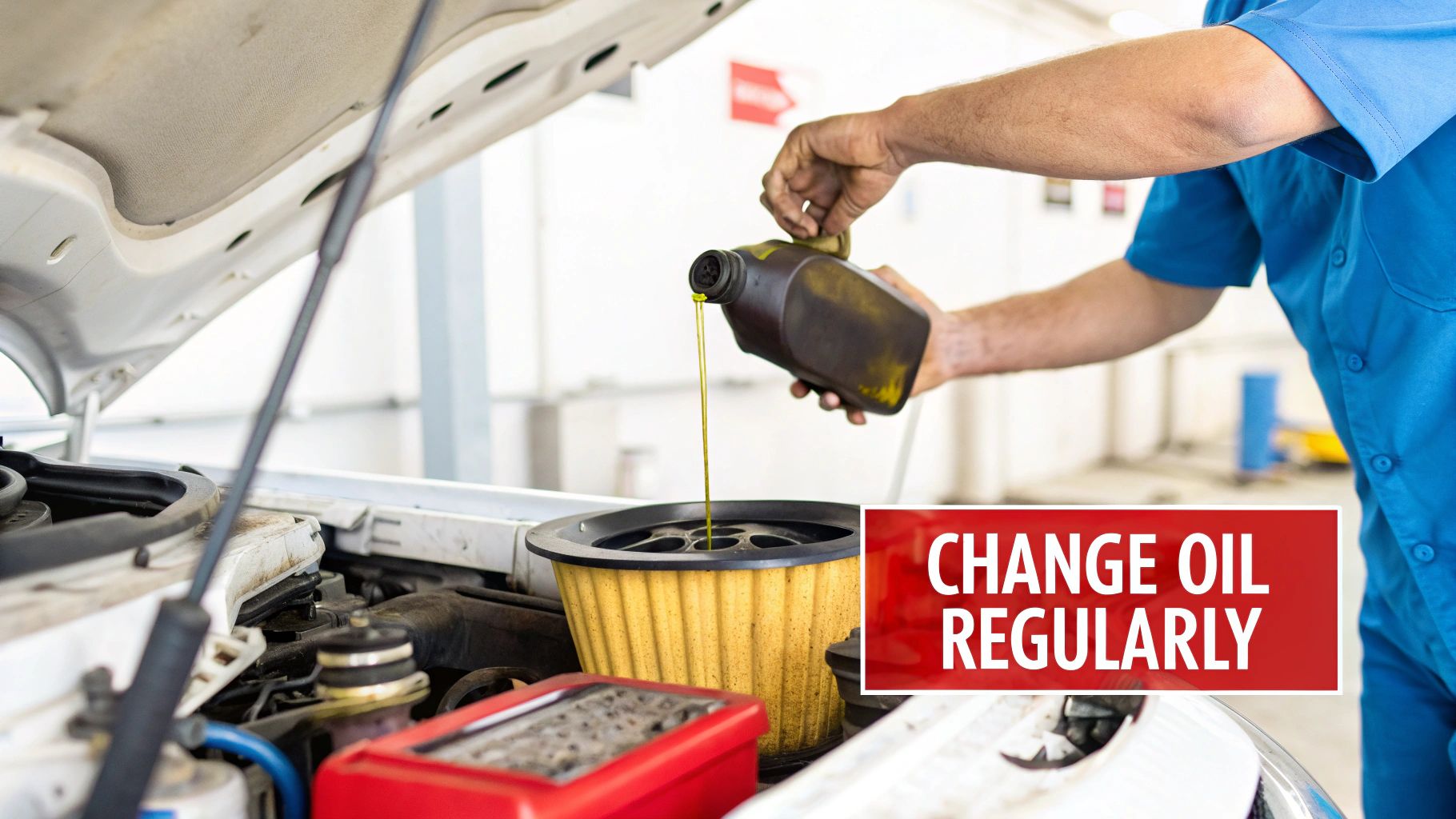
Consistent, high-quality oil changes are directly linked to engine longevity. For example, it's common for fleet managers at companies like UPS to see significant cost reductions and extended vehicle life by implementing strict synthetic oil programs. Similarly, individual owners of trucks like the Ford F-150 and Toyota Tundra often report reaching 200,000 or 300,000 miles on their original engines by adhering to manufacturer-recommended synthetic oil intervals.
Implementation and Best Practices
To properly integrate this into your maintenance schedule, follow these actionable tips:
- Consult Your Owner's Manual: This is your primary source. It specifies the correct oil type (e.g., 5W-30 synthetic), viscosity, and change interval for your truck’s engine and typical operating conditions (e.g., towing vs. city driving).
- Choose the Right Interval: Modern full-synthetic oils often allow for intervals of 7,500 to 10,000 miles. Conventional oils typically require changes every 3,000 to 5,000 miles. If you frequently tow heavy loads or operate in dusty environments, shorten the interval.
- Prioritize Filter Quality: The oil filter is as important as the oil itself. Using a cheap, low-quality filter can compromise the entire system. Stick with OEM or reputable aftermarket brands that meet or exceed OEM specifications.
- Warm the Engine: Before draining the old oil, let your truck run for a few minutes. Warm oil flows more freely, ensuring more contaminants are drained out with it.
Pro Tip: Always keep meticulous records of every oil change, including the date, mileage, oil type used, and filter brand. This documentation is invaluable for maintaining your truck’s warranty and maximizing its resale value.
2. Coolant System Inspection and Flushing
The coolant system is the guardian of your engine's thermal health, a vital component of any preventive maintenance checklist for trucks. Its primary job is to circulate antifreeze, or coolant, through the engine block to absorb excess heat and then dissipate it through the radiator. This process prevents overheating in the summer and freezing in the winter, while also using corrosion inhibitors to protect internal metal parts like the water pump and radiator core. Neglected coolant becomes acidic over time, losing its protective properties and leading to catastrophic failures.
The benefits of diligent coolant maintenance are significant. For instance, Chevrolet Silverado owners often prevent costly head gasket repairs, which can exceed $2,000, simply by performing annual coolant checks and flushes. Similarly, commercial fleets have demonstrated dramatic improvements in reliability, with some reporting up to a 35% reduction in breakdown calls by implementing quarterly coolant system audits. For trucks like the Toyota Tacoma operating in sub-zero climates, proper coolant concentration is the difference between a reliable start and a cracked engine block.
Implementation and Best Practices
To effectively manage your truck’s cooling system, incorporate these essential practices into your routine:
- Use the Right Coolant: Always refer to your owner’s manual for the specific coolant type (e.g., OAT, HOAT) and color required. Using the wrong kind can cause chemical reactions that lead to gelling and blockages.
- Inspect Hoses and Connections: Regularly check all coolant hoses for cracks, soft spots, or bulging, especially near the clamps. A bulging hose is a sign of imminent failure and should be replaced immediately.
- Check Levels Correctly: Always check the coolant level in the overflow reservoir when the engine is cold. The level should be between the "MIN" and "MAX" lines. Never open the radiator cap on a hot engine, as the system is pressurized and can cause severe burns.
- Perform Regular Flushes: A complete coolant flush, not just a drain-and-fill, should be performed every 30,000 to 50,000 miles or as specified by your manufacturer. This removes old, degraded coolant and any sediment that has built up in the system.
Pro Tip: When topping off the system, use a pre-mixed 50/50 solution of coolant and distilled water. Using tap water can introduce minerals that cause scale buildup and corrosion inside your radiator and engine.
3. Brake System Assessment and Pad Replacement
A fully functional brake system is non-negotiable for safety, making its regular inspection a cornerstone of any preventive maintenance checklist for trucks. The brake system converts the kinetic energy of your moving truck into heat through friction, and its key components like pads, rotors, and fluid wear down over time. Neglecting this system compromises your ability to stop safely, especially when hauling heavy loads or navigating steep terrain.
Regular checks ensure brake pads have sufficient material, rotors are smooth and within thickness specifications, and brake fluid is free of moisture and contaminants. Fleet maintenance programs often cite quarterly brake safety audits as a primary factor in reducing accident liability and operational downtime. Similarly, Ford F-250 owners who frequently tow heavy trailers can significantly extend component life and prevent catastrophic failure by adhering to proactive inspection intervals rather than waiting for warning signs.
Implementation and Best Practices
To effectively manage your truck’s brake health, incorporate these practices into your routine:
- Listen for Early Warnings: A high-pitched squealing or grinding noise when you apply the brakes is often the first indicator that your brake pads are worn down to their metal wear indicator. Address this immediately to avoid damaging the rotors.
- Feel the Pedal: Pay attention to how the brake pedal feels. A soft, spongy, or mushy pedal often points to air in the brake lines or contaminated fluid. A pulsating pedal usually indicates warped rotors.
- Inspect During Tire Rotations: Since the wheels are already off, a tire rotation is the perfect time to visually inspect brake pad thickness and rotor condition. Most pads have a wear groove; if it's gone, it’s time for replacement.
- Prioritize Quality Components: Always use high-quality OEM or equivalent brake pads and rotors from reputable brands like Brembo or ACDelco. Cheaper aftermarket parts can compromise stopping power and wear out much faster.
- Check Brake Fluid: Inspect the brake fluid reservoir monthly. If the fluid is dark or murky, it has likely absorbed moisture and needs to be flushed and replaced.
Pro Tip: If you frequently drive in mountainous areas or tow heavy loads, your brakes are subjected to extreme heat and stress. Consider upgrading to performance brake pads and slotted or drilled rotors for improved heat dissipation and reduced brake fade.
4. Tire Rotation, Alignment, and Pressure Monitoring
As the sole contact point between your truck and the road, tires are a critical component for safety, fuel efficiency, and performance. A disciplined approach to tire maintenance is a non-negotiable part of any preventive maintenance checklist for trucks. This includes regular rotation to ensure even wear, periodic wheel alignment to maintain proper geometry, and consistent pressure monitoring to prevent blowouts and optimize handling. Neglecting these tasks leads to premature tire replacement, reduced fuel economy, and compromised safety.
The benefits are well-documented and significant. Commercial fleets often see major reductions in operational costs and downtime by implementing proactive tire pressure monitoring systems (TPMS). Similarly, individual pickup truck owners who consistently rotate their tires and check alignment often achieve 50,000 miles or more from a single set of tires, maximizing their investment. For those who tow, a proper alignment before the season can extend tire life by up to 30% by preventing the uneven wear caused by heavy loads.
Implementation and Best Practices
To properly maintain your truck’s tires, integrate these practices into your routine:
- Check Pressure Monthly: Use a quality pressure gauge to check all tires, including the spare, at least once a month. Always do this when the tires are "cold" (before the truck has been driven) to get an accurate reading.
- Follow Manufacturer PSI: Inflate tires to the pressure recommended on the sticker inside the driver’s door jamb, not the maximum pressure stamped on the tire sidewall. This ensures optimal safety, handling, and fuel efficiency.
- Rotate Every Other Oil Change: A good rule of thumb is to rotate your tires every 5,000 to 7,500 miles. This promotes uniform tread wear across all four tires, significantly extending their service life.
- Inspect for Uneven Wear: Visually inspect your tire treads for signs of misalignment or suspension issues. Wear on the inner or outer edges often points to an alignment problem, while "cupping" or scalloped wear can indicate worn shocks or issues with wheel bearings. You can explore a detailed guide to front wheel bearing replacement if you suspect a problem.
- Align When Necessary: Have your truck’s alignment checked annually or any time you install new tires, replace suspension components, or notice the vehicle pulling to one side.
Pro Tip: When it's time for new tires, always replace them in a full set of four whenever possible. This provides the most predictable handling, traction, and stability, especially on trucks with 4WD or AWD systems.
5. Battery Health Testing and Replacement
A healthy battery is the heart of your truck's electrical system, and proactive testing is essential for a complete preventive maintenance checklist for trucks. A truck battery typically lasts 3 to 5 years, but its lifespan is heavily influenced by climate, usage, and electrical load. Modern trucks rely on the battery for everything from starting the engine to powering complex onboard computers, making an unexpected failure more than just an inconvenience; it can bring your operations to a halt.
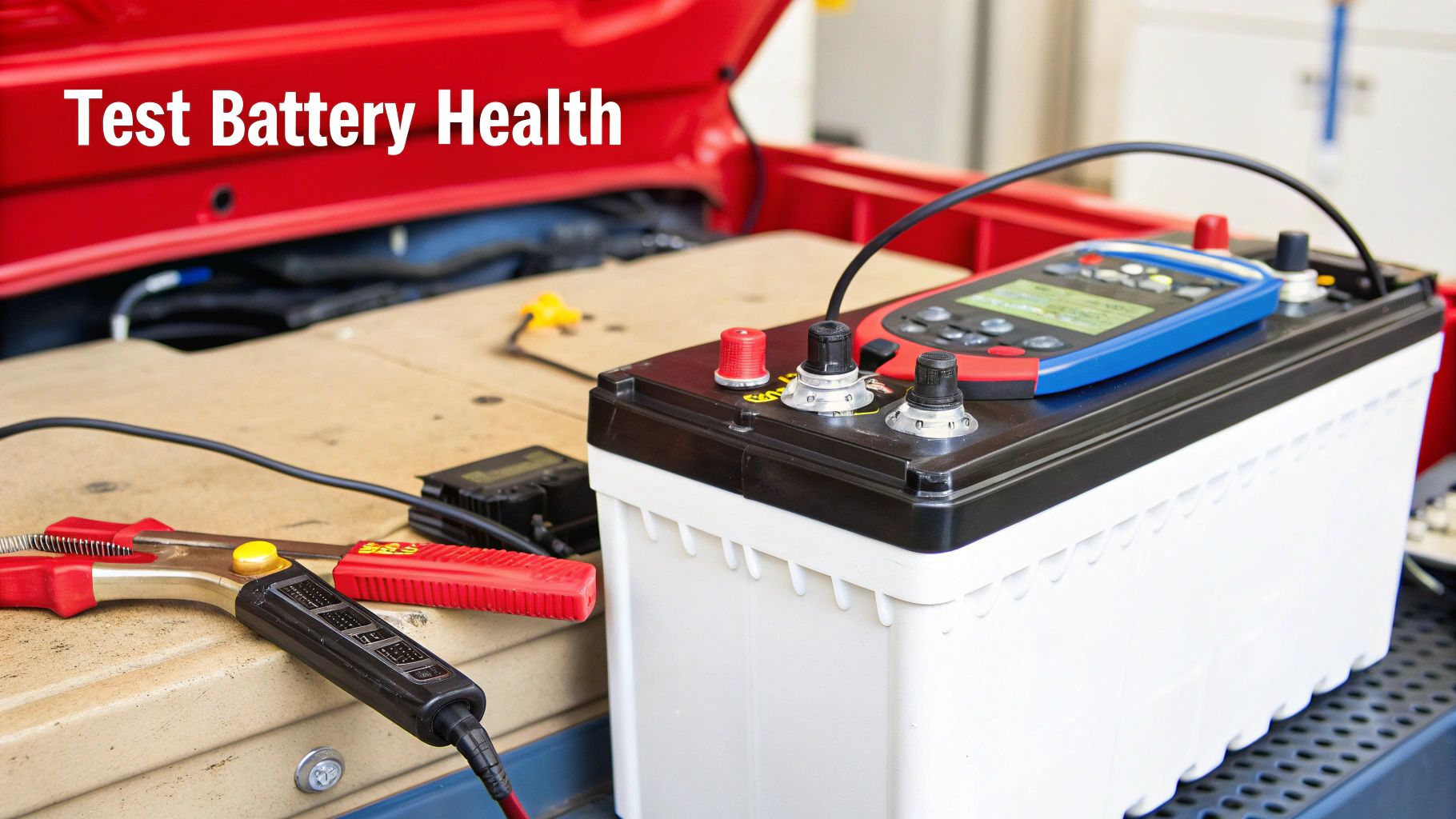
The benefits of regular battery maintenance are clear. Commercial fleet managers have reported that implementing quarterly battery testing can eliminate up to 90% of unexpected no-start situations. Similarly, truck owners in cold climates who proactively replace their batteries every three years avoid the hassle and danger of being stranded in freezing temperatures. For businesses, this translates directly to fewer emergency roadside calls and minimized operational downtime.
Implementation and Best Practices
To keep your truck’s electrical system reliable, incorporate these battery maintenance tasks into your schedule:
- Test Seasonally: Have your battery professionally load-tested before winter and summer. Extreme temperatures are the most common cause of battery failure, and a load test accurately assesses its ability to hold a charge under demand.
- Keep Terminals Clean: Inspect the battery terminals for corrosion, which looks like a white or greenish powder. This buildup restricts current flow and can prevent your truck from starting. Clean it off with a wire brush and a solution of baking soda and water.
- Check the Charging System: Your alternator recharges the battery while the engine is running. A faulty alternator can quickly drain a brand-new battery. Have your entire charging system tested annually to ensure it's functioning correctly. If you're encountering issues, you can learn more about how to diagnose car electrical problems on T1AAuto.com.
- Know When to Replace: A battery that fails a load test or consistently measures below 12.4 volts should be replaced immediately. If your truck has high-demand accessories like a winch or extensive aftermarket lighting, consider upgrading to a premium AGM (Absorbent Glass Mat) battery.
Pro Tip: When replacing your battery, check its manufacturing date code. A battery can lose charge sitting on a shelf, so always choose one that is less than six months old to ensure you’re getting maximum performance and lifespan.
6. Air Filter Replacement and Engine Intake Inspection
A clean air filter is essential for optimal engine performance and a core part of any preventive maintenance checklist for trucks. The engine air filter acts as the first line of defense, preventing harmful airborne contaminants like dust, pollen, and road debris from entering your engine's combustion chambers. A clogged filter restricts airflow, forcing the engine to work harder, which directly reduces fuel economy, increases emissions, and can lead to sluggish acceleration.
The impact of this simple maintenance task is significant. Commercial fleets have reported fuel efficiency gains of 5-8% by implementing strict air filter replacement programs. For individual owners, especially those operating trucks in dusty construction or agricultural environments, shortening the replacement interval from the standard 12,000 miles to every 5,000 miles can prevent premature engine wear and maintain power output when it's needed most.
Implementation and Best Practices
To effectively manage your truck’s air intake system, incorporate these practices into your routine:
- Follow Manufacturer Intervals: Your owner's manual provides a baseline replacement schedule, typically every 12,000 to 15,000 miles. However, this should be adjusted based on your driving conditions.
- Inspect Regularly: Don't just replace the filter based on mileage. A best practice is to inspect it during every oil change. Hold the filter up to a strong light; if you can't see light passing through it, it’s time for a replacement.
- Check the Seal: When installing a new filter, ensure it sits correctly in the housing and creates a perfect seal. A poor seal allows unfiltered air to bypass the filter, rendering it useless and exposing your engine to damaging particles.
- Don't Forget the Cabin Filter: Your truck also has a cabin air filter that cleans the air entering the passenger compartment. Replace it annually or if you notice reduced airflow from your HVAC vents or a musty odor.
Pro Tip: While cleaning a filter by blowing compressed air through it may seem economical, it can create microscopic tears in the filter media. This damage allows fine, abrasive particles to pass through, potentially harming sensitive engine components like sensors and cylinder walls. Always replace, don't just clean.
7. Transmission Fluid Service and Filter Changes
Often overlooked, transmission fluid service is a cornerstone of a comprehensive preventive maintenance checklist for trucks. The transmission fluid, or ATF, does more than just lubricate; it acts as a hydraulic fluid to enable shifting, cools vital internal components, and cleans away clutch material and metal particles. As the fluid ages, it degrades from heat, losing its lubricating properties and becoming contaminated, which can lead to shifting problems, overheating, and catastrophic failure.
Neglecting this service is a costly gamble. Fleet managers have seen transmission-related failures drop significantly after implementing proactive fluid monitoring and change schedules. Similarly, towing enthusiasts with trucks like the Ram 2500 or Chevy Silverado HD often report achieving well over 200,000 miles on original transmissions by servicing the fluid every 30,000 miles, a much shorter interval than the manufacturer might suggest for light-duty use.
Implementation and Best Practices
To effectively manage your truck's transmission health, integrate these practices into your routine:
- Follow Manufacturer Recommendations: Your owner's manual is the definitive guide. It will specify the exact fluid type (e.g., Dexron, Mercon) and the service interval, which can range from 30,000 to 100,000 miles or even be designated as "lifetime" fill, which still requires regular inspection.
- Check Fluid Condition Regularly: Between services, check the transmission fluid. It should be bright red (or its original color) and have a sweet smell. If it's brown, black, or smells burnt, it’s a clear sign that it needs to be changed immediately.
- Use the Correct Fluid: Transmissions are highly sensitive to fluid chemistry. Using the wrong type of ATF can cause shifting issues, seal damage, and premature failure. Always use the manufacturer-approved fluid specification.
- Consider a Fluid Flush vs. Drain-and-Fill: A simple drain-and-fill only replaces about half the fluid. A professional fluid flush or exchange replaces nearly all of it, providing better protection, especially for high-mileage or hard-working trucks.
Pro Tip: If you frequently tow heavy loads or operate in mountainous terrain, your transmission works much harder and generates more heat. Consider cutting the recommended service interval in half and installing an auxiliary transmission cooler to prevent fluid breakdown and extend the life of your transmission.
8. Suspension and Steering Component Inspection
A thorough suspension and steering inspection is a non-negotiable part of any preventive maintenance checklist for trucks. These systems, including springs, shocks, struts, bushings, ball joints, and tie rods, are responsible for ride quality, vehicle stability, and precise handling. Over time, these components wear out from constant stress, leading to poor alignment, uneven tire wear, compromised braking, and a significant loss of control.
Proactive inspection prevents catastrophic failures and maintains safety. For instance, commercial delivery fleets have demonstrated accident reductions of up to 40% by implementing quarterly suspension safety audits. Similarly, off-road enthusiasts and owners of high-mileage trucks often replace components from trusted brands like Bilstein or Moog proactively, ensuring their vehicle remains safe and capable long before a critical part fails on a remote trail or busy highway.
Implementation and Best Practices
To effectively monitor your truck's suspension and steering systems, incorporate these practices into your routine:
- Schedule Regular Professional Inspections: Have a qualified mechanic inspect the entire system annually or every 15,000 miles. They can spot subtle signs of wear on bushings or ball joints that are difficult to see without a vehicle lift.
- Listen and Feel for Warning Signs: Pay attention to new noises or changes in handling. A clunking or knocking sound over bumps often indicates worn shocks, struts, or sway bar links. If the truck wanders or pulls to one side, it could be a sign of steering linkage issues.
- Inspect During Tire Rotations: When the wheels are off for a tire rotation, it's the perfect opportunity for a visual check. Look for leaking fluid from shocks or struts, cracked or deteriorating rubber bushings, and any looseness in the tie rods by trying to wiggle the components.
- Replace Components in Pairs: To maintain balanced handling and stability, always replace shocks and struts in pairs (both front or both rear). Replacing only one can lead to unpredictable vehicle dynamics.
Pro Tip: If you regularly tow heavy trailers or carry substantial loads in the bed, consider upgrading to heavy-duty shocks and springs. This not only improves safety and control but also significantly reduces wear on other chassis components.
9. Exterior Lighting and Electrical Component Function Testing
A truck’s lighting and electrical systems are fundamental to its safety and operational integrity, making their regular inspection a core part of any preventive maintenance checklist for trucks. This involves more than just a quick glance at the headlights; it includes a full functional test of all exterior lights (headlights, taillights, brake lights, turn signals) and interior electrical components like power windows, mirrors, door locks, and modern safety sensors. Neglecting these systems not only creates significant safety hazards but can also lead to costly traffic violations and unexpected failures.
The benefits of proactive electrical checks are well-documented. For instance, fleet safety managers have demonstrated significant reductions in nighttime accidents by implementing mandatory monthly lighting system audits. On an individual level, owners of trucks like the Ford F-Series and Toyota Tacoma often prevent complete lighting failures by performing thorough tests during seasonal transitions, catching issues like corroded bulb sockets or failing relays before they lead to a complete outage. Identifying a sluggish power window motor or a malfunctioning door lock early allows for a simple, preventive repair instead of an emergency fix.
Implementation and Best Practices
To properly integrate these checks into your routine, follow these actionable tips:
- Perform a Monthly "Walk-Around": Once a month, have a helper assist you. Test every light function: low beams, high beams, fog lights, turn signals (front and rear), hazard lights, brake lights, and reverse lights. Don't forget the license plate light.
- Inspect Lenses and Housings: Check all light lenses for cracks, moisture intrusion, or hazing (oxidation) that can severely reduce brightness. Clean cloudy lenses with a restoration kit to improve visibility.
- Test All Cabin Controls: During your regular drives, cycle through your power windows, adjust your power mirrors, and operate the power door locks. Listen for slow or struggling motors, which are early signs of failure.
- Check Modern Safety Systems: If equipped, regularly clean the lenses of your backup camera and parking sensors. A dirty lens can render a backup camera nearly useless, especially in poor weather conditions.
Pro Tip: Pay close attention to the door and window seals. Degraded rubber weatherstripping can allow water to leak into door panels, shorting out electrical components like window motors and lock actuators. Keep them clean and conditioned to prevent this.
10. Undercarriage Inspection and Corrosion Prevention
A truck’s undercarriage is its foundation, yet it's constantly exposed to the harshest elements like road salt, moisture, grime, and physical debris. A thorough undercarriage inspection is a vital part of any preventive maintenance checklist for trucks because it directly combats rust, which can compromise the structural integrity of the frame, exhaust, fuel tank, and suspension components. Protecting this area prevents catastrophic failures and significantly extends the vehicle's service life.
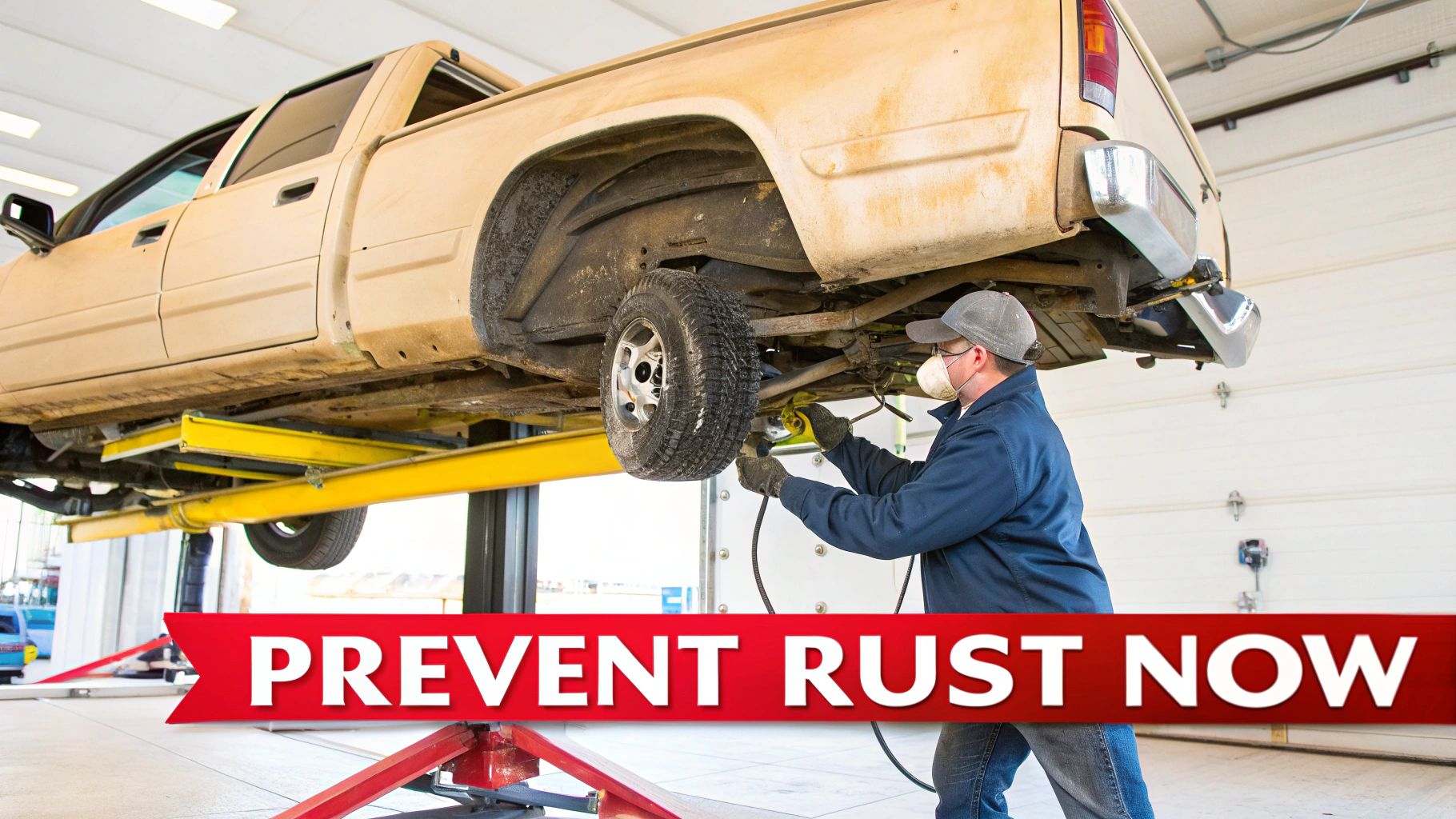
The benefits are well-documented. Truck owners in northern "salt belt" regions who apply annual undercoatings often see their vehicle's lifespan double compared to unprotected trucks. Similarly, commercial fleets have reported reducing rust-related vehicle retirements by up to 60% through proactive undercarriage care programs. Brands like Ziebart, POR-15, and Fluid Film have built their reputations on creating products that stop corrosion in its tracks, proving the value of this maintenance step.
Implementation and Best Practices
To properly protect your truck’s underbody, integrate these habits into your maintenance routine:
- Wash Frequently: In winter, wash the undercarriage monthly to remove corrosive road salt. In coastal areas, do the same to rinse away salt spray, especially after driving near the beach.
- Inspect Key Components: Regularly check the frame, fuel tank, brake lines, and exhaust system for signs of rust, holes, or loose hangers. Look for bubbling paint, which is an early sign of corrosion.
- Apply Protective Coatings: For trucks operating in high-corrosion environments, applying a professional-grade undercoating or a DIY rust inhibitor like Fluid Film annually is a sound investment.
- Clear Drain Holes: Locate and clear the drain holes at the bottom of your doors and in the truck bed. Clogged holes trap water, creating a perfect environment for rust to form from the inside out.
Pro Tip: When addressing surface rust or replacing undercarriage components, use a high-quality anti-seize product on bolts and fasteners. Find out more about how to use copper anti-seize for rust prevention to make future repairs much easier and prevent parts from seizing together.
10-Point Truck Preventive Maintenance Checklist Comparison
| Item | Implementation Complexity 🔄 | Resource Requirements ⚡ | Expected Outcomes 📊 | Ideal Use Cases 💡 | Key Advantages ⭐ |
|---|---|---|---|---|---|
| Oil and Filter Changes | Low 🔄 — routine, DIY-friendly | Low ⚡ — oil, filter, basic tools | High 📊 — longer engine life; better fuel economy; ⭐⭐⭐⭐ | All trucks; regular service schedules; fleets | Prevents sludge/wear; inexpensive vs repairs |
| Coolant System Inspection & Flushing | Medium 🔄 — inspection + flush equipment | Medium ⚡ — correct coolant, flush machine, disposal | High 📊 — prevents overheating/corrosion; ⭐⭐⭐⭐ | Extreme climates, towing, older engines | Protects against freeze/thaw and head gasket damage |
| Brake System Assessment & Pad Replacement | Medium‑High 🔄 — pad/rotor work, bleeding | Medium‑High ⚡ — pads, possible rotors, labor, fluid | Very High 📊 — critical safety improvement; ⭐⭐⭐⭐⭐ | Towing, mountainous driving, heavy use | Prevents brake failure; restores stopping performance |
| Tire Rotation, Alignment & Pressure Monitoring | Low‑Medium 🔄 — rotation easy; alignment needs shop | Low‑Medium ⚡ — rotation tools, TPMS, occasional alignment | High 📊 — longer tire life; improved fuel economy; ⭐⭐⭐⭐ | High-mileage, towing, long-haul | Even wear, better handling, fuel savings |
| Battery Health Testing & Replacement | Low 🔄 — quick testing, simple swap | Low ⚡ — tester, replacement battery cost ($100–300) | High 📊 — reduces roadside failures; protects electronics; ⭐⭐⭐⭐ | Cold climates, older batteries, high electrical loads | Prevents stranded starts; detects alternator issues |
| Air Filter Replacement & Intake Inspection | Low 🔄 — visual check and replace | Low ⚡ — inexpensive filters ($20–40) | Medium‑High 📊 — improves fuel economy, engine protection; ⭐⭐⭐ | Dusty environments; routine maintenance | Cheap, DIY, protects engine and HVAC |
| Transmission Fluid Service & Filter Changes | Medium‑High 🔄 — fluid change + filter; some sealed systems complex | Medium‑High ⚡ — specific ATF, filter, tools, shop labor | Very High 📊 — prevents major transmission failure; ⭐⭐⭐⭐⭐ | Towing, high-mileage, older transmissions | Smoother shifts; avoids costly rebuilds |
| Suspension & Steering Component Inspection | Medium‑High 🔄 — lift inspection, component testing | Medium‑High ⚡ — replacement parts, alignment after repairs | High 📊 — improved stability, safety, tire life; ⭐⭐⭐⭐ | Off‑road, towing, high‑use trucks | Detects dangerous wear; improves handling |
| Exterior Lighting & Electrical Function Testing | Low‑Medium 🔄 — visual tests; diagnostics when needed | Low‑Medium ⚡ — bulbs inexpensive; modules/diagnostics can be costly | High 📊 — improves visibility/safety; avoids citations; ⭐⭐⭐⭐ | Night driving, fleets, modern tech‑equipped trucks | Ensures visibility; catches electronic faults early |
| Undercarriage Inspection & Corrosion Prevention | Medium 🔄 — wash, inspection, undercoating application | Medium ⚡ — coatings, rust inhibitors, lift or spray equipment | High 📊 — prevents structural rust; extends vehicle life; ⭐⭐⭐⭐ | Salt‑belt, coastal, older vehicles | Preserves frame, prevents costly rust repairs |
Putting Your Checklist into Action for Long-Term Reliability
Moving from knowing to doing is where the real value of a preventive maintenance checklist for trucks is unlocked. You now possess a detailed roadmap covering everything from daily fluid checks and weekly tire inspections to annual undercarriage assessments and seasonal preparations. This isn't just a list of tasks; it's a strategic framework for transforming your relationship with your vehicle from one of reactive, expensive repairs to proactive, confident ownership. The core principle is simple: consistent, scheduled attention prevents catastrophic failures down the road.
The true power of this system lies in its disciplined application. A well-maintained logbook, whether a physical notebook in your glove compartment or a digital spreadsheet, is the cornerstone of effective maintenance. It creates a historical record of your truck’s health, making it easy to anticipate upcoming needs and diagnose emerging issues. This documentation is not just for your benefit; it significantly increases your truck's resale value by demonstrating a verifiable history of meticulous care to potential buyers.
Bridging the Gap Between Inspection and Action
Identifying a potential issue is only the first step. The next is taking decisive action. This checklist helps you categorize tasks into three distinct groups:
- Routine Upkeep: These are the non-negotiables like oil changes, tire rotations, and air filter replacements. Schedule these in your calendar just as you would any other important appointment.
- Component Monitoring: Items like brake pad thickness, battery voltage, and suspension bushings require regular inspection. Your logbook will help you track their wear over time, allowing you to replace them before they fail and cause collateral damage.
- Immediate Intervention: A check engine light, a new noise from the suspension, or a fluid leak are not to be ignored. These are your truck’s warning signals, and prompt diagnosis is critical to prevent a minor problem from escalating into a major system failure.
Key Insight: Preventive maintenance is not about avoiding all repairs forever. It is about controlling the when and the how of those repairs, turning unpredictable breakdowns into scheduled, manageable service tasks. This control saves you time, money, and immense stress.
Safety and Quality: The Non-Negotiable Elements
As you put this checklist into practice, never compromise on safety or quality. Working under a heavy vehicle or around complex electrical systems requires the right precautions. When handling sharp undercarriage components or working near engine parts, protecting yourself with appropriate personal protective equipment (PPE) is essential. For instance, a quality pair of cut-resistant gloves can prevent serious injuries, allowing you to focus on the task at hand with confidence.
Similarly, the quality of the parts you use determines the longevity of your repair. Choosing premium aftermarket components, especially for high-wear items like door handles, window regulators, or lighting assemblies, ensures you are not just fixing a problem but upgrading your vehicle's reliability. A quality part fits correctly, performs as expected, and withstands the rigors of daily use.
By integrating this comprehensive preventive maintenance checklist for trucks into your routine, you are not just servicing a machine; you are investing in its future. You are building a foundation of reliability that will carry you, your family, or your business safely and dependably for hundreds of thousands of miles to come. The road ahead is long, and with this proactive approach, your truck will be ready for every mile of it.
When your inspections reveal a part that needs replacement, don't settle for less than a perfect fit and lasting durability. T1A Auto specializes in premium, direct-fit replacement parts engineered to meet or exceed original specifications, ensuring your maintenance efforts lead to long-term reliability. Explore our full catalog of high-quality components at T1A Auto and get the job done right the first time.
